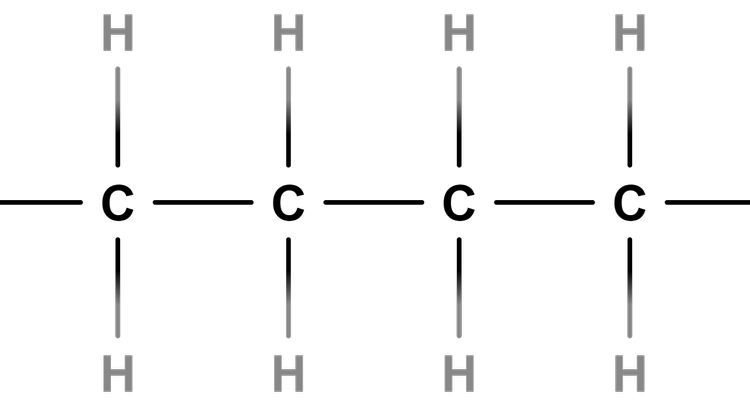
Addition polymerisation
I can describe the formation of an addition polymer from its monomer.

Addition polymerisation
I can describe the formation of an addition polymer from its monomer.
Lesson details
Key learning points
- A polymer is a substance of high average relative molecular mass made up of small repeating units.
- In addition polymerisation only one molecule is formed, e.g. addition polymerisation of ethene forms poly(ethene).
- Polymers have a specific displayed formula to show repeat units.
- A polymer's monomer can be deduced from its structure and vice versa.
- Addition polymers can be made by combining together a variety of monomer molecules containing C=C.
Keywords
Polymers - Polymers are long-chained molecules formed by joining together monomers.
Monomers - Monomers are small molecules that can join together to form a polymer.
Relative molecular mass - The relative molecular mass of a substance is the sum of the relative atomic masses of all the atoms in a molecule.
Addition polymerisation - Addition polymerisation is a type of polymerisation where monomers join together to form only one product; a polymer.
Repeating unit - The section of a polymer that repeats is known as the repeating unit.
Common misconception
Not including the bonds at the end of a repeating unit.
The slide deck states the need for open bonds to show how repeating units are bonded to each other.


Equipment
Molymods (optional).

Licence
Lesson video
Loading...
Prior knowledge starter quiz
6 Questions
Q1.What is the functional group of alkenes?
Q2.Name the molecule shown in the image.
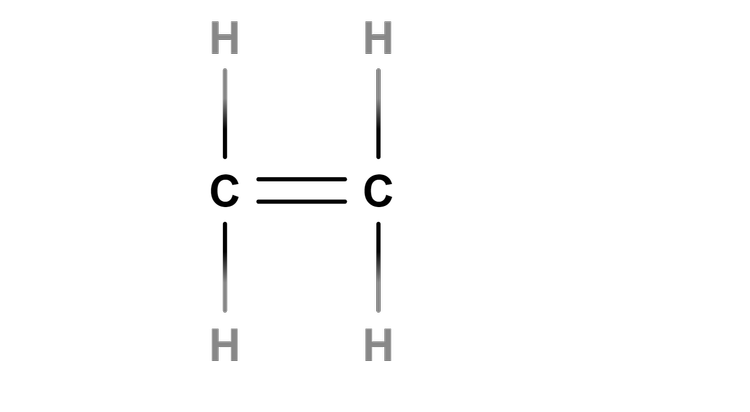
Q3.What is the relative molecular mass of H₂O?
Q4.What is the relative molecular mass of propene (C₃H₆)?
Q5.Monomers such as styrene can join together to form a polymer. What will the polymer be called?
Q6.Which monomer is used to make poly(propene)?
Assessment exit quiz
6 Questions
Q1.How many products are formed during addition polymerisation?
Q2.Polymerisation of the monomer shown in the image will produce which polymer?
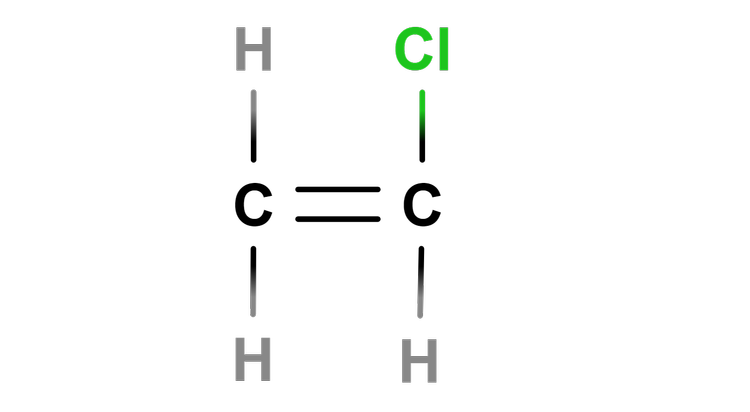
Q3.What is shown in the image?
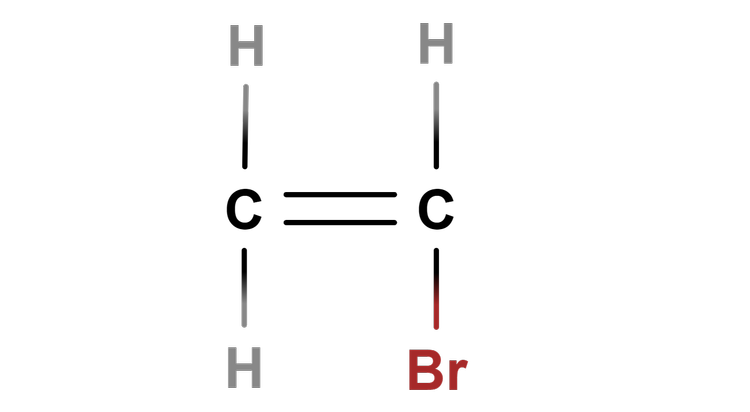
Q4.Match the key terms with the correct definitions.

long-chained molecules formed by joining together monomers.
small molecules that can join together to form a polymer.
where monomers join together to form only one product.
a section of a polymer that repeats.
Q5.How does the relative molecular mass (Mr) of poly(ethene) compare with the relative molecular mass of ethene?
Q6.The image shows two repeat units. Which monomer was used in polymerisation to form a polymer containining these repeat units?