


New
New
Continuous and discontinuous variation: practical
I can describe and measure examples of discontinuous and continuous variation in features.


Lesson 3 of 5
New
New
- Year 8
Continuous and discontinuous variation: practical
I can describe and measure examples of discontinuous and continuous variation in features.
Lesson details
Key learning points
- Some features have discontinuous variation (limited variations falling into particular categories).
- Some features have continuous variation (can take any value within a range).
- Examples of features in humans, other animals and plants that show discontinuous and continuous variation.
- Collecting primary data on examples of discontinuous and continuous variation in features.
Keywords
Discontinuous variation - Variation that is categorical (divided into particular categories).
Continuous variation - Variation that can take any one of many values over a continuous range.
Value - A number generated by a measurement, such as a measurement of mass or length.
Common misconception
All types of variation can be measured in the same way.
The lesson explores the differences between discontinuous and continuous variation and how they can be measured.
When measuring variation amongst pupils in class, some features (e.g. body mass) are best avoided as they can be sensitive for some pupils.

Teacher tip

Equipment
See additional materials.

Content guidance
- Depiction or discussion of sensitive content

Supervision
Adult supervision recommended

Licence
This content is © Oak National Academy Limited (2026), licensed on Open Government Licence version 3.0 except where otherwise stated. See Oak's terms & conditions (Collection 2).
Lesson video
Loading...
Prior knowledge starter quiz
6 Questions
Q1.When measuring the circumference of an apple, which piece of equipment would give the most accurate measurement?
When measuring the circumference of an apple, which piece of equipment would give the most accurate measurement?


ruler
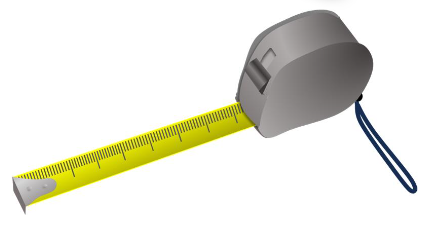
metal tape measure
Q2.What is meant by "variation"?
What is meant by "variation"?
similarities between organisms of the same species
reproduction between organisms of the same species
Q3.When measuring the mass of an apple, which piece of equipment should be used?
When measuring the mass of an apple, which piece of equipment should be used?
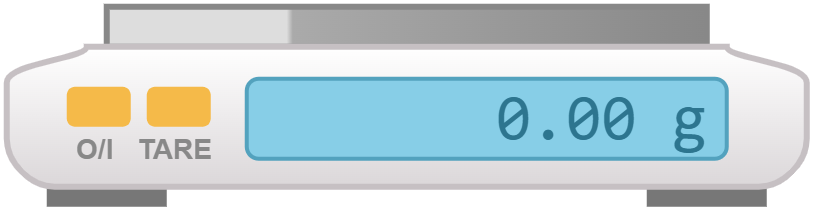

weighing scales

magnifying glass
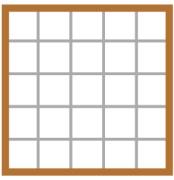
quadrat
Q4.A disorder such as cystic fibrosis is a form of variation that is a caused by ...
A disorder such as cystic fibrosis is a form of variation that is a caused by ...
environmental factors.
lifestyle choices.
Q5.Match each example of variation between humans to their cause.
Match each example of variation between humans to their cause.

Q6.A plant is wilting due to lack of water. This is an example of variation caused by the plant's .
A plant is wilting due to lack of water. This is an example of variation caused by the plant's .

Assessment exit quiz
6 Questions
Q1.Match the type of variation to its definition.
Match the type of variation to its definition.
Q2.Which of the following is an example of discontinuous variation?
Which of the following is an example of discontinuous variation?
satsuma circumference
length of leaf
body mass
Q3.Which table uses tally marks to record data on the heights of students?
Which table uses tally marks to record data on the heights of students?

table 1


table 3
Q4.Which two of the following are examples of continuous variation?
Which two of the following are examples of continuous variation?
fur colour
ability to roll tongue
Q5.Whose explanation of discontinuous variation is correct?
Whose explanation of discontinuous variation is correct?
Discontinuous variation has a maximum of three categories: X, Y and Z.
Discontinuous variation can have lots of in-between values, such as 0.7 and 0.2.
Q6.Whose explanation of continuous variation is correct?
Whose explanation of continuous variation is correct?
Continuous variation has an infinite number of individuals.
Continuous variation has specific categories but is numerical.
