


Global atmospheric circulation model, pressure belts and surface winds
I can explain that the atmosphere operates as a global system, determining pressure, winds and rainfall patterns.

Global atmospheric circulation model, pressure belts and surface winds
I can explain that the atmosphere operates as a global system, determining pressure, winds and rainfall patterns.
Lesson details
Key learning points
- The atmosphere operates as a global system.
- The atmospheric circulation and ocean currents transfer heat around the Earth.
- The atmospheric circulation determines the location of global pressure belts.
- Global pressure belts affect surface winds and patterns of rainfall.
Keywords
Latitude - this describes how far north or south of the Equator a place is
Atmospheric pressure - the pressure of a column of air at a point on the Earth'ssurface, creating relatively high or low pressure
Surface winds - the movement of air from place to place, generally from an area of high pressure to an area of low pressure
Coriolis effect - deflection of winds and ocean currents caused by Earth's rotation
Common misconception
The global atmospheric circulation systems controls the temperature of different climate zones.
Global circulation system redistributes heat received at the Equator, but latitude controls temperature of each climate zone. The amount of solar radiation received at each latitude is due to the curvature of the Earth.


Equipment

Licence
Lesson video
Loading...
Prior knowledge starter quiz
6 Questions
Q1.What shape is the Earth?
Q2.Which of these correctly names the seven continents?
Q3.What is the atmosphere?
Q4.What are the horizontal lines shown on this map called?
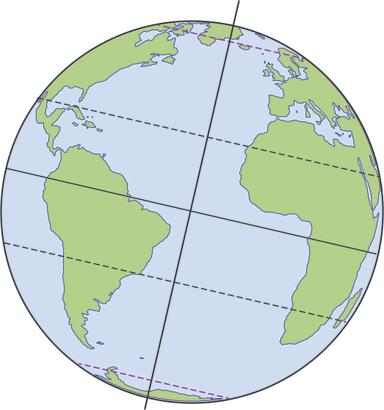
Q5.Why do different parts of the Earth receive varying amounts of solar radiation?
Q6.What is the difference between weather and climate?
Assessment exit quiz
6 Questions
Q1.Match the terms with their correct definition.

this describes how far north or south of the Equator a place is
the pressure of a column of air at a point on the Earth's surface
the movement of air, generally from areas of high to low pressure
deflection of winds and ocean currents caused by Earth's rotation