Myths about teaching can hold you back
- Year 8
Perpendicular bisector of a line segment

I can use the properties of a rhombus to construct a perpendicular bisector of a line segment.
- Year 8
Perpendicular bisector of a line segment
I can use the properties of a rhombus to construct a perpendicular bisector of a line segment.
These resources were made for remote use during the pandemic, not classroom teaching.
Switch to our new teaching resources now - designed by teachers and leading subject experts, and tested in classrooms.
Lesson details
Key learning points
- A rhombus can be constructed from two congruent isosceles triangles.
- The diagonals of a rhombus meet at right angles and bisect each other.
- It is possible to construct the perpendicular bisector of a line segment without drawing the rhombus.
Keywords
Bisect - To bisect means to cut or divide an object into two equal parts.
Rhombus - A rhombus is a parallelogram where all sides are the same length.
Common misconception
I can use a ruler to measure the midpoint of a line segment, and a protractor to find 90°.
Constructions, such as perpendicular bisectors, are methods of creating & modifying shapes & angles in ways that don't require measurements.
To help you plan your year 8 maths lesson on: Perpendicular bisector of a line segment, download all teaching resources for free and adapt to suit your pupils' needs...
To help you plan your year 8 maths lesson on: Perpendicular bisector of a line segment, download all teaching resources for free and adapt to suit your pupils' needs.
The starter quiz will activate and check your pupils' prior knowledge, with versions available both with and without answers in PDF format.
We use learning cycles to break down learning into key concepts or ideas linked to the learning outcome. Each learning cycle features explanations with checks for understanding and practice tasks with feedback. All of this is found in our slide decks, ready for you to download and edit. The practice tasks are also available as printable worksheets and some lessons have additional materials with extra material you might need for teaching the lesson.
The assessment exit quiz will test your pupils' understanding of the key learning points.
Our video is a tool for planning, showing how other teachers might teach the lesson, offering helpful tips, modelled explanations and inspiration for your own delivery in the classroom. Plus, you can set it as homework or revision for pupils and keep their learning on track by sharing an online pupil version of this lesson.
Explore more key stage 3 maths lessons from the Constructions unit, dive into the full secondary maths curriculum, or learn more about lesson planning.
Licence
Prior knowledge starter quiz
6 Questions
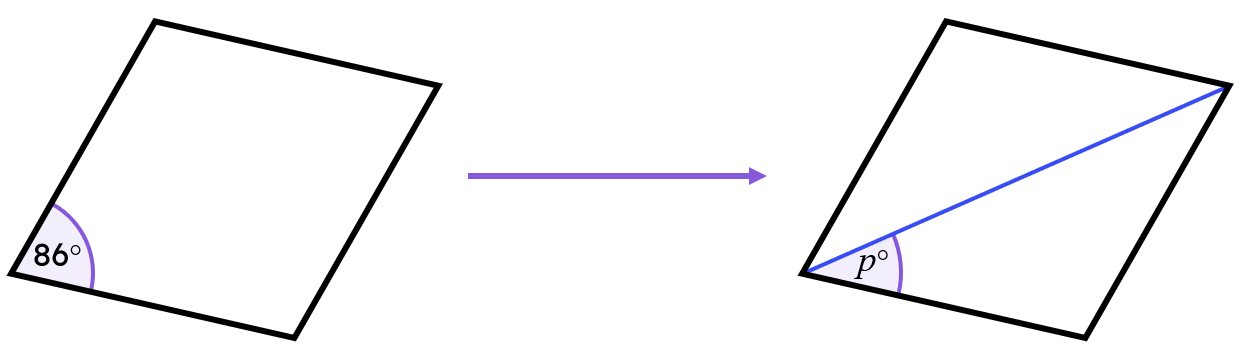
Q1.This quadrilateral is a rhombus with one of its diagonals drawn on. What is the size of angle $$p$$?

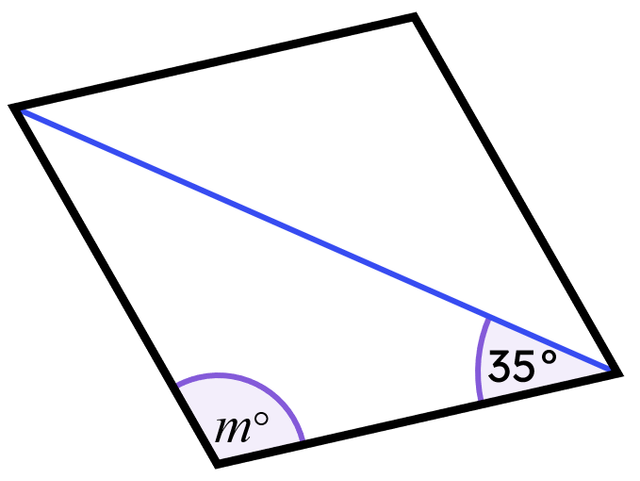
Q2.This quadrilateral is a rhombus with one of its diagonals drawn on. What is the size of angle $$m$$?

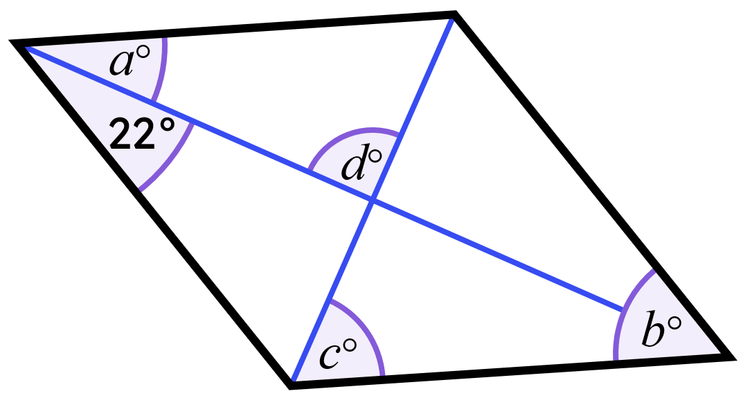
Q3.This quadrilateral is a rhombus with both of its diagonals drawn on. Match the angles in the rhombus to its size.

$$a$$ -
22°
$$b$$ -
44°
$$c$$ -
68°
$$d$$ -
90°
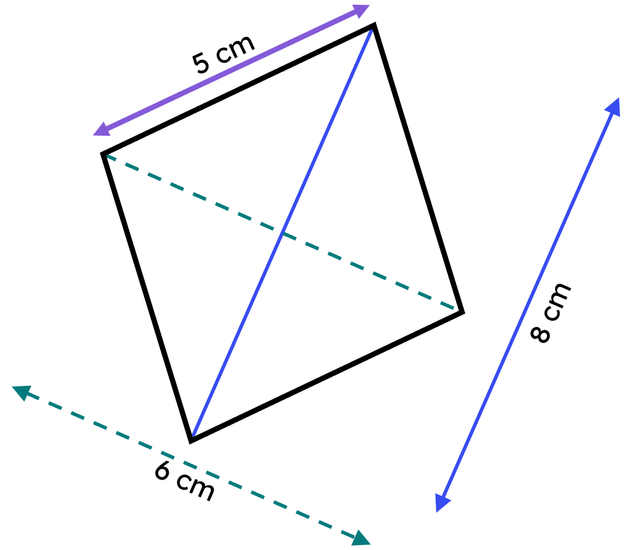
Q4.What is the area of this rhombus?

Q5.A rhombus has side length of 41 cm, and diagonals of length 18 cm and 80 cm. What is the area of this rhombus (in cm²)?
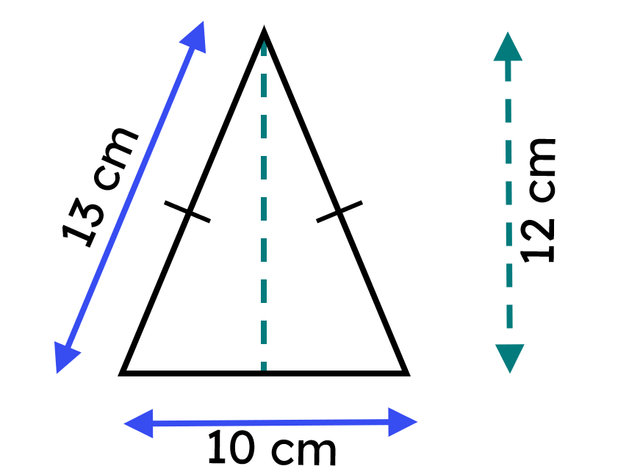
Q6.This triangle is reflected with the line of reflection at its base side. The resultant quadrilateral is a rhombus. What is the area of this rhombus (in cm²)?

Assessment exit quiz
6 Questions
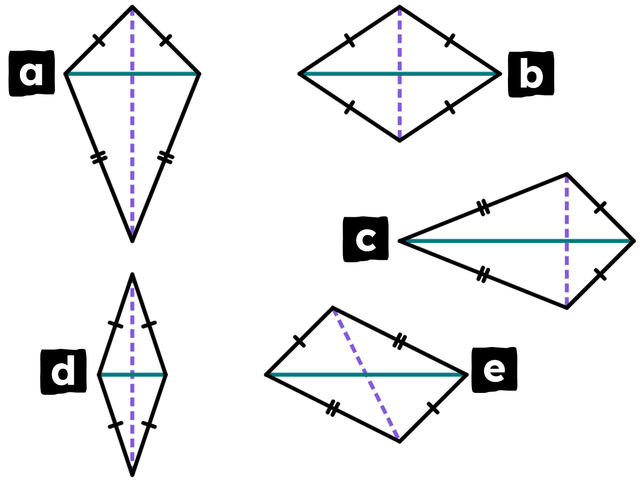
Q1.Which of these diagrams show a perpendicular bisector on a rhombus?

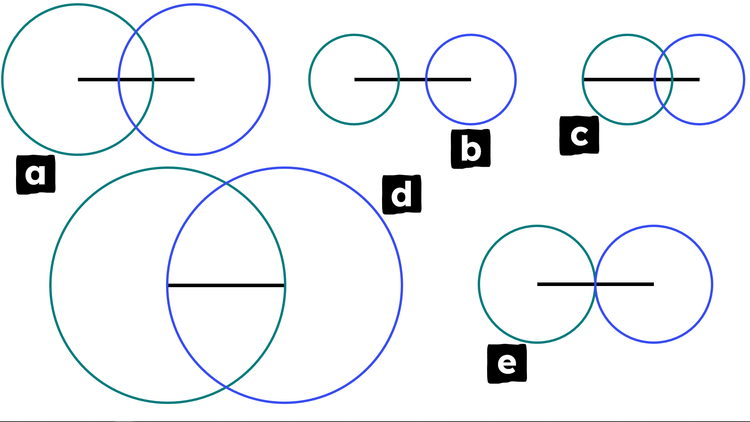
Q2.Which of these compass widths are suitable when constructing the perpendicular bisector of the given line segment?

Q3.Which of these constructions can be used to draw on the perpendicular bisector of the line segment given?

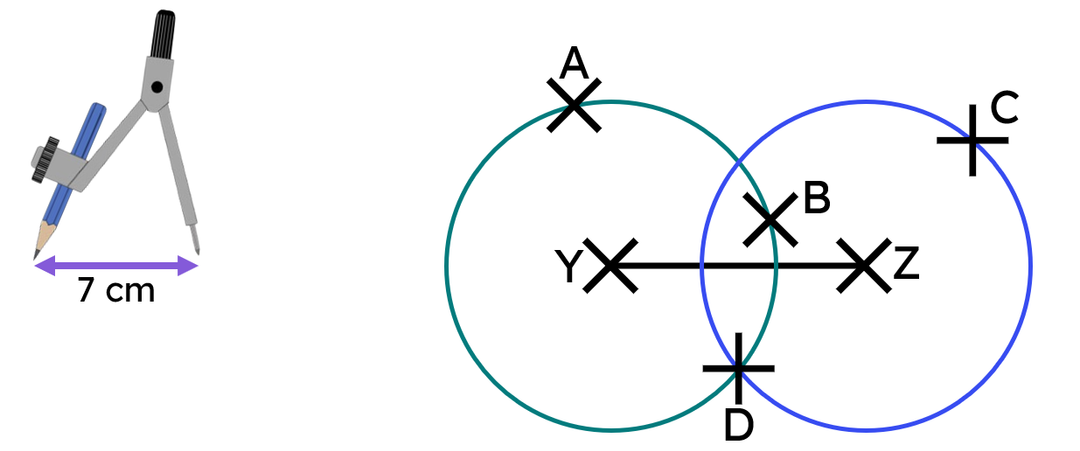
Q4.Each of the two circles has been drawn with a radius of 7 cm, one with centre Y, and the other with centre Z. Match the statement to the point it describes.

point A -
7 cm away from Y and greater than 7 cm away from Z.
point B -
7 cm away from Y and less than 7 cm away from Z.
point C -
7 cm away from Z and greater than 7 cm away from Y.
point D -
7 cm away from both Y and Z.
Q5.Lucas wants to construct the perpendicular bisector of line segment RS, which has a length of 18 cm. Which of these construction methods are possible?
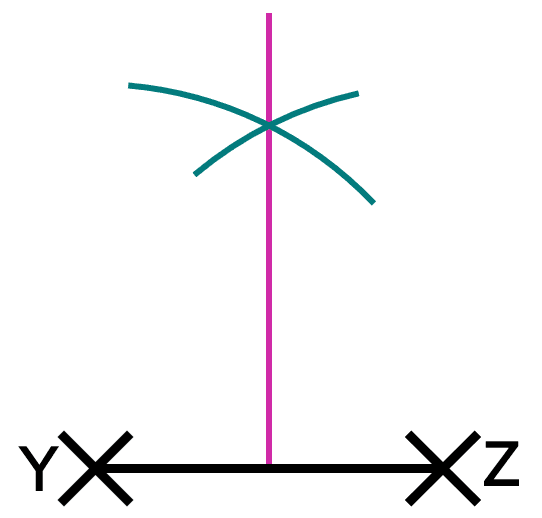
Q6.Which of these statements is true about this construction?