Choose exam board for KS4 Computer Science (GCSE)
Choose exam board for KS4 English
Choose exam board for KS4 French
Choose exam board for KS4 Geography
Choose exam board for KS4 German
Choose exam board for KS4 History
Choose tier for KS4 Maths
Choose exam board for KS4 Music
Choose exam board for KS4 Physical education (GCSE)
Choose exam board for KS4 Religious education (GCSE)
Choose exam board for KS4 Spanish

Securing understanding of perimeter and area
Lesson details

Learning outcome

I can find the perimeter and area of basic shapes.

Key learning points

  1. You can calculate the area and perimeter of rectangles.
  2. Different rectangles can have the same perimeter.
  3. The area of a parallelogram can be deduced from the area of a rectangle.
  4. The base and perpendicular height of parallelograms can be identified.
  5. The area of any parallelogram can be calculated.

Keywords

  • Parallelogram - A parallelogram is a quadrilateral with two pairs of parallel and equal sides.

  • Area - The area is the size of the surface and states the number of unit squares needed to completely cover that surface.

  • Perimeter - The perimeter is the distance around a 2D shape.

Common misconception

Pupils may confuse perimeter and area.

Perimeter is the distance around a 2D shape. Area is the size of the surface.

Teacher tip

To remember perimeter, it may help pupils to think the of rim of a glass and that this is traced around the glass.

Licence

This content is © Oak National Academy Limited (2025), licensed on Open Government Licence version 3.0
except where otherwise stated. See Oak's terms & conditions
(Collection 2).

Lesson video

Loading...

Prior knowledge starter quiz

6 Questions
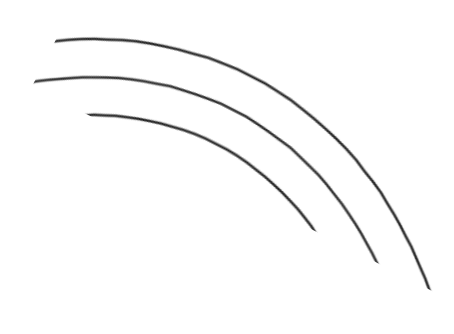
Q1.
True or false? These lines are an example of parallel lines.

An image in a quiz
True
Correct answer: False

Q2.
An alternative name for a regular triangle is an triangle

Correct Answer: equilateral

Q3.
Starting with triangle, put these shapes in order from smallest to greatest number of sides.

1 - triangle
2 - trapezium
3 - pentagon
4 - hexagon
5 - octagon

Q4.
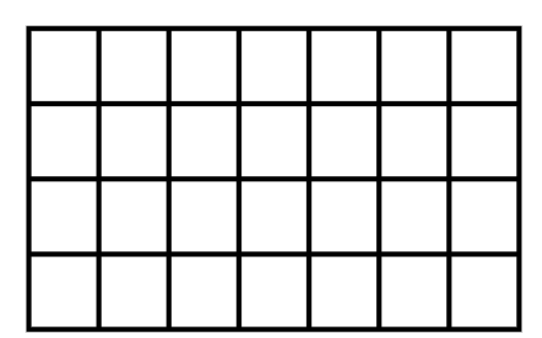
How many unit squares are inside the rectangle?

An image in a quiz
Correct Answer: 28, 28 squares, twenty eight, twenty-eight, twenty eight squares

Q5.
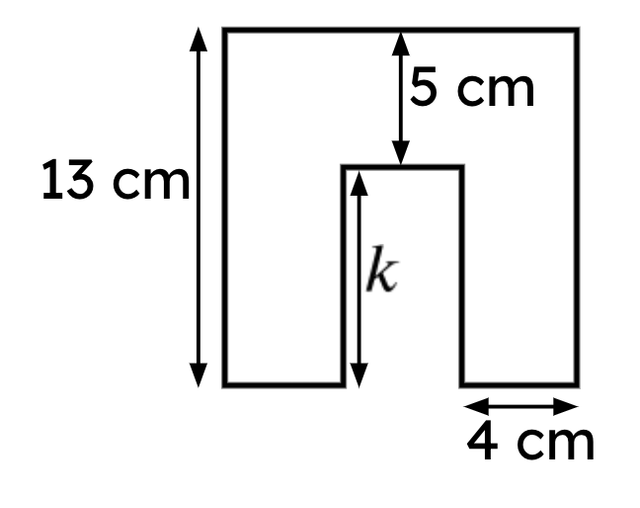
What is the length of the line marked $$k$$?

An image in a quiz
Correct Answer: 8 cm, 8 centimeters, 8 centimetres, eight cm, eight centimeters

Q6.
If two lines are perpendicular then they ______

never meet
meet at one point
Correct answer: meet at right angles at one point
meet at multiple points

6 Questions

Q1.
Match the word to its definition

Correct Answer:perimeter,the distance around a 2D shape

the distance around a 2D shape

Correct Answer:area,the size of the surface

the size of the surface

Correct Answer:parallelogram,the quadrilateral with two pairs of parallel and equal sides

the quadrilateral with two pairs of parallel and equal sides

Q2.
What is the minimum information needed to calculate both the area and perimeter of a rectangle?

All four lengths
Two parallel lengths
Correct answer: Two perpendicular lengths
One length and the diagonal

Q3.
True or false? Given a value for the perimeter, there is only one possible rectangle you could draw.

True
Correct answer: False

Q4.
A rectangle has an area of 72 units$$^2$$ and a perimeter of 36 units. How long are the length and width?

Length = 9 units and width = 8 units
Length = 10 units and width = 8 units
Length = 11 units and width = 7 units
Correct answer: Length = 12 units and width = 6 units

Q5.
A parallelogram with four interior angles, each equal to 90 degrees, is called a

Correct Answer: rectangle, square

Q6.
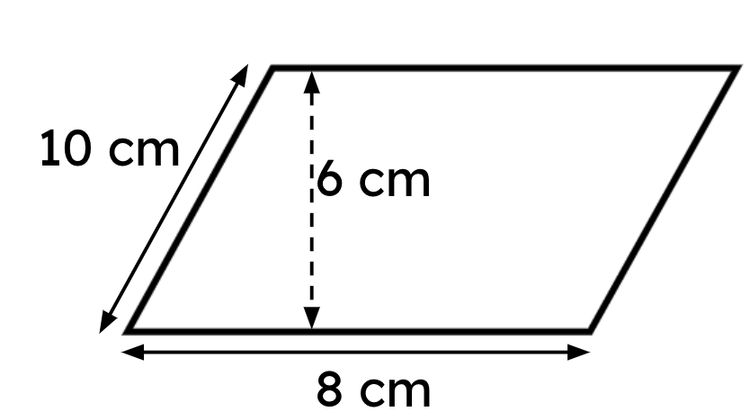
Calculate the area and perimeter of this parallelogram.

An image in a quiz
Area = 48 m$$^2$$ and perimeter = 24 m
Correct answer: Area = 48 m$$^2$$ and perimeter = 36 m
Area = 80 m$$^2$$ and perimeter = 24 m
Area = 80 m$$^2$$ and perimeter = 36 m

To help you plan your 7 maths lesson on: Securing understanding of perimeter and area, download all teaching resources for free and adapt to suit your pupils' needs...