Myths about teaching can hold you back
- Year 10•
- Higher
Checking and securing understanding of advanced angle facts
I can recognise equal corresponding angles, equal alternate angles and supplementary co-interior angles.
- Year 10•
- Higher
Checking and securing understanding of advanced angle facts
I can recognise equal corresponding angles, equal alternate angles and supplementary co-interior angles.
Lesson details
Key learning points
- Corresponding angles are equal if they are on parallel lines and the same side of the transversal.
- Alternate angles are equal if they are on parallel lines and the opposite sides of the transversal.
- Supplementary co-interior angles sum to 180°
Keywords
Transversal - A transversal is a line, line segment, or ray that intersects through two or more lines at distinct (different) points.
Corresponding angles - Corresponding angles are a pair of angles at different vertices on the same side of a transversal in equivalent positions.
Alternate angles - Alternate angles are a pair of angles both between or both outside two line segments that are on opposite sides of the transversal that cuts them.
Co-interior angles - Co-interior angles are on the same side of the transversal line and in between the two other lines.
Common misconception
Alternate angles are always equal to each other.
Alternate angles are equal when a transversal intersects parallel lines. If the transversal intersects a pair of lines that are not parallel then the alternate angles will not be equal.
To help you plan your year 10 maths lesson on: Checking and securing understanding of advanced angle facts, download all teaching resources for free and adapt to suit your pupils' needs...
To help you plan your year 10 maths lesson on: Checking and securing understanding of advanced angle facts, download all teaching resources for free and adapt to suit your pupils' needs.
The starter quiz will activate and check your pupils' prior knowledge, with versions available both with and without answers in PDF format.
We use learning cycles to break down learning into key concepts or ideas linked to the learning outcome. Each learning cycle features explanations with checks for understanding and practice tasks with feedback. All of this is found in our slide decks, ready for you to download and edit. The practice tasks are also available as printable worksheets and some lessons have additional materials with extra material you might need for teaching the lesson.
The assessment exit quiz will test your pupils' understanding of the key learning points.
Our video is a tool for planning, showing how other teachers might teach the lesson, offering helpful tips, modelled explanations and inspiration for your own delivery in the classroom. Plus, you can set it as homework or revision for pupils and keep their learning on track by sharing an online pupil version of this lesson.
Explore more key stage 4 maths lessons from the Angles unit, dive into the full secondary maths curriculum, or learn more about lesson planning.
Equipment
Licence
Prior knowledge starter quiz
6 Questions
Q1.Two lines are if they are straight lines that are always the same (non-zero) distance apart.
Q2.A __________ is a line, line segment, or ray that intersects through two or more lines at distinct (different) points.
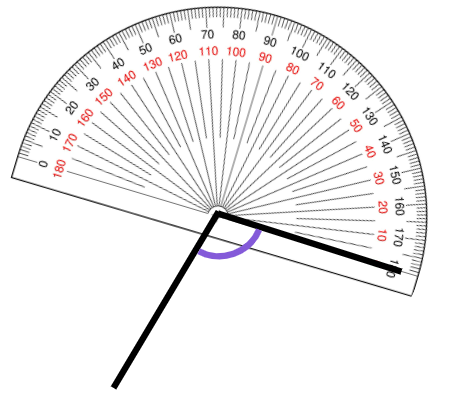
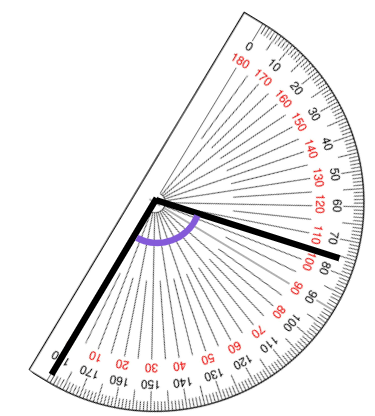
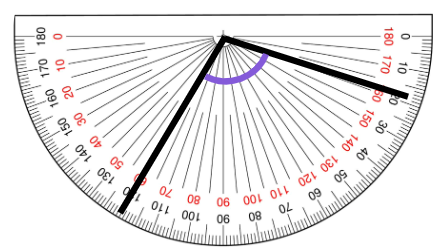
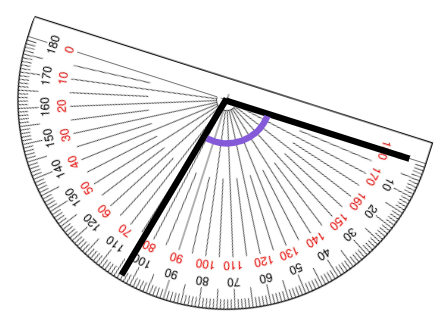
Q3.In which image(s) is the protractor in a correct position to measure the marked angle?


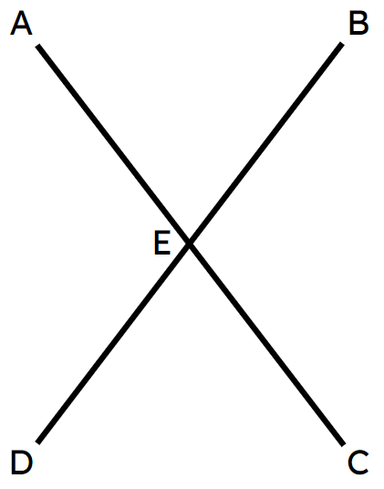
Q4.The size of ∠AED is 105°. Therefore the size of the acute angle ∠DEC is °.

Q5.The size of ∠AED is 105°. Therefore the size of the reflex angle ∠DEA is °.

Q6.The size of ∠AED is 105°. Therefore the size of the obtuse angle ∠CEB is °.

Assessment exit quiz
6 Questions
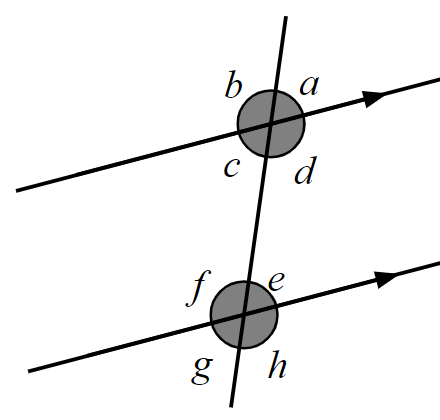
Q1.The angle that is corresponding with angle $$c$$ is angle .

Q2.The angle that is alternate with angle $$c$$ is angle .

Q3.The angle that is co-interior with angle $$c$$ is angle .

Q4.The angle that is vertically opposite angle $$c$$ is angle .

Q5.Angles $$d$$ and $$e$$ are __________.

Q6.Angles $$a$$ and $$g$$ are __________.