


Playing the D minor pentatonic scale



Lesson details
Learning outcome
I can play the ascending and descending minor pentatonic scale and know this scale is often used as the framework for jazz improvisation.
Key learning points
- Jazz music often uses syncopated and swung rhythms.
- The D minor pentatonic scale is made up of the five notes D, F, G, A, C.
- Improvisation means created new musical ideas in-the-moment.
- Improvising can mean choosing small changes, such as changing from playing on the beat to playing on the offbeat.
Keywords
Syncopation - rhythms that emphasise the offbeat
Offbeat - weak beats or notes between the beats
Swing rhythm - where the rhythm Ta-di is divided into unequal parts, creating a "long-short" pattern
Improvisation - creative, in-the-moment musical composition
Minor pentatonic scale - the five tones, la, do, re, mi and so arranged in an ascending or descending order
Common misconception
A scale uses all the notes in step with no leaps.
A scale is a series of notes arranged in an ascending or descending order. Each scale has a unique pattern of intervals (the distance between notes) that defines its character and the intervals are not always the same.
Teacher tip
Use this unit's whole body, breathing, vocal and chant warm-ups to prepare the pupils for music.

Equipment
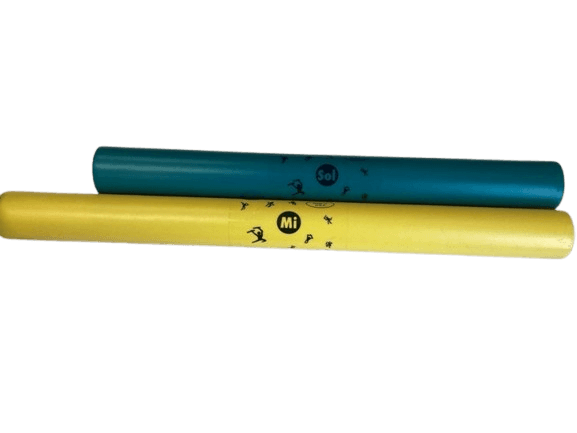
Pitched percussion with the notes D, F, G, A, C, ideally one-between-two.

Licence

Lesson video
Loading...
Prior knowledge starter quiz
4 Questions
Q1. is a music genre that emerged from African-American communities in New Orleans in the late 19th and early 20th centuries, characterised by improvisation.
Q2.Match the musical element to its definition.

Q3.What is a scale?
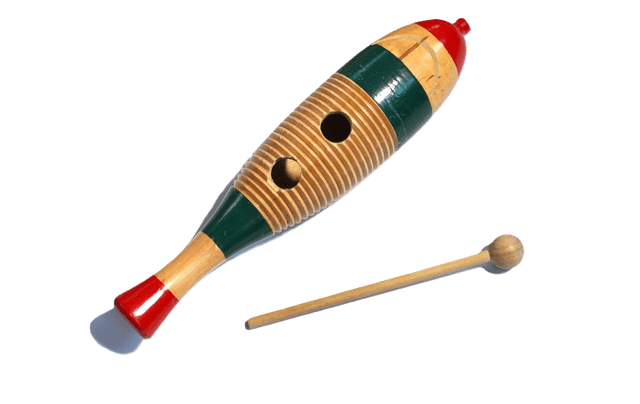
Q4.Which of these is a pitched percussion instrument?

Assessment exit quiz
4 Questions
Q1.True or false? Improvising can mean making small simple changes to a melody or scale to create something new.
Q2.The D minor pentatonic scale consists of __________ notes.
Q3.Syncopation means:
Q4.__________ is where the rhythm Ta-di is divided into unequal parts, creating a "long-short" pattern.
To help you plan your 6 music lesson on: Playing the D minor pentatonic scale, download all teaching resources for free and adapt to suit your pupils' needs...
To help you plan your 6 music lesson on: Playing the D minor pentatonic scale, download all teaching resources for free and adapt to suit your pupils' needs.
The starter quiz will activate and check your pupils' prior knowledge, with versions available both with and without answers in PDF format.
We use learning cycles to break down learning into key concepts or ideas linked to the learning outcome. Each learning cycle features explanations with checks for understanding and practice tasks with feedback. All of this is found in our slide decks, ready for you to download and edit. The practice tasks are also available as printable worksheets and some lessons have additional materials with extra material you might need for teaching the lesson.
The assessment exit quiz will test your pupils' understanding of the key learning points.
Our video is a tool for planning, showing how other teachers might teach the lesson, offering helpful tips, modelled explanations and inspiration for your own delivery in the classroom. Plus, you can set it as homework or revision for pupils and keep their learning on track by sharing an online pupil version of this lesson.
Explore more key stage 2 music lessons from the Compose and rehearse: improvising with the minor pentatonic scale unit, dive into the full primary music curriculum, or learn more about lesson planning.