Blues music and the 12-bar blues


Copyrighted materials: to view and download resources from this lesson, you’ll need to be in the UK and
Lesson details
Learning outcome
I can describe the instruments and features that create a blues sound and I can perform the 12-bar blues chords.
Key learning points
- Blues music is considered one of the most influential styles of the 20th Century.
- The main structure in blues is the 12-bar blues chord sequence which uses the chords C, F and G.
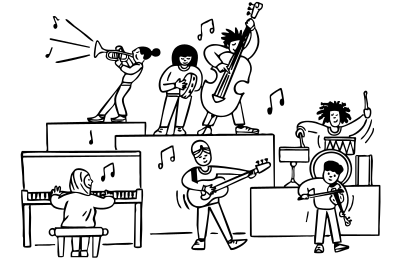
- Main instruments include vocals, piano, guitar, double bass, drum kit and often harmonica, saxophone and brass.
- Slide/bottleneck guitar helps to give the music that ‘bluesy’ sound.
- We can perform the 12-bar blues chord sequence.
Keywords
12-bar blues - the standard chord sequence used in blues music, based on the C, F and G
Chords - two or more notes played at the same time; they are usually played as three notes in a triad
Slide/bottleneck guitar - a guitar playing technique used in blues music which uses a slide or bottleneck to slide up the strings
Common misconception
Playing the sequence incorrectly, particularly missing the final F in the sequence.
Encourage pupils to learn the chord structure from memory and to think in 4-bar phrases. Highlight the last phrase specifically which has two chord changes.
Teacher tip
Although pupils are encouraged to learn the chords in the right hand due to the blues patterns in the rest of the unit, pupils could also learn the chords with the left hand.

Equipment
Keyboard instrument
Licence

Sign in to continue
Our content remains 100% free, but to access certain copyrighted materials, you'll need to sign in. This ensures we’re both staying within the rules.
P.S. Signing in also gives you more ways to make the most of Oak like unit downloads!