


Life expectancy (non-statutory Climate Change & Sustainability)


Lesson details
Learning outcome
I can research and compare life expectancy over time.
Key learning points
- Life expectancy is the measure of how long a person is expected to live.
- Life expectancy varies worldwide and involves many factors.
- The average life expectancy in the UK is around 79 years for males and 83 years for females.
- Life expectancy can be researched using secondary sources of information.
- Life expectancy can be plotted on a line graph to show changes over time.
Keywords
Life expectancy - Life expectancy is the measure of how long a person may live.
Average - An average is a number that is calculated by adding amounts together and then dividing the total by the number of quantities.
Research - To research something is to find out about it or investigate it carefully.
Line graph - A line graph is a type of diagram that can be used to show how something changes over time.
Common misconception
Pupils may think that life expectancy is a prediction for individuals or a guarantee.
Using the lesson resources to support, explain that life expectancy is a measurement we can make using data that we have about human lifespans. We cannot use it to predict how long an individual or group’s life will be.
Teacher tip
It will be interesting for children to think about life expectancy during the time periods they are familiar with from history lessons. Be sure to discuss these and encourage them to think about what they know about lifestyles at these times and how they contributed to a shorter life expectancy.

Equipment
None required.

Content guidance
Depiction or discussion of sensitive content

Supervision
Adult supervision recommended

Licence

Lesson video
Loading...
Prior knowledge starter quiz
6 Questions
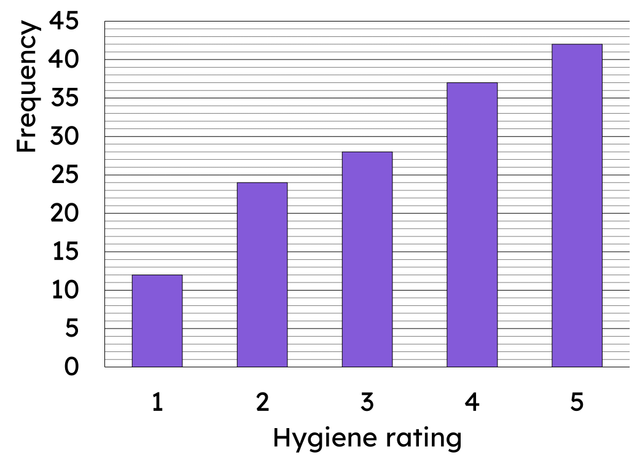
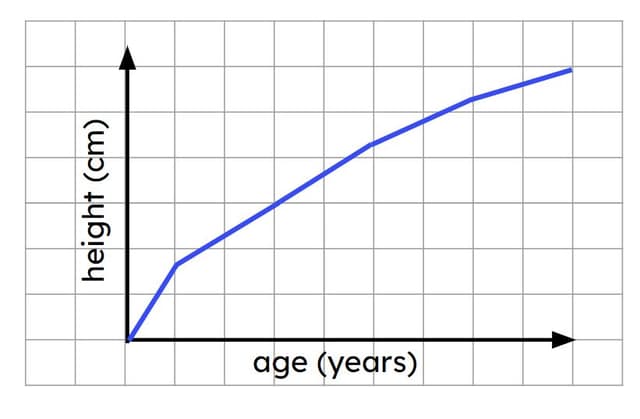
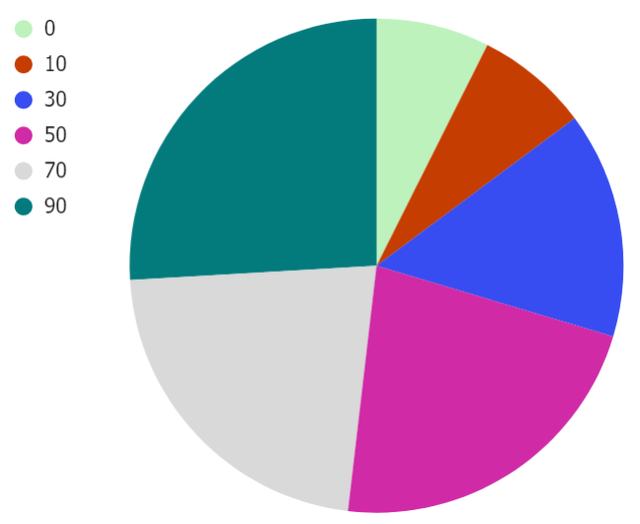
Q1.Which of these types of diagram is a line graph?
Q2.What is pollution?
Q3.What is a person’s diet?
Q4.On this graph, what is shown on the y axis?
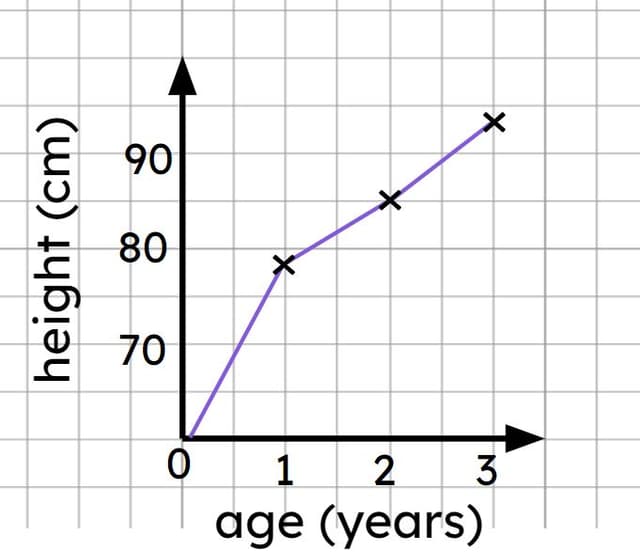
Q5.Match the date to the correct name.

Q6.Starting with the earliest, order these dates.
Assessment exit quiz
6 Questions
Q1.The amount of time a person is expected to live is called their life ...
Q2.Match the life expectancy of UK people in 2024 to the correct group.
Q3.Which of these factors would be likely to increase a person’s life expectancy?
Q4.We can find out more about life expectancy in different places and at different times by carrying out using secondary sources.
Q5.Why would we use a line graph to represent life expectancy each century from 1200 CE to now?
Q6.Starting with the shortest, order the people according to how long their life expectancy would be.
To help you plan your 5 science lesson on: Life expectancy (non-statutory Climate Change & Sustainability), download all teaching resources for free and adapt to suit your pupils' needs...
To help you plan your 5 science lesson on: Life expectancy (non-statutory Climate Change & Sustainability), download all teaching resources for free and adapt to suit your pupils' needs.
The starter quiz will activate and check your pupils' prior knowledge, with versions available both with and without answers in PDF format.
We use learning cycles to break down learning into key concepts or ideas linked to the learning outcome. Each learning cycle features explanations with checks for understanding and practice tasks with feedback. All of this is found in our slide decks, ready for you to download and edit. The practice tasks are also available as printable worksheets and some lessons have additional materials with extra material you might need for teaching the lesson.
The assessment exit quiz will test your pupils' understanding of the key learning points.
Our video is a tool for planning, showing how other teachers might teach the lesson, offering helpful tips, modelled explanations and inspiration for your own delivery in the classroom. Plus, you can set it as homework or revision for pupils and keep their learning on track by sharing an online pupil version of this lesson.
Explore more key stage 2 science lessons from the Human development unit, dive into the full primary science curriculum, or learn more about lesson planning.