

New
New

    Cells

    I can identify that all cells have some structures in common and I can explain that all organisms are unicellular or multicellular.

    New
    New

      Cells

      I can identify that all cells have some structures in common and I can explain that all organisms are unicellular or multicellular.

      These resources were made for remote use during the pandemic, not classroom teaching.

      Switch to our new teaching resources now - designed by teachers and leading subject experts, and tested in classrooms.

      Lesson details

      Key learning points

      1. All organisms (including animals, plants, fungi and micro-organisms) are made up of one or more living cells.
      2. All cells have some structures in common (cell membrane and cytoplasm) and have a three-dimensional shape.
      3. Chemical reactions essential to life occur in cytoplasm; the cell membrane regulates the cell’s internal environment.
      4. Many animals and plants are multicellular; they are made up of many cells organised to form tissues and organs.
      5. Micro-organisms such as bacteria are unicellular – they are made of just one cell.

      Keywords

      • Organism - A living thing made of one or more cells.

      • Cell - The basic unit of all forms of life.

      • Multicellular - An organism made of many cells.

      • Micro-organism - An organism that can only be viewed through a microscope.

      • Unicellular - An organism that consists of a single cell.

      Common misconception

      Pupils may think that all animals and plant are multicellular and that all unicellular organisms are bacteria.

      Lesson explicitly addresses this misconception and the questions in Task A are designed to expose the misconception.

      Make links between the prefixes 'uni-' and 'multi-' to things that pupils might be familiar with such as unicycle or multimedia.
      Teacher tip

      Licence

      This content is © Oak National Academy Limited (2025), licensed on Open Government Licence version 3.0 except where otherwise stated. See Oak's terms & conditions (Collection 2).

      Lesson video

      Loading...

      Prior knowledge starter quiz

      Download quiz pdf

      6 Questions

      Q1.
      What are all living organisms made of?

      tissue
      Correct answer: cells
      organs
      system

      Q2.
      What type of cell is shown in the image?
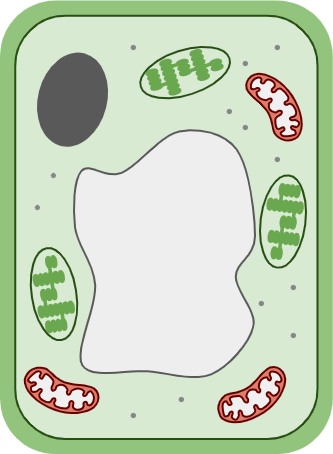
      An image in a quiz
      Correct answer: plant cell
      animal cell
      bacterial cell

      Q3.
      What type of cell is shown in the image?
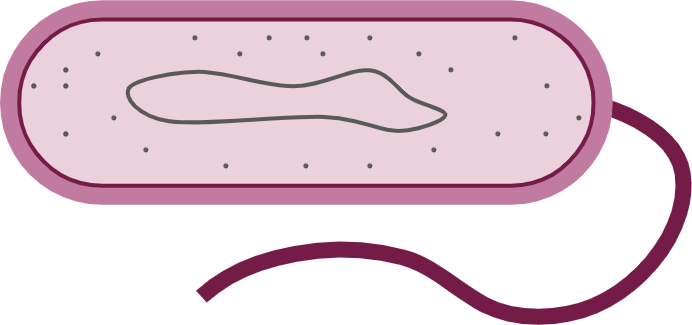
      An image in a quiz
      plant cell
      animal cell
      Correct answer: bacterial cell

      Q4.
      Shown in the image is an animal cell. What is label A pointing to?
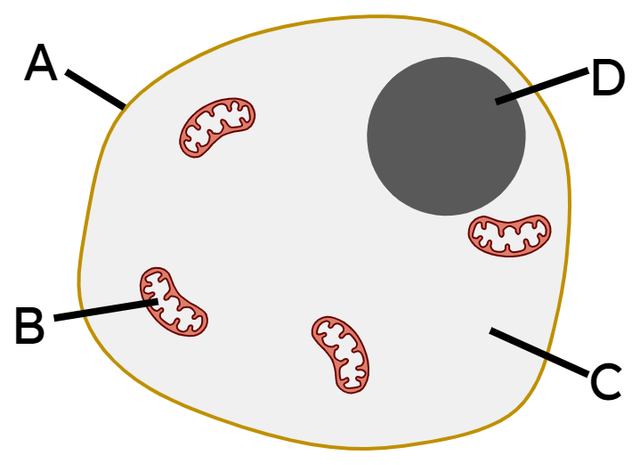
      An image in a quiz
      cell wall
      Correct answer: cell membrane
      nucleus
      cytoplasm

      Q5.
      What is the function of the nucleus of a cell?

      it is the brain of the cell
      it controls what enters and leaves the cell
      Correct answer: it contains genetic material that controls the cell
      it contains enzymes that control respiration

      Q6.
      Which of the following are found in plant cells but not animal cells?

      nucleus
      cytoplasm
      Correct answer: permanent vacuole
      Correct answer: chloroplasts

      Assessment exit quiz

      Download quiz pdf

      6 Questions

      Q1.
      What does the term 'multicellular organism' mean?

      an organism that can be seen without a microscope
      an organism that consists of one cell
      Correct answer: an organism made up of many cells
      an organism that can only be seen with a microscope

      Q2.
      Which of the following is true for unicellular organisms?

      Correct answer: they consist of one cell
      they can usually be seen with the unaided eye
      they are all bacteria
      Correct answer: they are usually microscopic

      Q3.
      Starting with the smallest, sort the organisational structure of multicellular organisms into the correct order.

      1 - cell
      2 - tissue
      3 - organ
      4 - organ system
      5 - organism

      Q4.
      Which of the following are found in both plant and animal cells?

      Correct answer: nucleus
      Correct answer: cytoplasm
      chloroplasts
      cell wall
      Correct answer: cell membrane

      Q5.
      Match the following structures with their functions.

      Correct Answer:cytoplasm,jelly-like substance where chemical reactions take place

      jelly-like substance where chemical reactions take place

      Correct Answer:nucleus,contains DNA, which controls the cell activities

      contains DNA, which controls the cell activities

      Correct Answer:mitochondria,where energy is released through aerobic respiration

      where energy is released through aerobic respiration

      Correct Answer:cell wall,contains cellulose, which provides strength and support to cell

      contains cellulose, which provides strength and support to cell

      Q6.
      Match the following structures with their functions.

      Correct Answer:ribosomes,where protein synthesis occurs

      where protein synthesis occurs

      Correct Answer:cell membrane,controls what enters and exits the cell

      controls what enters and exits the cell

      Correct Answer:permanent vacuole,contains sap which helps keep the cell turgid

      contains sap which helps keep the cell turgid

      Correct Answer:chloroplast,contains chlorophyll, which is where photosynthesis occurs

      contains chlorophyll, which is where photosynthesis occurs

      Lesson appears in

      UnitBiology / Eukaryotic and prokaryotic cells

      UnitCombined science / Eukaryotic and prokaryotic cells