


New
New
Lesson 7 of 12
Electronic systems
I can use electronic components to design and test electronic circuits.

Lesson 7 of 12
New
New
Electronic systems
I can use electronic components to design and test electronic circuits.


Lesson details
Key learning points
- Voltage, current and resistance are the key concepts when designing electronic systems.
- Input, process and output components are used to construct electronic systems.
- CAD and breadboarding are ways of modelling an electronic system in order to test it.
- Printed circuit boards are used in electronic products.
Keywords
Ohm's law - the relationship between voltage, current and resistance
Breadboard - a device used to plug in electrical components and test circuits
Polarity - the directional flow of electrons from one pole to another
Resistance - the opposition to the flow of current
Common misconception
Components all work however they are positioned in a circuit.
Some components are polarised and only work if they are the correct way round.
This lesson is a great opportunity to recap previous electronic circuit learning and build on that to develop more complex circuit designs.

Teacher tip

Equipment

Licence
This content is © Oak National Academy Limited (2026), licensed on Open Government Licence version 3.0 except where otherwise stated. See Oak's terms & conditions (Collection 2).
Lesson video
Loading...
Prior knowledge starter quiz
Download quiz pdf
6 Questions
Q1.Match the terms with the correct definition.
Match the terms with the correct definition.

the electromotive force
the flow of electrons
the opposition to the flow of current
Q2.Identify this component.
Identify this component.
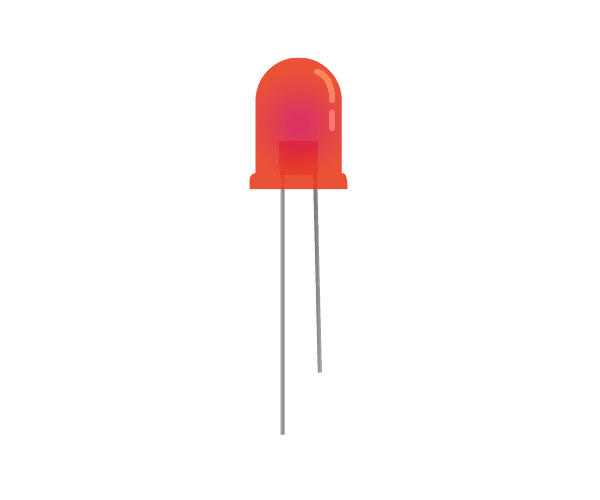
Q3.What are the advantages of modelling circuit designs using CAD?
What are the advantages of modelling circuit designs using CAD?
expensive as you need to buy the components
operator skill required
Q4.Resistors are measured in ohms but they do not have values printed on them. How can we distinguish the value?
Resistors are measured in ohms but they do not have values printed on them. How can we distinguish the value?
Q5.Voltage is measured volts; what is current measured in?
Voltage is measured volts; what is current measured in?
currents
ohms
electrons
Q6.When designing circuits, component symbols are used. Explain why.
When designing circuits, component symbols are used. Explain why.
allows for individual creativity
difficult to copy
Assessment exit quiz
Download quiz pdf
6 Questions
Q1.Match the equation to the concept from Ohm's law.
Match the equation to the concept from Ohm's law.
I x R
V/R
V/I
Q2.'The directional flow of electrons from one pole to another' is a definition for?
'The directional flow of electrons from one pole to another' is a definition for?
Ohm's law
resistance
current
voltage
Q3.Which of these components are polarised?
Which of these components are polarised?
LDR
resistor
switch
Q4.Which component responds to a small current flowing to the base which then enables a large current to flow between the collector to the emitter?
Which component responds to a small current flowing to the base which then enables a large current to flow between the collector to the emitter?
Q5.Match the circuit board material with its function.
Match the circuit board material with its function.
conductor
insulator
Q6.When soldering, it is important to assess the potential hazards and minimise risk. What is this process called?
When soldering, it is important to assess the potential hazards and minimise risk. What is this process called?