


New
New
Lesson 1 of 7

Lesson 1 of 7
New
New
Living or non-living
I can compare and group things into living and non-living.
Lesson details
Key learning points
- The world is made up of things that are living and not living (non-living).
- A living thing is something that is alive and needs food, water and air.
- A thing that is not living does not need food, water and air because it is not alive.
- Living and non-living things can be compared and grouped by looking at what is the same and what is different.
Keywords
Living - Something that is living is alive. It can grow, reproduce, move, feed and get rid of waste material.
Alive - Living things are alive.
Non-living - Something which is non-living is not alive. It does not show any of the characteristics of living things.
Sort - To sort is to put items into different groups.
Common misconception
Plants are not living things because we cannot see them move.
Show examples of living things, including plants.
Ask pupils to bring in an object (or photograph of) from home and share whether they believe it's living or not. This lesson contains a diagnostic question on slide 20 - see additional materials for further guidance.

Teacher tip

Equipment
Paper, pencils, scissors.

Content guidance
- Risk assessment required - equipment
- Exploration of objects

Supervision
Adult supervision required

Licence
This content is © Oak National Academy Limited (2026), licensed on Open Government Licence version 3.0 except where otherwise stated. See Oak's terms & conditions (Collection 2).
Lesson video
Loading...
Prior knowledge starter quiz
Download quiz pdf
6 Questions
Q1.Animals that eat other animals and plants are called ...
Animals that eat other animals and plants are called ...
carnivores.
herbivores.
Q2.A human, a cat and an elephant are all ...
A human, a cat and an elephant are all ...
fish.
reptiles.
Q3.Many fish have bodies that are covered in ...
Many fish have bodies that are covered in ...
Q4.Match each reptile to the correct name.
Match each reptile to the correct name.
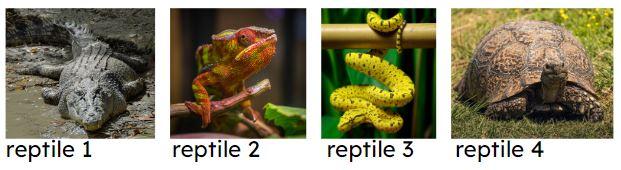

crocodile
chameleon
snake
tortoise
Q5.Which of these statements about amphibians are true?
Which of these statements about amphibians are true?
Amphibians have feathers.
Q6.Which of these animals do not have feathers?
Which of these animals do not have feathers?
parrot
seagull
Assessment exit quiz
Download quiz pdf
6 Questions
Q1.Which of these is a living thing?
Which of these is a living thing?
a fork
a chair
Q2.Which of these is not living?
Which of these is not living?
an apple tree
a bluetit
Q3.The world is made up of things that are ...
The world is made up of things that are ...
living and alive.
living and healthy.
Q4.Animals need air to stay alive. What else do living things need to stay alive?
Animals need air to stay alive. What else do living things need to stay alive?
toys
a bedroom
Q5.A thing that is not living ...
A thing that is not living ...
needs food, water and air.
is alive.
Q6.Sam is sorting things that are living and non-living. Which things are in the wrong place?
Sam is sorting things that are living and non-living. Which things are in the wrong place?
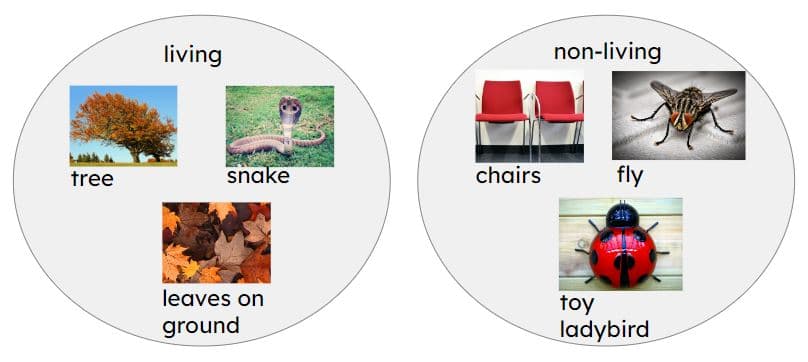
The tree and the fly.
The chairs and the snake.