


- OCR
The spectrum of electromagnetic waves
I can explain what is meant by the spectrum of electromagnetic waves.

- OCR
The spectrum of electromagnetic waves
I can explain what is meant by the spectrum of electromagnetic waves.
Lesson details
Key learning points
- Electromagnetic waves/radiation are transverse oscillations (ripples) in electric and magnetic fields.
- The visible spectrum shows the range of different frequencies (colours) of visible light waves (visible EM radiation).
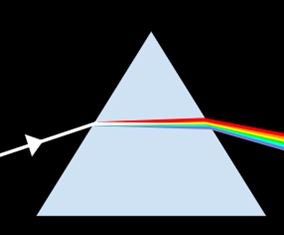
- In the visible spectrum, violet light has the highest frequency and refracts more than red.
- The EM spectrum shows the range of frequencies that EM waves can have (radio, microwave, IR, visible, UV, X-ray, gamma).
- EM waves in different frequency ranges have the same speed in air, but interact differently with different materials.
Keywords
Electromagnetic wave - Electromagnetic waves are oscillations/ripples in electric and magnetic fields.
Frequency - The frequency of a wave gives the number of oscillations that occur per second.
Spectrum - A spectrum is a continuous range or scale.
Refraction - Refraction is when waves enter a new material and change direction.
Radiation - Anything that is emitted (given out) from a system and transfers energy away from that system can be called radiation.
Common misconception
The different 'kinds' of EM radiation are different phenomena to each other and to visible light. Pupils may also think all radiation is dangerous, none is natural and that light is not radiation.
Each 'kind' of EM radiation is the same phenomena as light (i.e. waves/ripples in electric and magnetic fields) just with different frequencies and wavelengths. Try to refer to different frequencies/frequency ranges rather than different 'kinds'.


Licence
Lesson video
Loading...
Prior knowledge starter quiz
6 Questions
Q1.The medium of a wave is ...
Q2.A pupil draws a transverse wave on a piece of paper. The direction of wave travel is from left to right.
Which of the following describes how each part of the medium moves as the wave passes through?
Q3.Which of the following describes the wavelength of a wave?
Q4.Which of the following describes the frequency of a wave?
Q5.Which of the following is the wave equation?
Q6.Refraction is when …
Assessment exit quiz
6 Questions
Q1.Which of the following colours of light has the highest frequency?
Q2.White light is split into its separate colours by this triangular prism. This is because some frequencies (colours) of light are refracted more than others. Which colour is refracted the most?
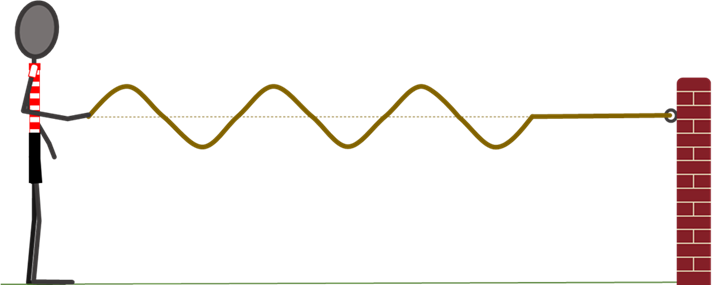
Q3.A pupil makes waves on a rope. The speed of the waves is fixed by the properties of the rope, but the pupil can change the frequency. What happens to the wavelength if the frequency increases?
Q4.Put these electromagnetic waves in order of frequency, from lowest to highest.
Q5.Match each type of electromagnetic radiation with one of its uses.

Security pen ink can only be seen when this is shone onto it.
Thermal cameras detect this.
This is used to transmit television signals over long distances.
This is used to make images of a patient’s bones in hospital.