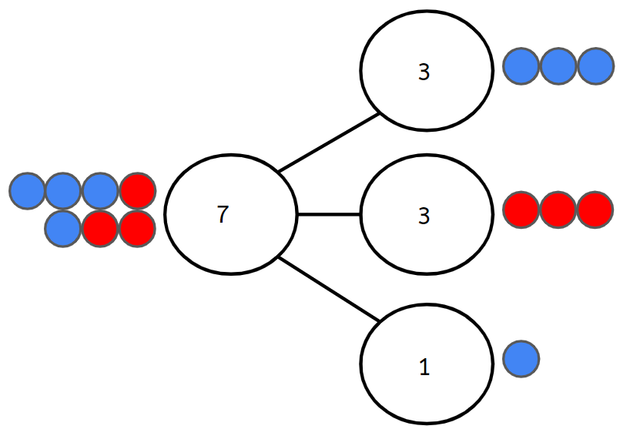
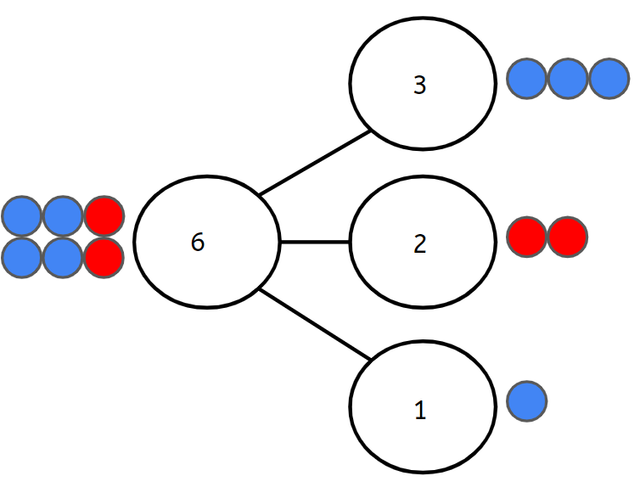
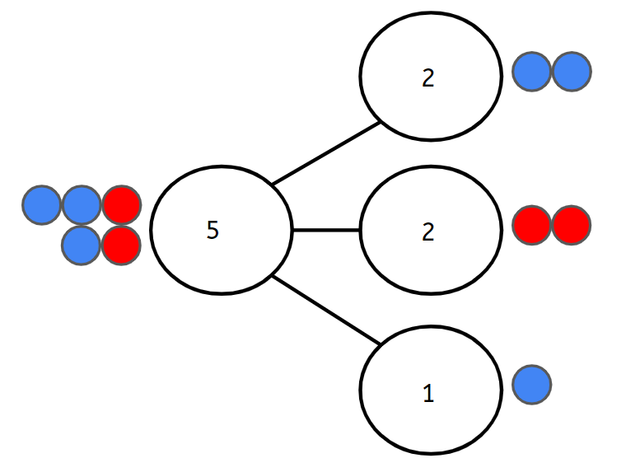
New
New
Lesson 14 of 15
Use a part-part-whole model to represent partitioning into more than two parts
I can use a part-part-whole model to represent a whole partitioned into more than two parts.

Lesson 14 of 15
New
New
Use a part-part-whole model to represent partitioning into more than two parts
I can use a part-part-whole model to represent a whole partitioned into more than two parts.
Lesson details
Key learning points
- Draw attention to the fact that each part is smaller than the whole.
- Partition objects into 3 parts in as many ways as possible.
Keywords
Whole - All of something. Complete.
Part - A piece of a whole.
Partition - To break up a whole into parts.
Part-part-whole model - A pictorial representation that shows the whole and its parts.
Common misconception
Children may not realise that a whole can be split in different ways and into more than two parts.
Provide lots of practical partitioning and recombining of objects and record on a part-part-whole model in different orientations.
Use a variety of part-part-whole models with different numbers of parts and in different orientations for children to practise partitioning and combining numbers. You can make part-part-whole models from paper plates joined with pieces of string.

Teacher tip

Equipment

Licence
This content is © Oak National Academy Limited (2025), licensed on Open Government Licence version 3.0 except where otherwise stated. See Oak's terms & conditions (Collection 2).
Lesson video
Loading...
Prior knowledge starter quiz
Download quiz pdf
6 Questions
Q1.Is 10 the whole or a part?
Is 10 the whole or a part?
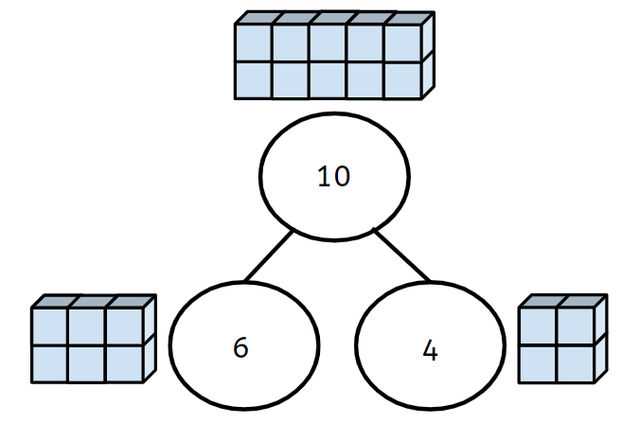

part
Q2.Is 4 the whole or a part?
Is 4 the whole or a part?
whole
Q3.What is the whole?
What is the whole?
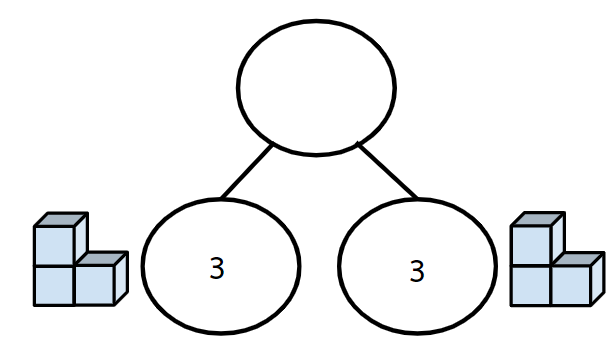
3
4
9
Q4.What is the missing part?
What is the missing part?
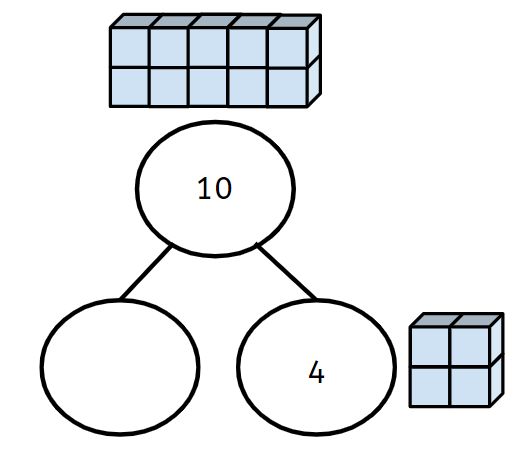
2
4
10
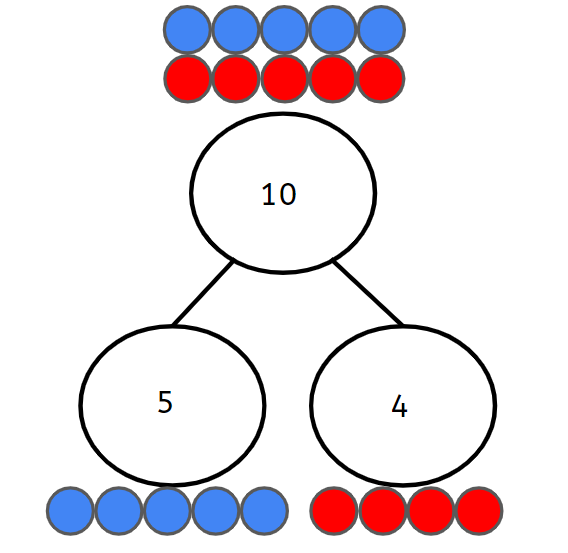
Q5.Which part-whole model is showing Sam’s counters correctly partitioned?
Which part-whole model is showing Sam’s counters correctly partitioned?

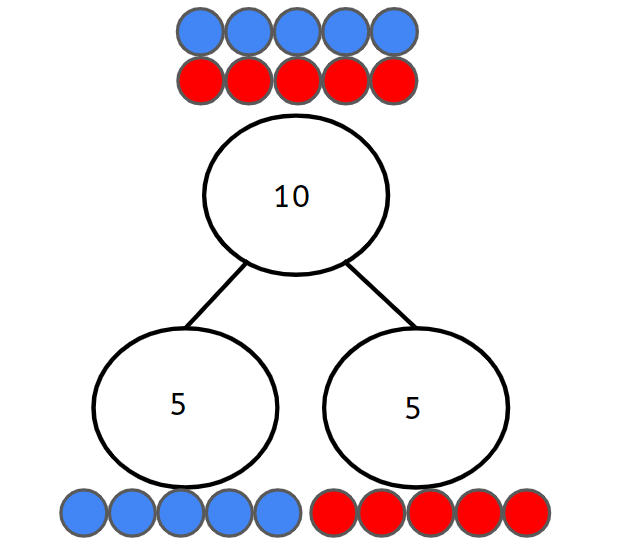

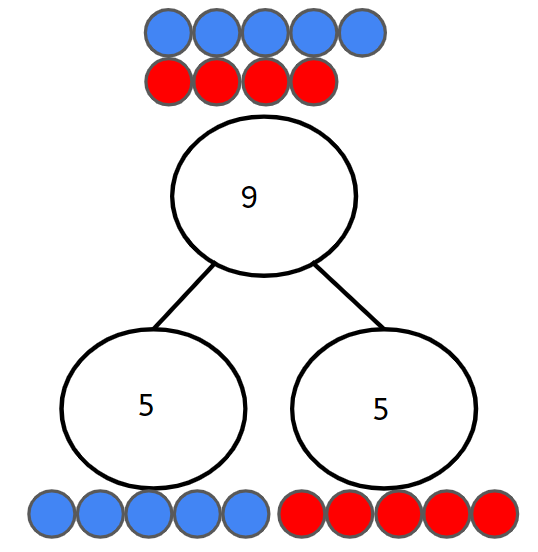
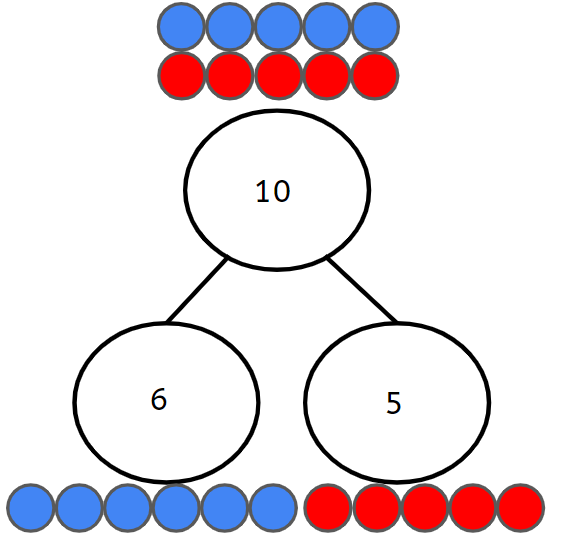
Q6.Which part-whole model is showing Jun's counters correctly partitioned?
Which part-whole model is showing Jun's counters correctly partitioned?


Assessment exit quiz
Download quiz pdf
6 Questions
Q1.Jun thinks that the whole will be bigger than the parts. Is he right?
Jun thinks that the whole will be bigger than the parts. Is he right?
No
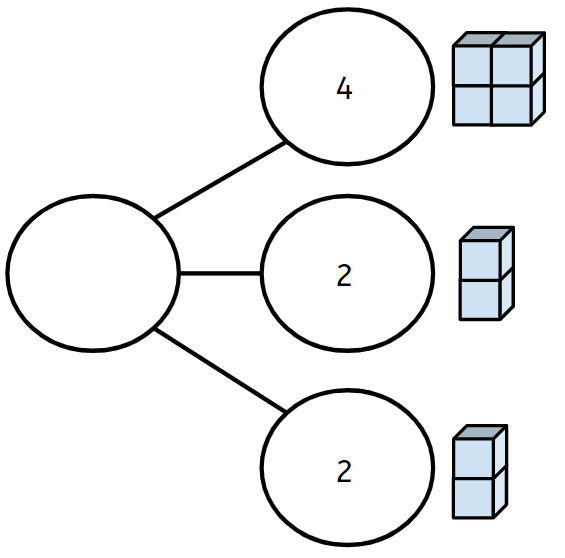
Q2.How many cubes are in the whole?
How many cubes are in the whole?
2
4
6
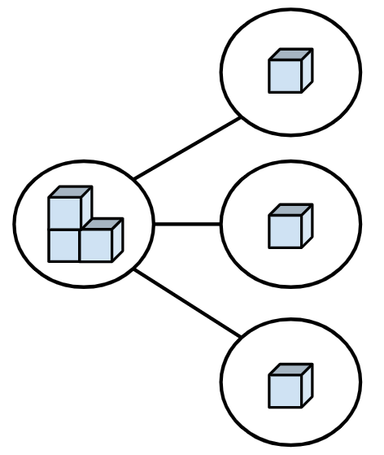
Q3.How many cubes are in each part?
How many cubes are in each part?
2
3
Q4.Sam thinks the whole will be 8. Is this correct?
Sam thinks the whole will be 8. Is this correct?
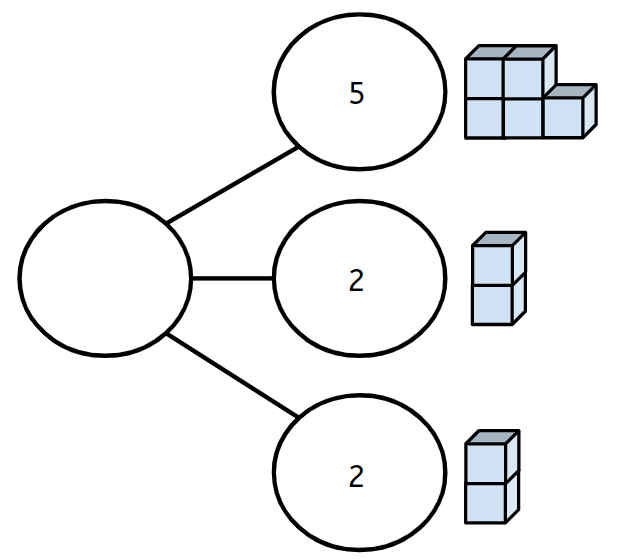
Yes
Q5.Jun thinks the whole will be 8. Is this correct?
Jun thinks the whole will be 8. Is this correct?
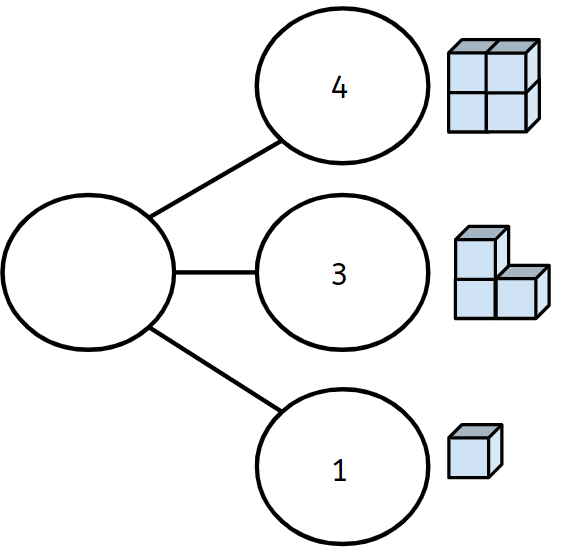
No
Q6.Sam has 3 counters, Jun has 2 counters and Alex has 1 counter. Which part-whole model is showing their counters?
Sam has 3 counters, Jun has 2 counters and Alex has 1 counter. Which part-whole model is showing their counters?