


New
New
Lesson 9 of 15
Use knowledge of the composition of 100 to multiply and divide by 100 in different ways
I can use knowledge of the composition of 100 to multiply and divide by 100 in different ways

Lesson 9 of 15
New
New
Use knowledge of the composition of 100 to multiply and divide by 100 in different ways
I can use knowledge of the composition of 100 to multiply and divide by 100 in different ways
Lesson details
Key learning points
- 100 is ten groups of ten or ten times ten.
- Multiplying by 100 is equivalent to multiplying by 10 and then multiplying by 10 again.
- Each time you multiply by 10 the digits move one place to the left in the place value chart.
Keywords
Placeholder - A placeholder is where we use the digit 0 to hold a place in a number and maintain place value.
Digit - A digit is one of the symbols of a number system. In our number system we use the digits 0, 1, 2, 3, 4, 5, 6, 7, 8 and 9
Common misconception
Pupils may not have much experience in using a Gattegno chart.
Consider pre-teaching for children who lack confidence using Gattegno chart.
As much as possible and through prompting and discussion, get the pupils to make the generalisation that multiplying by 100 is equivalent to multiplying by 10 and then multiplying by 10 again as 10 multiplied by 10 is equal to 100

Teacher tip

Licence
This content is © Oak National Academy Limited (2025), licensed on Open Government Licence version 3.0 except where otherwise stated. See Oak's terms & conditions (Collection 2).
Lesson video
Loading...
Prior knowledge starter quiz
Download quiz pdf
6 Questions
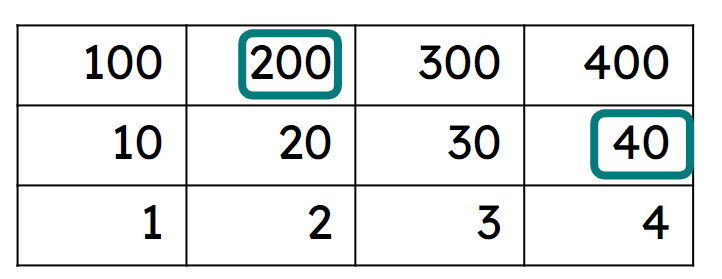
Q1.What is the number being shown on the Gattegno chart?
What is the number being shown on the Gattegno chart?
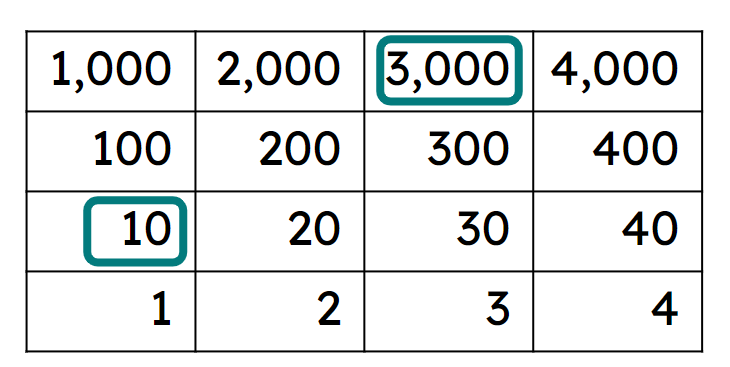
Q2.What is the number being shown on the Gattegno chart?
What is the number being shown on the Gattegno chart?
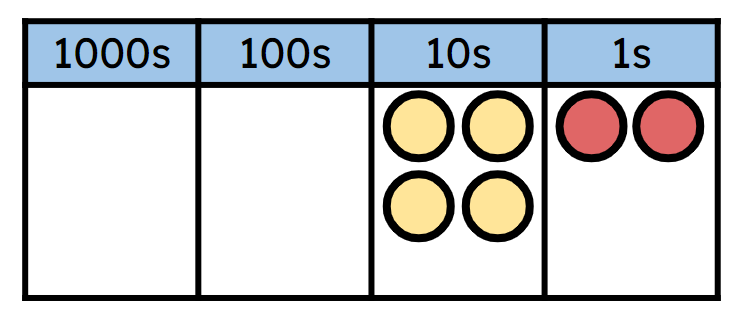
Q3.What is the number being shown on the place value chart?
What is the number being shown on the place value chart?
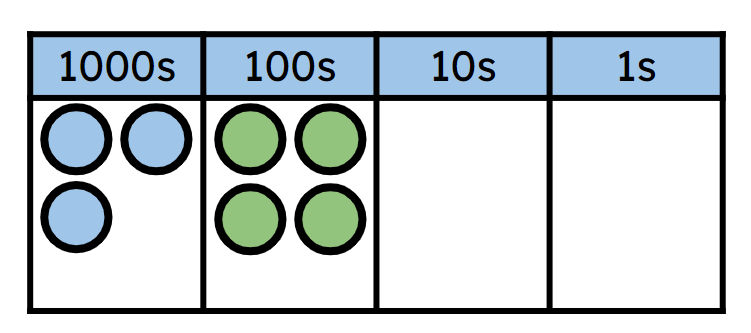
Q4.What is the number being shown on the place value chart?
What is the number being shown on the place value chart?
3,400
Q5.What is the missing number in the following equation? 10 × 8 = 70 +
What is the missing number in the following equation? 10 × 8 = 70 +
Q6.What is the missing number in the following equation?
3 × 100 = 150 ×
What is the missing number in the following equation?
3 × 100 = 150 ×
Assessment exit quiz
Download quiz pdf
6 Questions
Q1.What is the equation being represented on this Gattegno chart?
What is the equation being represented on this Gattegno chart?
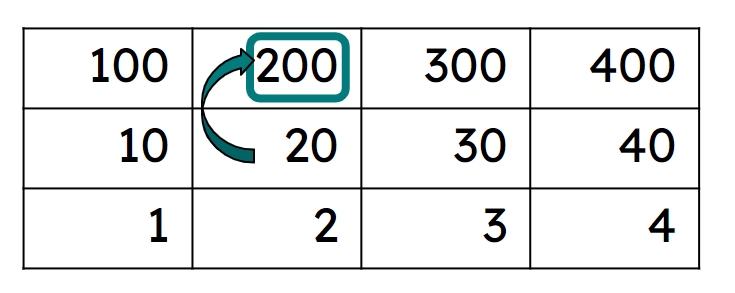
2 × 10 = 20
20 ÷ 10 = 2
200 ÷ 10 = 20
Q2.What is the equation being represented on this Gattegno chart?
What is the equation being represented on this Gattegno chart?
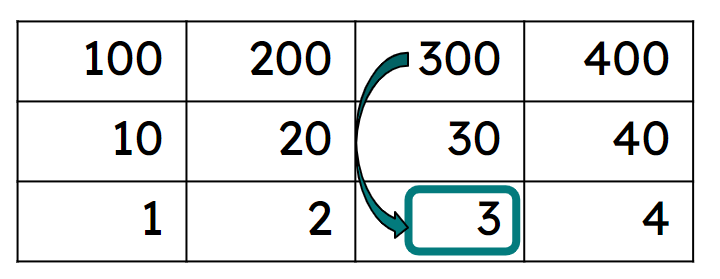
3 × 10 = 30
30 × 10 = 300
300 ÷ 10 = 30
Q3.Match the equivalent expressions.
Match the equivalent expressions.

2 × 10 × 10
20 × 100
2,000 ÷ 10 ÷ 10
200 ÷ 10 ÷ 10
Q4.Match the equivalent expressions.
Match the equivalent expressions.
12 × 10 × 10
8 × 100
8,400 ÷ 10 ÷ 10
500 ÷ 10 ÷ 10
Q5.What is the missing number in the following equation?
11 × 10 × 10 = 11 ×
What is the missing number in the following equation?
11 × 10 × 10 = 11 ×
Q6.What is the missing number in the following equation? 3,400 ÷ 100 = 3,400 ÷ ÷ 10
What is the missing number in the following equation? 3,400 ÷ 100 = 3,400 ÷ ÷ 10