


Draw the rainforest: studies of plants and leaves


Lesson details
Learning outcome
I can observe and sketch a variety of leaves.
Key learning points
- Using organic and geometric shapes for the basic structure creates a more accurate leaf sketch.
- Different line styles can be used to improve a drawing of a leaf.
- Applying tone and shading can be used to make an observational drawing more realistic.
Keywords
Line - a mark made by a moving point, such as a pencil or brush
Geometric shapes - shapes that have uniform measurements and do not appear in nature
Organic shapes - shapes that do not have straight lines and are found in nature
Tone - how light or dark something is
Common misconception
Pupils often think that leaves are uniform in shape, when in fact rainforest leaves vary greatly in shape and size.
Highlight the diversity of plant forms and individuality of shape in the lesson.
Teacher tip
Weather permitting, take the children outside to gather plants and flowers from around the school grounds. If it’s not suitable to collect them outdoors, have some purchased flowers available for the children to observe and explore.

Equipment
Plants and flowers

Licence

Lesson video
Loading...
Prior knowledge starter quiz
6 Questions
Q1.Which of the following tools would be best for creating bold lines in your drawing?
Q2.Which of the following is a key part of creating a collage?
Q3.Match the drawing tool or technique to its purpose.

Q4.What is the best way to add texture to a collage?
Q5.Frottage is an art technique where you over a textured surface, like a leaf or wood, with a pencil or crayon to capture its pattern.
Q6.How might an artist like Henri Rousseau show the diversity of animals in a rainforest scene?
Assessment exit quiz
4 Questions
Q1.Match the keywords to their definitions.
Q2.What colours would you use to shade this green leaf realistically?
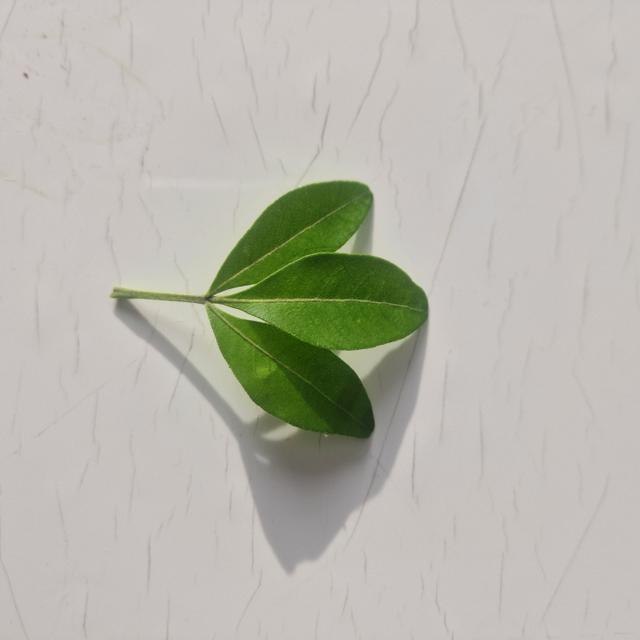




Q3.When drawing a leaf, you can show the veins by using lines to follow the leaf’s shape.
Q4.Put these steps for drawing a leaf in the correct order.
To help you plan your 3 art and design lesson on: Draw the rainforest: studies of plants and leaves, download all teaching resources for free and adapt to suit your pupils' needs...
To help you plan your 3 art and design lesson on: Draw the rainforest: studies of plants and leaves, download all teaching resources for free and adapt to suit your pupils' needs.
The starter quiz will activate and check your pupils' prior knowledge, with versions available both with and without answers in PDF format.
We use learning cycles to break down learning into key concepts or ideas linked to the learning outcome. Each learning cycle features explanations with checks for understanding and practice tasks with feedback. All of this is found in our slide decks, ready for you to download and edit. The practice tasks are also available as printable worksheets and some lessons have additional materials with extra material you might need for teaching the lesson.
The assessment exit quiz will test your pupils' understanding of the key learning points.
Our video is a tool for planning, showing how other teachers might teach the lesson, offering helpful tips, modelled explanations and inspiration for your own delivery in the classroom. Plus, you can set it as homework or revision for pupils and keep their learning on track by sharing an online pupil version of this lesson.
Explore more key stage 2 art and design lessons from the The Rainforest: drawing and painting unit, dive into the full primary art and design curriculum, or learn more about lesson planning.