


The human brain


Lesson details
Learning outcome
I can describe the main regions of the brain and their functions.
Key learning points
- The human brain is an organ made of billions of neurones.
- The brain acts as the processing centre for the nervous system.
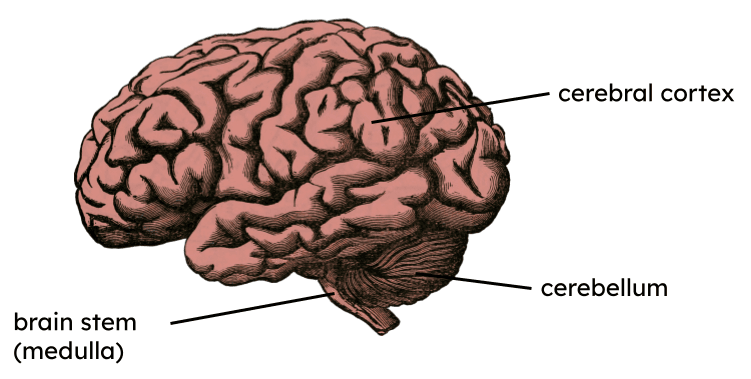
- Key regions of the brain (e.g. cerebral cortex, cerebellum, brain stem) and the processes they regulate.
Keywords
Brain - The organ which controls responses to the internal and external environments.
Cerebral cortex - The part of the brain responsible for conscious thoughts and responses.
Cerebellum - The part of the brain responsible for conscious movement.
Brain stem - The part of the brain responsible for unconscious control of the body.
Common misconception
Confusion around which functions of the brain operate where, the level of detail required, and how these functions can become impaired through injury or disease are common.
The role and parts of the brain are covered in detail and separately to avoid confusion. Quick checks and tasks focus on areas of misunderstanding to reinforce the correct message and help identify those who have got it wrong.
Teacher tip
Don't go into detail about the lobes of the cerebral cortex: they are not needed at GCSE. Instead, focus on ensuring students can correctly assign the functions to the areas, and spend time checking this, with more checks if necessary.

Equipment
None required.

Licence

Lesson video
Loading...
Prior knowledge starter quiz
6 Questions
Q1.What are nerve cells called?
Q2.What does CNS stand for?
Q3.What does the central nervous system include?
Q4.Which type of neurone carries a nerve impulse from the brain to an effector?
Q5.How does a message travel down a neurone?
Q6.True or false? The brain is involved in the initial response of the reflex arc.
Assessment exit quiz
6 Questions
Q1.The human brain is made up of billions of .
Q2.True of false? The right side of the brain controls the right side of the body.
Q3.Match the label to the part of the brain.
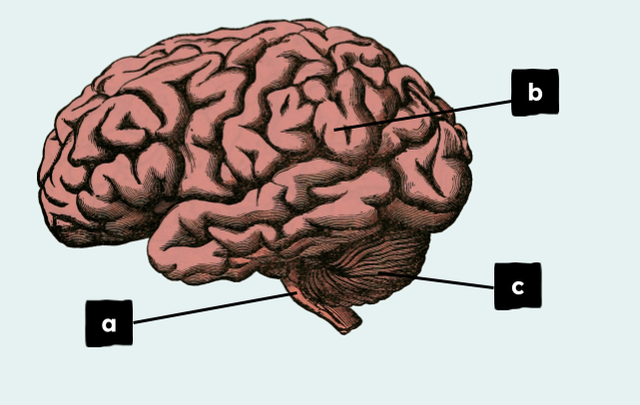

Q4.Which unconscious processes does the brain control?
Q5.Which part of the brain is responsible for conscious movement including balance and coordination.
Q6.Which part of the brain is responsible for consciousness?
To help you plan your 10 biology lesson on: The human brain, download all teaching resources for free and adapt to suit your pupils' needs...
To help you plan your 10 biology lesson on: The human brain, download all teaching resources for free and adapt to suit your pupils' needs.
The starter quiz will activate and check your pupils' prior knowledge, with versions available both with and without answers in PDF format.
We use learning cycles to break down learning into key concepts or ideas linked to the learning outcome. Each learning cycle features explanations with checks for understanding and practice tasks with feedback. All of this is found in our slide decks, ready for you to download and edit. The practice tasks are also available as printable worksheets and some lessons have additional materials with extra material you might need for teaching the lesson.
The assessment exit quiz will test your pupils' understanding of the key learning points.
Our video is a tool for planning, showing how other teachers might teach the lesson, offering helpful tips, modelled explanations and inspiration for your own delivery in the classroom. Plus, you can set it as homework or revision for pupils and keep their learning on track by sharing an online pupil version of this lesson.
Explore more key stage 4 biology lessons from the Coordination and control: the human nervous system unit, dive into the full secondary biology curriculum, or learn more about lesson planning.