


Reforming manufacturing processes


Lesson details
Learning outcome
I can identify and use reforming manufacturing processes.
Key learning points
- Reforming materials changes the shape and the state.
- Injection moulding is a reforming process for polymers.
- Casting is a reforming process for metals.
Keywords
Reforming - changing the material shape and state
Molten - made liquid by heat
Mould - a hollow shape which can be used to form materials
Common misconception
Reforming is the same as deforming.
Reforming changes the state AND the shape; solid, liquid and back to solid. Deforming only changes the shape; the materials always remain a solid.
Teacher tip
Using a glue gun to emulate injection moulding is a great way for students to have a practical experience of an industrial process.

Equipment
Glue gun and mould. Pewter casting facilities.

Content guidance
Risk assessment required - equipment

Supervision
Adult supervision required

Licence

Lesson video
Loading...
Prior knowledge starter quiz
6 Questions
Q1.Accuracy is closeness to the measurement.

Q2.What is this the definition for? 'Using the least amount of resources to achieve a goal'.
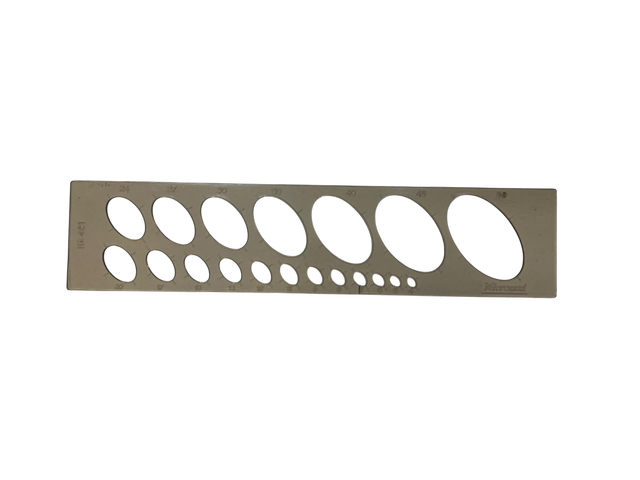
Q3.Identify this piece of equipment.
Q4.A manufacturing process where materials are joined together is called ...
Q5.In the school workshop who is responsible for health and safety?
Q6.What does PPE stand for?
Assessment exit quiz
6 Questions
Q1.Reforming is a manufacturing process where the shape and the __________ are changed.
Q2.Which materials can be reformed?
Q3. is a metal with a low melting range which makes it suitable for using in schools.
Q4.When casting metal, what is the PPE worn made from?
Q5.What are the advantages of injection moulding?
Q6.Why does casting metal use a lot of energy?
To help you plan your 7 design and technology lesson on: Reforming manufacturing processes, download all teaching resources for free and adapt to suit your pupils' needs...
To help you plan your 7 design and technology lesson on: Reforming manufacturing processes, download all teaching resources for free and adapt to suit your pupils' needs.
The starter quiz will activate and check your pupils' prior knowledge, with versions available both with and without answers in PDF format.
We use learning cycles to break down learning into key concepts or ideas linked to the learning outcome. Each learning cycle features explanations with checks for understanding and practice tasks with feedback. All of this is found in our slide decks, ready for you to download and edit. The practice tasks are also available as printable worksheets and some lessons have additional materials with extra material you might need for teaching the lesson.
The assessment exit quiz will test your pupils' understanding of the key learning points.
Our video is a tool for planning, showing how other teachers might teach the lesson, offering helpful tips, modelled explanations and inspiration for your own delivery in the classroom. Plus, you can set it as homework or revision for pupils and keep their learning on track by sharing an online pupil version of this lesson.
Explore more key stage 3 design and technology lessons from the Principles of materials and manufacturing unit, dive into the full secondary design and technology curriculum, or learn more about lesson planning.