


Planning a biography about Charles Darwin's life and theory of evolution



Lesson details
Learning outcome
I can plan the structure and content of a biography about Charles Darwin's life and theory of evolution and I can practise using a range of cohesive devices.
Key learning points
- Writing is most successful when it is planned.
- Our biography of Charles Darwin will contain paragraphs organised by theme and in chronological order.
- We can plan in note form, using our text map to support us in recalling information about the subject of the biography.
- When we write, we use a range of cohesive devices to connect ideas together.
Keywords
Theme - a central idea that the writer intends the audience to engage deeply with
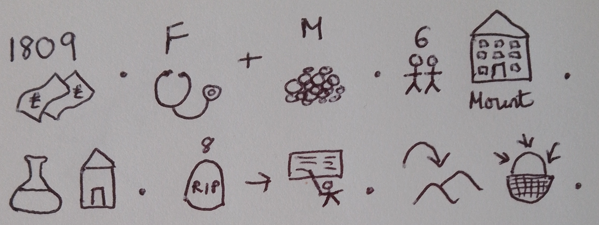
Text map - a visual representation of a series of events, where pictures represent events
Notes - ideas recorded without using complete sentences
Subject-specific vocabulary - vocabulary we use when writing about a particular subject
Cohesive devices - language structures that develop text cohesion
Common misconception
Pupils may struggle to describe Darwin's theory of evolution in simple terms.
You may wish to allow time to model this section to pupils, showing them that a simple explanation can cover the main points briefly.
Teacher tip
Complete lessons on each of the cohesive devices touched on in this lesson can be found in our Grammar curriculum. Encourage children to 'play' with different cohesive devices - usually, different ideas can be connected in many different ways.

Licence

Lesson video
Loading...
Prior knowledge starter quiz
6 Questions
Q1.What is the following an example of? Lions in a population have different levels of jaw strength.
Q2.What did Darwin notice about the Galapagos finches?
Q3.What kinds of variations become more common due to natural selection?
Q4.Why is an unhelpful variation less likely to be passed on to offspring?
Q5.What do we mean if we say a variation helps an individual to be 'more successful'?
Q6.Is this statement true or false? The process of evolution takes many generations and can take thousands or millions of years to make significant changes.
Assessment exit quiz
6 Questions
Q1.Put the events shown in the text map in the correct order.
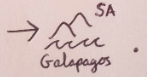
Q2.Which note best matches this picture from our text map of Darwin's biography?
Q3.Put the sections of our Darwin biography in the correct order.
Q4.Match the subject-specific vocabulary words to their meanings.

Q5.Match the subject-specific vocabulary words to their meanings.
Q6.What is the purpose of cohesive devices?
To help you plan your 6 English lesson on: Planning a biography about Charles Darwin's life and theory of evolution, download all teaching resources for free and adapt to suit your pupils' needs...
To help you plan your 6 English lesson on: Planning a biography about Charles Darwin's life and theory of evolution, download all teaching resources for free and adapt to suit your pupils' needs.
The starter quiz will activate and check your pupils' prior knowledge, with versions available both with and without answers in PDF format.
We use learning cycles to break down learning into key concepts or ideas linked to the learning outcome. Each learning cycle features explanations with checks for understanding and practice tasks with feedback. All of this is found in our slide decks, ready for you to download and edit. The practice tasks are also available as printable worksheets and some lessons have additional materials with extra material you might need for teaching the lesson.
The assessment exit quiz will test your pupils' understanding of the key learning points.
Our video is a tool for planning, showing how other teachers might teach the lesson, offering helpful tips, modelled explanations and inspiration for your own delivery in the classroom. Plus, you can set it as homework or revision for pupils and keep their learning on track by sharing an online pupil version of this lesson.
Explore more key stage 2 English lessons from the Charles Darwin: biographical writing unit, dive into the full primary English curriculum, or learn more about lesson planning.