Myths about teaching can hold you back
- Year 6
Solve problems involving remainders in context
I can solve a problem, making appropriate use of the remainder.
- Year 6
Solve problems involving remainders in context
I can solve a problem, making appropriate use of the remainder.
Lesson details
Key learning points
- The remainder can be rounded up or down, depending on context.
- Some problems require the remainder being given as a fraction or a decimal.
Keywords
Long division - Long division is a method used for dividing large numbers by breaking the number down into smaller groups.
Remainder - A remainder is an amount left after a division.
Common misconception
Pupils do not consider the context when identifying what to do with the remainder.
Pupils often respond well to ridiculous examples here such as suggesting some of the class are left behind on a school trip in order to have equal-sized teams. These more extreme examples help consideration of context.
To help you plan your year 6 maths lesson on: Solve problems involving remainders in context, download all teaching resources for free and adapt to suit your pupils' needs...
To help you plan your year 6 maths lesson on: Solve problems involving remainders in context, download all teaching resources for free and adapt to suit your pupils' needs.
The starter quiz will activate and check your pupils' prior knowledge, with versions available both with and without answers in PDF format.
We use learning cycles to break down learning into key concepts or ideas linked to the learning outcome. Each learning cycle features explanations with checks for understanding and practice tasks with feedback. All of this is found in our slide decks, ready for you to download and edit. The practice tasks are also available as printable worksheets and some lessons have additional materials with extra material you might need for teaching the lesson.
The assessment exit quiz will test your pupils' understanding of the key learning points.
Our video is a tool for planning, showing how other teachers might teach the lesson, offering helpful tips, modelled explanations and inspiration for your own delivery in the classroom. Plus, you can set it as homework or revision for pupils and keep their learning on track by sharing an online pupil version of this lesson.
Explore more key stage 2 maths lessons from the Multiplying and dividing by 2-digit numbers unit, dive into the full primary maths curriculum, or learn more about lesson planning.
Equipment
Licence
Prior knowledge starter quiz
6 Questions
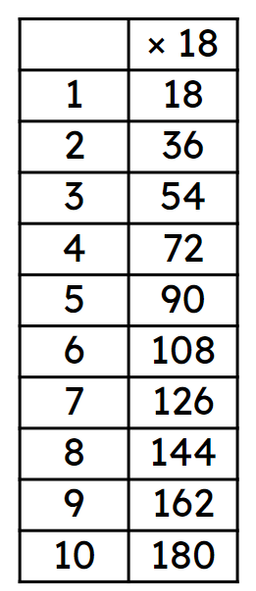
Q1.Use the multiplication facts to derive 20 × 18 =

Q2.Match the division equations to their answers.
282 ÷ 4 = -
70.5
646 ÷ 8 = -
80.75
321 ÷ 4 = -
80.25
Q3.Select which type of answer would be best to use for the following question:
Mrs Jones has 894 football stickers to share amongst her class of 30 pupils. How many stickers will each pupil receive?
Q4.Select which type of answer would be best to use: Mrs Jones’ class raise £894 in the school cake-a-thon.
There are 30 pupils in the class; each raised an equal amount. How much did each pupil raise?
Q5.Elm coaches uses 918 litres of petrol each day.
There are 30 coaches. How many litres does each coach use per day? Give your answer as a decimal. litres
Q6.Beech buses Coastliner runs 28 times a day.
Each day the Coastliner travels 7.7 km.
How far is each journey? Give your answer as a decimal. km
Assessment exit quiz
6 Questions
Q1.Use the multiplication facts to derive 25 × 18 =

Q2.Match the division equations to their remainders.
282 ÷ 7 = 40 -
r 2
643 ÷ 8 = 80 -
r 3
544 ÷ 9 = 60 -
r 4
545 ÷ 6 = 90 -
r 5
496 ÷ 7 = 70 -
r 6