Choose exam board for KS4 Computer Science (GCSE)
Choose exam board for KS4 English
Choose exam board for KS4 French
Choose exam board for KS4 Geography
Choose exam board for KS4 German
Choose exam board for KS4 History
Choose tier for KS4 Maths
Choose exam board for KS4 Music
Choose exam board for KS4 Physical education (GCSE)
Choose exam board for KS4 Religious education (GCSE)
Choose exam board for KS4 Spanish

Understanding and calculating the range
Lesson details

Learning outcome

I can understand what the range is measuring, how it is measuring it and calculate the range from data presented in a range of different ways.

Key learning points

  1. The range is a measure of spread.
  2. The range is difference between the highest and lowest data point.
  3. The range shows how spread out (far apart) the extreme values in the data set are.

Keywords

  • Range - The range is a measure of spread. It is found by finding the difference between the highest and lowest values.

  • Spread/Dispersion - The spread/dispersion of data values describes how far apart the pieces of data are.

Common misconception

Pupils may often write the range as '3 to 10' or '10 - 3' rather than a single value.

Remind pupils that the range is a single value which describes how far apart the extreme values are.

Teacher tip

Pupils could be challenged to make their own data sets that have particular averages and a certain range.

Licence

This content is © Oak National Academy Limited (2025), licensed on Open Government Licence version 3.0
except where otherwise stated. See Oak's terms & conditions
(Collection 2).

Lesson video

Loading...

Prior knowledge starter quiz

6 Questions

Q1.
Work out: $$ 128 - 94 $$ =

Correct Answer: 34, thirty four

Q2.
Work out: $$ (-28) - (-47) $$ =

Correct Answer: 19, nineteen

Q3.
Work out: $$ 63.8 - 19.7 $$ =

Correct Answer: 44.1

Q4.
are a collection of information.

Correct Answer: Data, data

Q5.
Two numbers have a difference of 10. The smaller number is 53. The other number is

Correct Answer: 63, sixty three, sixty-three

Q6.
Two positive numbers have a difference of 8. One of the numbers is 6. The other number is

Correct Answer: 14, fourteen

6 Questions

Q1.
The range is a measure of spread. It is found by finding the between the two extreme points; the lowest and highest values.

Correct Answer: difference

Q2.
Select the data sets where you can calculate a range.

Correct answer: 4, 7, 5, 8, 3, 1, 0
cat, dog, rabbit, dog, cat, rabbit, hamster
Correct answer: -4, -2, -5, -1, 0, -7
Correct answer: 5, 5, 5, 5, 5, 5, 5, 5, 5
ash, birch, oak, maple, sycamore, oak

Q3.
A large data set has the extreme values of 24.6 and 59.2. The range of the data set is .

Correct Answer: 34.6

Q4.
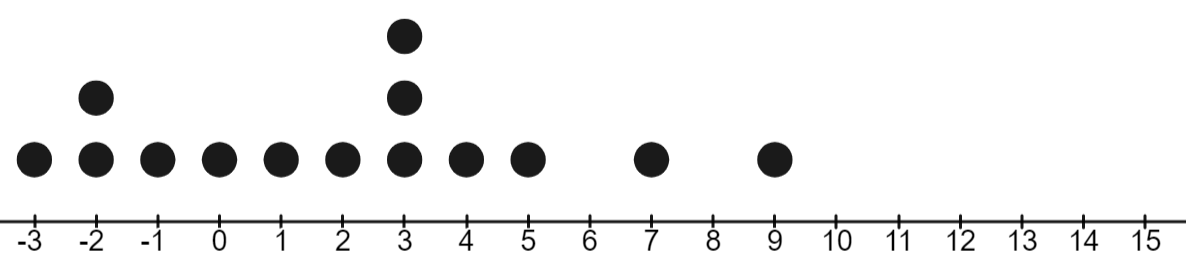
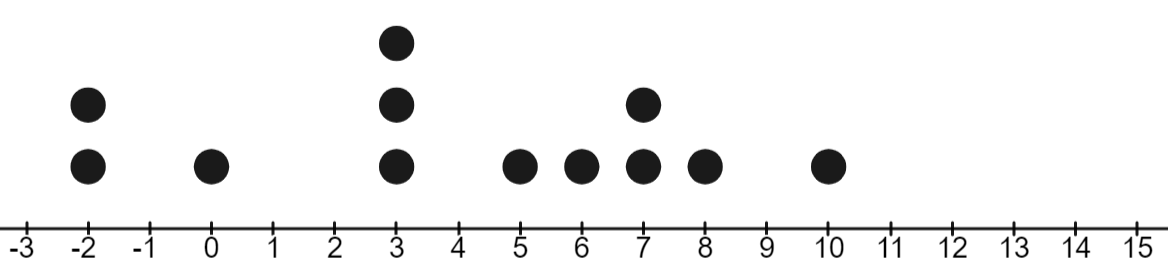
Which of these dot plots is most varied?

Correct Answer: An image in a quiz
An image in a quiz
An image in a quiz
An image in a quiz

Q5.
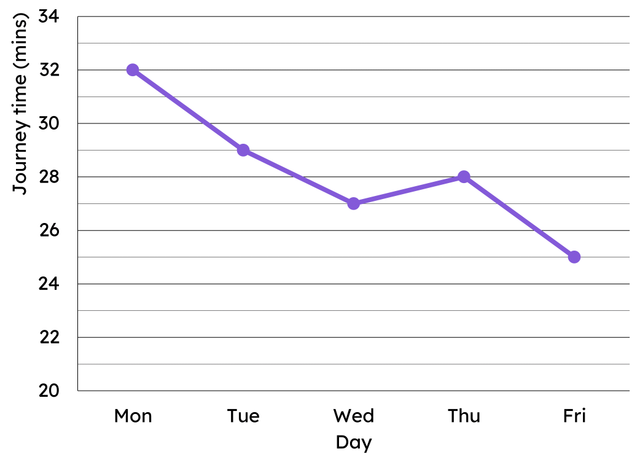
This line graph shows data about journey times to school over a week. The range of the journey times is minutes.

An image in a quiz
Correct Answer: 7, 7, seven

Q6.
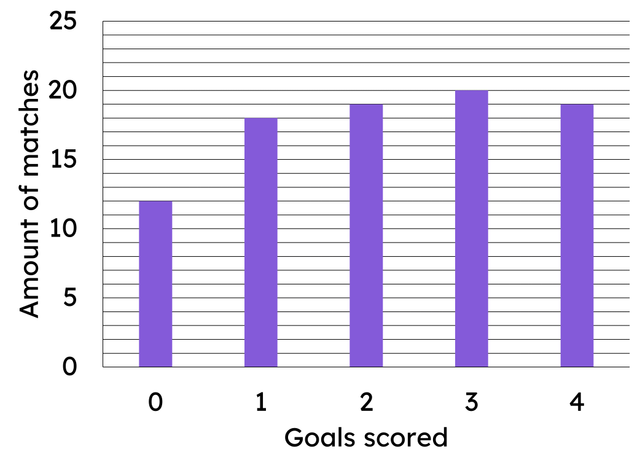
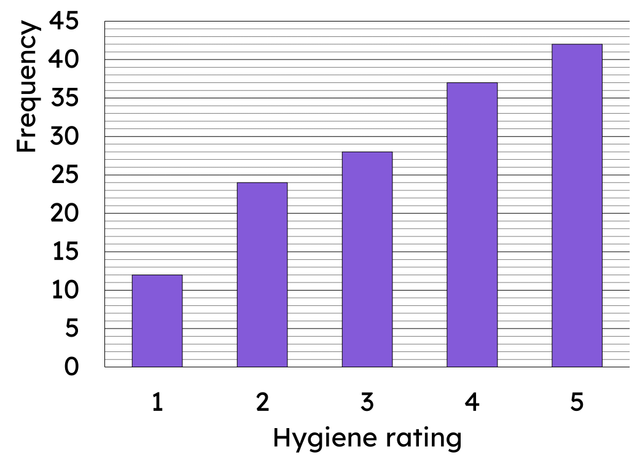
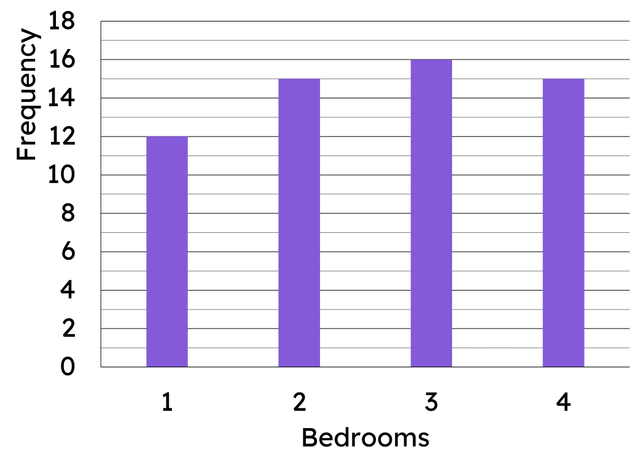
Which of these bar charts show data with a range of 4?

Correct Answer: An image in a quiz
An image in a quiz
Correct Answer: An image in a quiz
An image in a quiz
An image in a quiz

To help you plan your 8 maths lesson on: Understanding and calculating the range, download all teaching resources for free and adapt to suit your pupils' needs...