Myths about teaching can hold you back
- Year 7
Checking understanding of basic transformations
I can describe how an object has moved or changed.
- Year 7
Checking understanding of basic transformations
I can describe how an object has moved or changed.
Lesson details
Key learning points
- A congruent shape has not changed size
- Two shapes can be congruent even if one has been reflected or rotated
- An image can be described in terms of its object
- The description states how the object has been changed
Keywords
Object - The object is the starting figure before a transformation has been applied.
Image - The image is the resulting figure after a transformation has been applied.
Transformation - A transformation is a process that may change the size, orientation or position of a shape.
Congruent - If one shape can fit exactly on top of another using rotation, reflection or translation, then the shapes are congruent.
Invariant - A property of a shape is invariant if that property has not changed after the shape is transformed.
Common misconception
Students may believe two shapes are congruent based purely on the shape and not the size as well.
Consider squares - all squares have the same angles and are visually identical but if the lengths are different they're not congruent.
To help you plan your year 7 maths lesson on: Checking understanding of basic transformations, download all teaching resources for free and adapt to suit your pupils' needs...
To help you plan your year 7 maths lesson on: Checking understanding of basic transformations, download all teaching resources for free and adapt to suit your pupils' needs.
The starter quiz will activate and check your pupils' prior knowledge, with versions available both with and without answers in PDF format.
We use learning cycles to break down learning into key concepts or ideas linked to the learning outcome. Each learning cycle features explanations with checks for understanding and practice tasks with feedback. All of this is found in our slide decks, ready for you to download and edit. The practice tasks are also available as printable worksheets and some lessons have additional materials with extra material you might need for teaching the lesson.
The assessment exit quiz will test your pupils' understanding of the key learning points.
Our video is a tool for planning, showing how other teachers might teach the lesson, offering helpful tips, modelled explanations and inspiration for your own delivery in the classroom. Plus, you can set it as homework or revision for pupils and keep their learning on track by sharing an online pupil version of this lesson.
Explore more key stage 3 maths lessons from the Transformations unit, dive into the full secondary maths curriculum, or learn more about lesson planning.
Licence
Lesson video
Loading...
Prior knowledge starter quiz
6 Questions
Q1.Which is bigger: 4.2 cm or 4 cm?
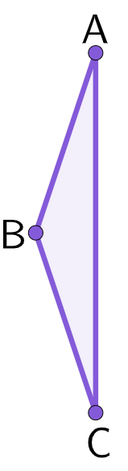
Q2.In this triangle, the largest interior angle is located at which vertex?

Q3.A half turn means __________ $$^{\circ}$$
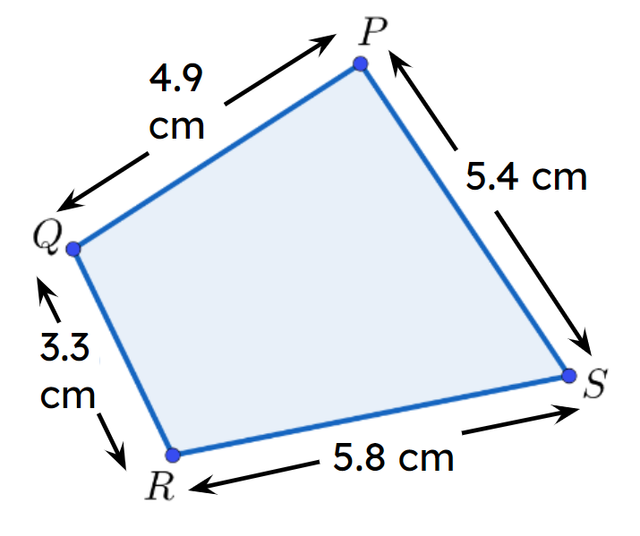
Q4.Match the edges to the correct lengths.

QP -Â
4.9 cm
PS -Â
5.4 cm
RQ -Â
3.3 cm
SR -Â
5.8 cm
Q5.Select all the quadrilaterals.
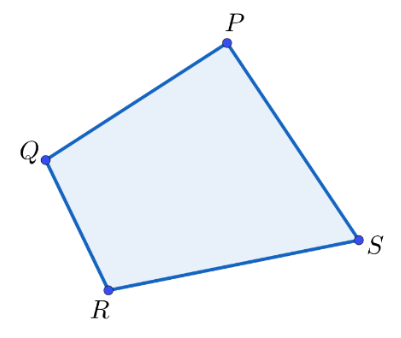
Q6.The vertices in the quadrilateral PQRS has been labelled in the direction.

Assessment exit quiz
6 Questions

Q1.A transformation is a process that may change the size, orientation or of a shape.
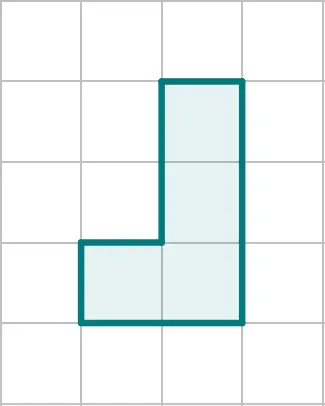
Q2.This L shape is flipped over once, which of these could be the image?


Q3.The quadrilateral ABCD is transformed. How should the image of vertex A be labelled?
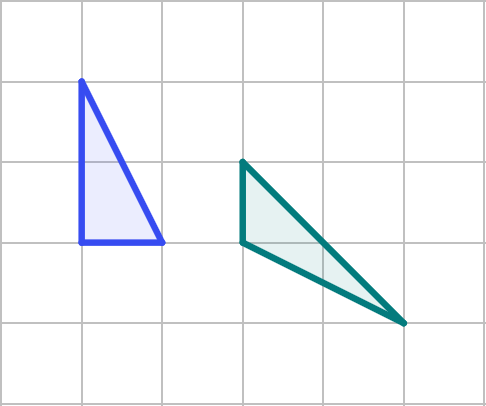
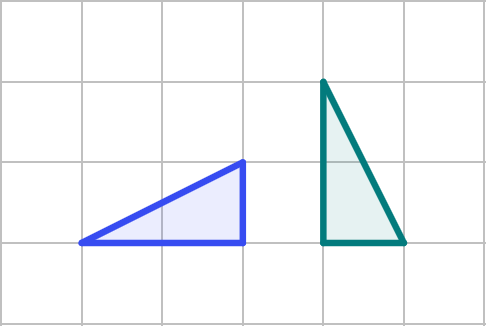
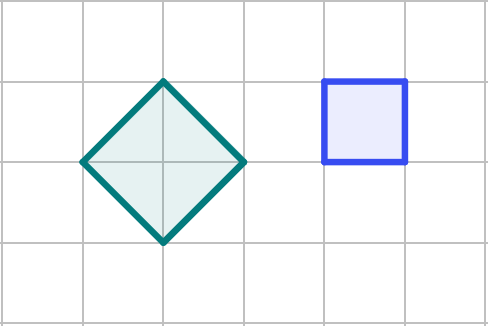
Q4.Which of these show a pair of congruent shapes?


Q5.Regardless of whether an object is flipped, twisted or moved which properties are invariant?
Q6.Which figure does this description match: The object has been twisted half a turn.