


How levers can help us


Lesson details
Learning outcome
I can describe how levers can make difficult work easier.
Key learning points
- A lever is a simple mechanism or machine which is useful for lifting things.
- A lever allows a smaller force to have a greater effect.
- The object you are lifting is called the load.
- The force you apply to the load to make an object move is called the effort.
- A lever requires different amounts of force depending on where the pivot is positioned.
Keywords
Force - A force is a push or a pull. Forces can make objects move, slow down, change direction or change shape.
Lever - A lever is a simple mechanism or machine which is useful for lifting things.
Load - The load is the object being lifted.
Effort - The effort is the force needed to do a job.
Pivot - The pivot is the fixed point where a lever turns.
Common misconception
All levers work in the same way.
Teaching that the position of the pivot (fulcrum) and the effort compared to load can vary.
Teacher tip
Children will learn how levers make our lives easier and will have the chance to measure how they can reduce the effort needed to lift objects.

Equipment
Force meters, stiff wooden rulers or rods, masses, elastic bands, sticky tape.

Content guidance
Risk assessment required - equipment

Supervision
Adult supervision required

Licence

Lesson video
Loading...
Prior knowledge starter quiz
6 Questions
Q1.Forces are and pulls.

Q2.Which of the following is not caused by a force?
Q3.Which type of force do you use when you close scissors to cut paper?
Q4.What unit are forces measured in?
Q5.What is another name for force meters?
Q6.Which of the following is a type of friction force?
Assessment exit quiz
6 Questions
Q1.A __________ is a simple mechanism or machine which is useful for lifting or moving things. A seesaw is an example of one of these.
Q2.A lever allows a smaller force to have a __________ effect.
Q3.When you use a lever, the object you are lifting or moving is called ...
Q4.When you use a lever, the force you apply to make an object move is called...
Q5.The point along a lever on which it turns is called the .
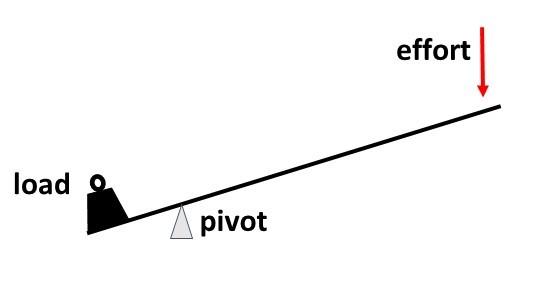
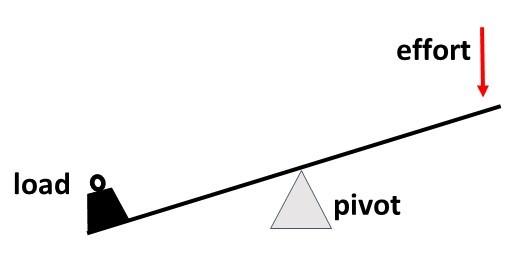
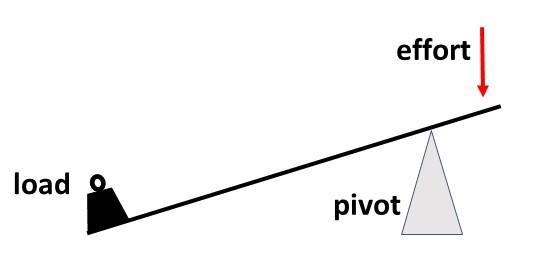
Q6.Look at the position of the pivot in these diagrams. In which one would the least effort be needed to lift the load?
To help you plan your 5 science lesson on: How levers can help us, download all teaching resources for free and adapt to suit your pupils' needs...
To help you plan your 5 science lesson on: How levers can help us, download all teaching resources for free and adapt to suit your pupils' needs.
The starter quiz will activate and check your pupils' prior knowledge, with versions available both with and without answers in PDF format.
We use learning cycles to break down learning into key concepts or ideas linked to the learning outcome. Each learning cycle features explanations with checks for understanding and practice tasks with feedback. All of this is found in our slide decks, ready for you to download and edit. The practice tasks are also available as printable worksheets and some lessons have additional materials with extra material you might need for teaching the lesson.
The assessment exit quiz will test your pupils' understanding of the key learning points.
Our video is a tool for planning, showing how other teachers might teach the lesson, offering helpful tips, modelled explanations and inspiration for your own delivery in the classroom. Plus, you can set it as homework or revision for pupils and keep their learning on track by sharing an online pupil version of this lesson.
Explore more key stage 2 science lessons from the Forces including simple machines unit, dive into the full primary science curriculum, or learn more about lesson planning.