


Water resistance: do and review


Lesson details
Learning outcome
I can carry out an investigation into water resistance and evaluate results.
Key learning points
- Scientists take, repeat and compare measurements using a range of scientific equipment.
- The evaluation of an investigation can include an explanation of, and degree of trust in, the results.
- Greater surface area on a moving object can increase water resistance.
Keywords
Water resistance - Water resistance is a type of friction force which acts between water and the surface of an object.
Trust - How reliable we think the results of an investigation are.
Reliable - If a result is reliable, it measures something consistently.
Evaluation - In the evaluation of an investigation, scientists judge how reliable the results and conclusion are.
Common misconception
All objects experience the same amount of water resistance, regardless of their size or shape.
Discussion and explicit teaching. The investigation they carry out will show them that this is not true.
Teacher tip
This lesson should link directly to the previous lesson in this unit (Lesson 7) whereby children planned how they are going to find answers to the question: Does the shape of an object affect water resistance?

Equipment
Modelling dough, 2 litre bottles, water, trays, equipment to film in slo-motion, stopwatches.

Content guidance
Risk assessment required - equipment

Supervision
Adult supervision required

Licence

Lesson video
Loading...
Prior knowledge starter quiz
6 Questions
Q1.Match the force created, to the example:

Q2.The the surface area of a moving object, the greater the air resistance.
Q3.Air resistance and water resistance are both types of friction that act in the direction to the direction of movement.
Q4.On which part of moving objects does water resistance act?
Q5.Which of these would you find in a conclusion?
Q6.Why do runners sometimes use parachutes in training?
Assessment exit quiz
6 Questions
Q1.Which of this equipment would not help you measure time?
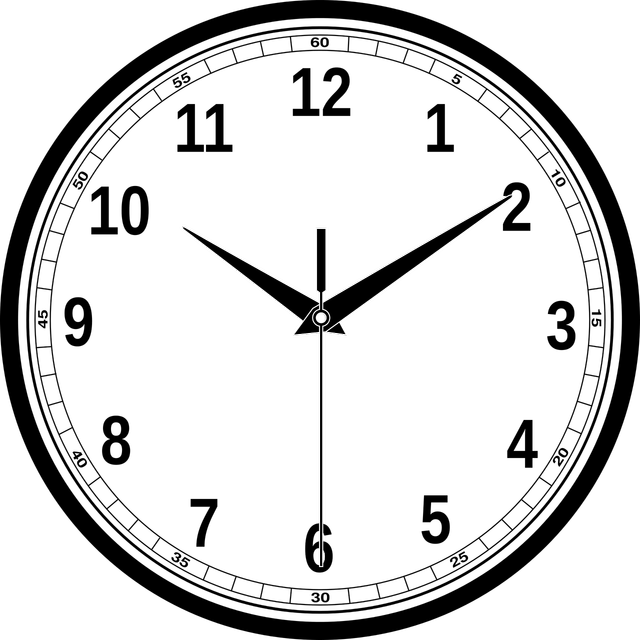
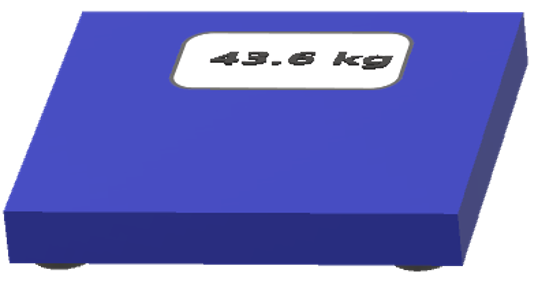

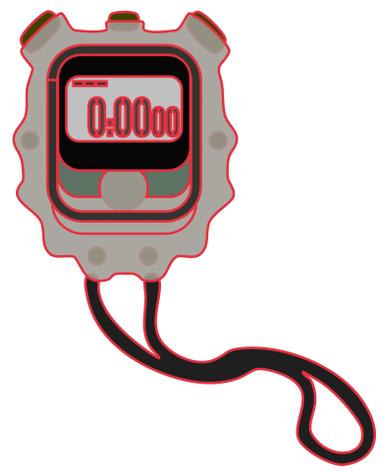
Q2.Which of these are non-contact forces?
Q3.If the results of an investigation are reliable, it means you can ...
Q4.Scientists take repeat measurements to ...
Q5.In the of an investigation, scientists judge how reliable the conclusion is. This can include an explanation of, and degree of trust in, the results.
Q6.Match the size of the surface area to its effect on a moving object.
To help you plan your 5 science lesson on: Water resistance: do and review, download all teaching resources for free and adapt to suit your pupils' needs...
To help you plan your 5 science lesson on: Water resistance: do and review, download all teaching resources for free and adapt to suit your pupils' needs.
The starter quiz will activate and check your pupils' prior knowledge, with versions available both with and without answers in PDF format.
We use learning cycles to break down learning into key concepts or ideas linked to the learning outcome. Each learning cycle features explanations with checks for understanding and practice tasks with feedback. All of this is found in our slide decks, ready for you to download and edit. The practice tasks are also available as printable worksheets and some lessons have additional materials with extra material you might need for teaching the lesson.
The assessment exit quiz will test your pupils' understanding of the key learning points.
Our video is a tool for planning, showing how other teachers might teach the lesson, offering helpful tips, modelled explanations and inspiration for your own delivery in the classroom. Plus, you can set it as homework or revision for pupils and keep their learning on track by sharing an online pupil version of this lesson.
Explore more key stage 2 science lessons from the Forces including simple machines unit, dive into the full primary science curriculum, or learn more about lesson planning.