


Nutrient-rich meal: planning (non-statutory)


Lesson details
Learning outcome
I can plan a meal to include the right types and amount of nutrients.
Key learning points
- A healthy diet is essential for good health.
- A meal plan gives your body the nutrients it needs every day.
- Secondary sources can help you to plan a nutrient-rich meal.
Keywords
Diet - A diet is the sort of food animals including humans eat regularly.
Nutrient - A nutrient is any substance that plants or animals need in order to live and grow.
Amount - An amount is a quantity of something.
Secondary source - Secondary sources are texts, images or objects created using information gathered by others.
Food group - Food groups are created by grouping together foods with similar nutritional values, such as proteins.
Common misconception
Pupils may think that humans need to eat the same amounts of different types of food to stay healthy.
Emphasise that humans need to eat different amounts of different foods as part of a healthy diet.
Teacher tip
This lesson links well with learning from 'Cooking and nutrition' within the Year 3 Design and technology curriculum.

Equipment
Access to secondary sources such as online recipes and recipe books.

Content guidance
Depiction or discussion of sensitive content

Supervision
Adult supervision recommended

Licence

Lesson video
Loading...
Prior knowledge starter quiz
6 Questions
Q1.Which of these do living things need to stay alive?
Q2.Which of these statements is true?
Q3.Which of these images shows the Eatwell plate?
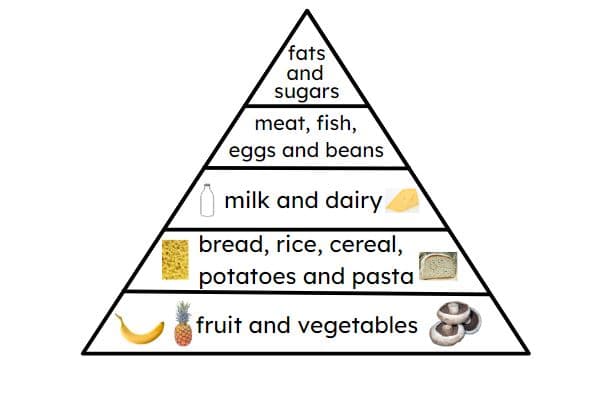
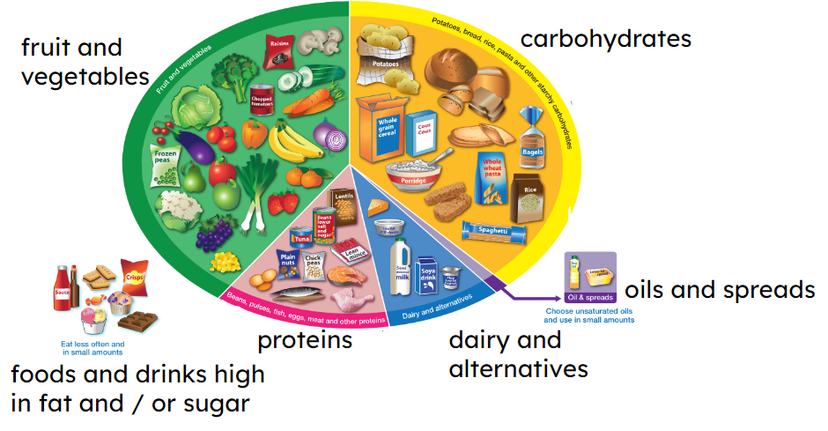
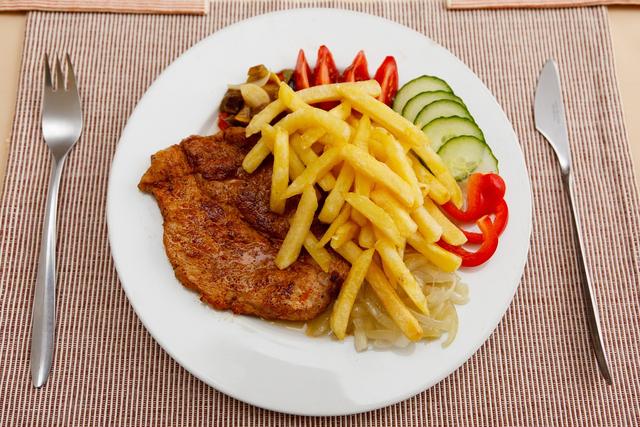
Q4.Why is it important to eat each of these types of food?

Q5.What is a dietician?
Q6.Which of these are secondary sources?
Assessment exit quiz
6 Questions
Q1.Why is it important to have a balanced and healthy diet?
Q2.Why is writing a meal plan a good idea?
Q3.True or false? Every meal must include a balance of all food groups shown on the Eatwell plate.
Q4.What is a secondary source?
Q5.Which of these secondary sources would help us to create a meal plan?
Q6.Sofia is writing a healthy eating plan. For breakfast she had wholegrain cereal with milk and strawberries. Which food groups did Sofia's breakfast contain?
To help you plan your 3 science lesson on: Nutrient-rich meal: planning (non-statutory), download all teaching resources for free and adapt to suit your pupils' needs...
To help you plan your 3 science lesson on: Nutrient-rich meal: planning (non-statutory), download all teaching resources for free and adapt to suit your pupils' needs.
The starter quiz will activate and check your pupils' prior knowledge, with versions available both with and without answers in PDF format.
We use learning cycles to break down learning into key concepts or ideas linked to the learning outcome. Each learning cycle features explanations with checks for understanding and practice tasks with feedback. All of this is found in our slide decks, ready for you to download and edit. The practice tasks are also available as printable worksheets and some lessons have additional materials with extra material you might need for teaching the lesson.
The assessment exit quiz will test your pupils' understanding of the key learning points.
Our video is a tool for planning, showing how other teachers might teach the lesson, offering helpful tips, modelled explanations and inspiration for your own delivery in the classroom. Plus, you can set it as homework or revision for pupils and keep their learning on track by sharing an online pupil version of this lesson.
Explore more key stage 2 science lessons from the Healthy eating unit, dive into the full primary science curriculum, or learn more about lesson planning.