


Representing data about human height


Lesson details
Learning outcome
I can use mean average heights to create a line graph that shows how human height varies with age.
Key learning points
- Humans grow continuously and at changing rates from birth until the end of puberty.
- Mean averages can be used to help us analyse large data sets.
- Human height can be measured and plotted on a line graph to show how height varies with age.
Keywords
Data - In science, data is information collected during an investigation, which can include numbers, symbols, pictures, or text.
Mean average - A mean average is calculated by adding values together and dividing the total by the number of values.
Line graph - A line graph is a type of diagram used to show how a variable changes over time.
Plot - To plot a mark or line on a graph means to place it correctly on the axes according to its values.
Common misconception
Pupils may think that humans either grow at a steady rate throughout their lives or only grow on milestones such as their birthdays.
When pupils have completed their line graphs showing human height data, discuss the changes in height between different ages.
Teacher tip
Pupils could create their line graphs directly on tables, using masking tape for the axes, sticky tack for the data points,and string to connect the points. Analysing the data will be covered in lesson 8. See video to demonstrate aspects of working scientifically linked to this lesson's content.

Equipment
Squared and graph paper, pencils, rulers, calculators (optional).

Content guidance
Depiction or discussion of sensitive content

Supervision
Adult supervision recommended

Licence

Lesson video
Loading...
Prior knowledge starter quiz
6 Questions
Q1.At which age group do humans generally stop growing taller?

Q2.Which of these statements about human growth is correct?
Q3.How can we find out how tall a human is?
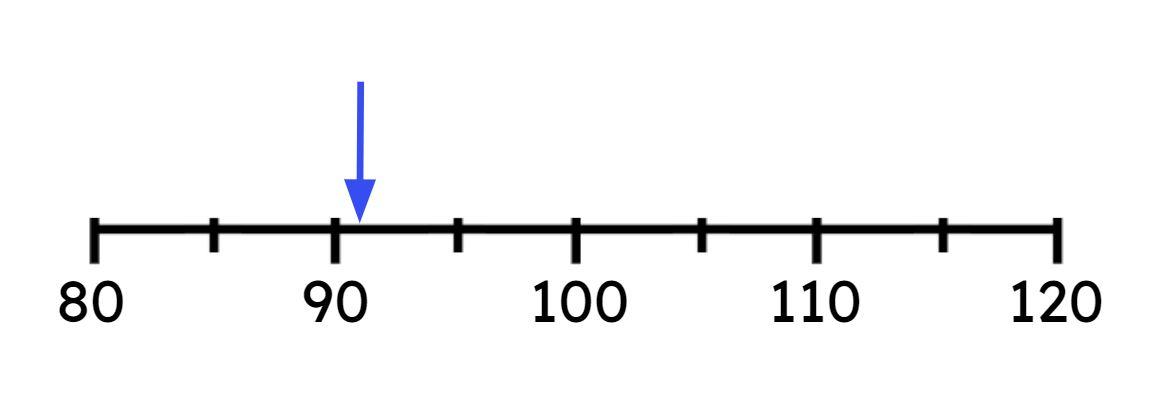
Q4.What number is the arrow pointing to on this number line?
Q5.What does calculate mean?
Q6.Starting with the smallest, sort these numbers into order of increasing size.
Assessment exit quiz
6 Questions
Q1.What sort of graph would we use to show changes in human height from birth to adulthood?
Q2.On this graph, what variable is shown on the x-axis?
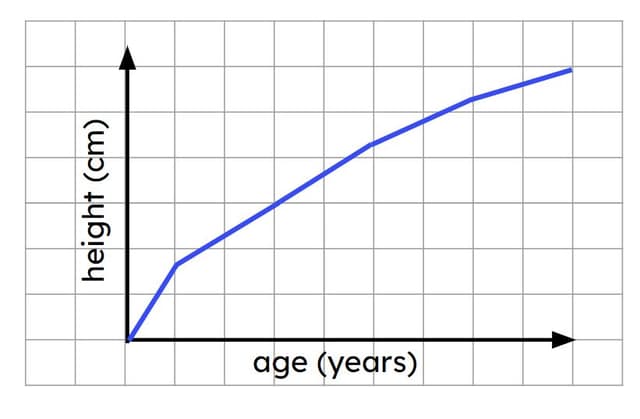
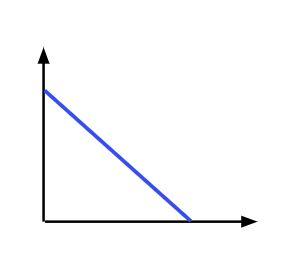
Q3.Which of these graphs could show how human height changes from birth to adolescence?
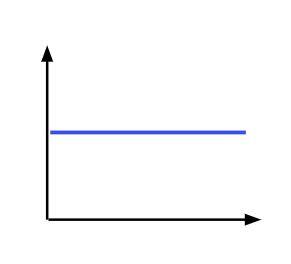
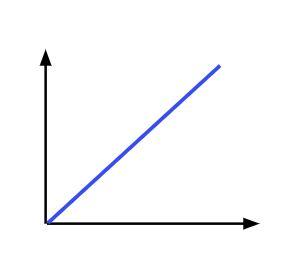
Q4.Andeep has measured the height of some children and would like to plot his data on a line graph. What does plot mean?
Q5.Why might scientists find a mean average of a set of numbers?
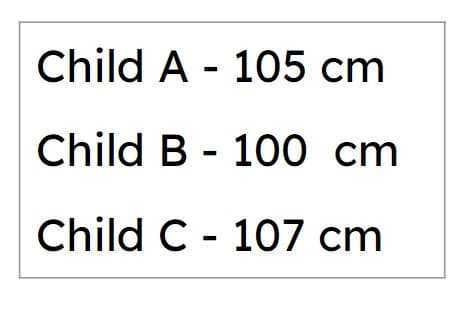
Q6.What is the mean average of these three children’s heights?
To help you plan your 5 science lesson on: Representing data about human height, download all teaching resources for free and adapt to suit your pupils' needs...
To help you plan your 5 science lesson on: Representing data about human height, download all teaching resources for free and adapt to suit your pupils' needs.
The starter quiz will activate and check your pupils' prior knowledge, with versions available both with and without answers in PDF format.
We use learning cycles to break down learning into key concepts or ideas linked to the learning outcome. Each learning cycle features explanations with checks for understanding and practice tasks with feedback. All of this is found in our slide decks, ready for you to download and edit. The practice tasks are also available as printable worksheets and some lessons have additional materials with extra material you might need for teaching the lesson.
The assessment exit quiz will test your pupils' understanding of the key learning points.
Our video is a tool for planning, showing how other teachers might teach the lesson, offering helpful tips, modelled explanations and inspiration for your own delivery in the classroom. Plus, you can set it as homework or revision for pupils and keep their learning on track by sharing an online pupil version of this lesson.
Explore more key stage 2 science lessons from the Human development unit, dive into the full primary science curriculum, or learn more about lesson planning.