


Classification keys


Lesson details
Learning outcome
I can use a classification key to group and identify objects.
Key learning points
- Objects can be classified based on their similarities and differences.
- You can use a classification key to help decide which group something belongs to.
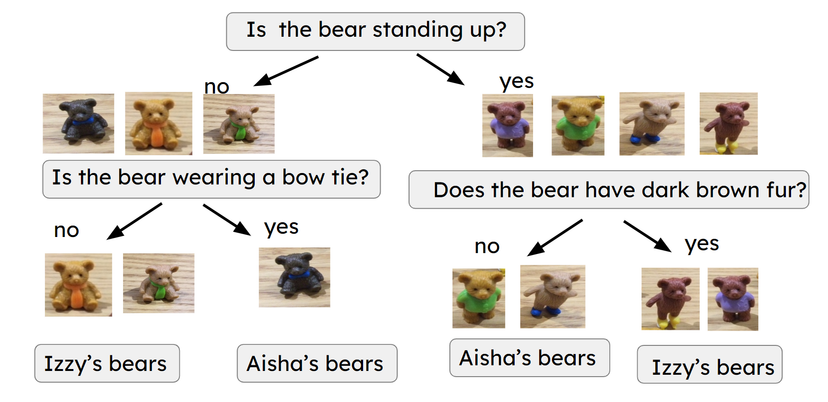
- The questions on a classification key are layered, each answer leads to a new question.
- Scientists use observable characteristics to identify unknown objects through a series of yes/no questions.
- Scientists use classification keys based on observable characteristics.
Keywords
Group - To group things is to put similar things together.
Classification key - Classification keys are diagrams which help us identify objects using yes/no questions.
Identify - To identify something is to be able to name it correctly.
Yes/no questions - A yes/no question is a type of sentence that asks something and is answered with only yes or no.
Observable characteristics - An observable characteristic is a feature or property of something that we can see or use our other senses to observe.
Common misconception
Children may ask questions that don't have a yes or no answer.
Keep reminding the children that their questions need to have a yes/no answer and that this is how a classification key works to help us to group and identify unknown objects.
Teacher tip
Give the children some real unknown objects to sort themselves as moving objects through a classification key helps them to understand the layers more easily.

Equipment
Worksheet and your own objects if you chose to do some more classification keys of your own.

Content guidance
Exploration of objects

Supervision
Adult supervision recommended

Licence

Lesson video
Loading...
Prior knowledge starter quiz
6 Questions
Q1.Which features do these living things have in common?
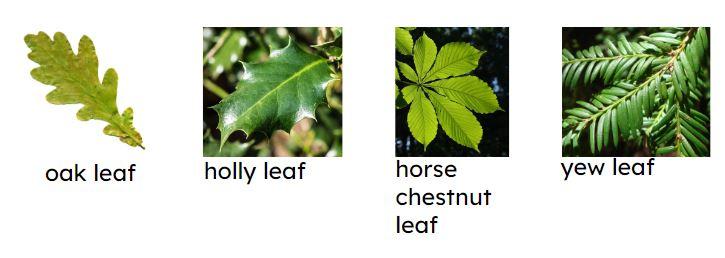
Q2.In which groups can a lizard, a swan and a deer belong to?
Q3.Match the animals to the correct animal group.

Q4.Which of these are observable characteristics of a tree?
Q5.What is it called when we sort objects or living things into groups?
Q6.How might a scientist record objects they have classified?
Assessment exit quiz
6 Questions
Q1.Which groups could the object in the image below belong to?

Q2.Objects can be classified based on their similarities and .
Q3.What kind of diagram is this?
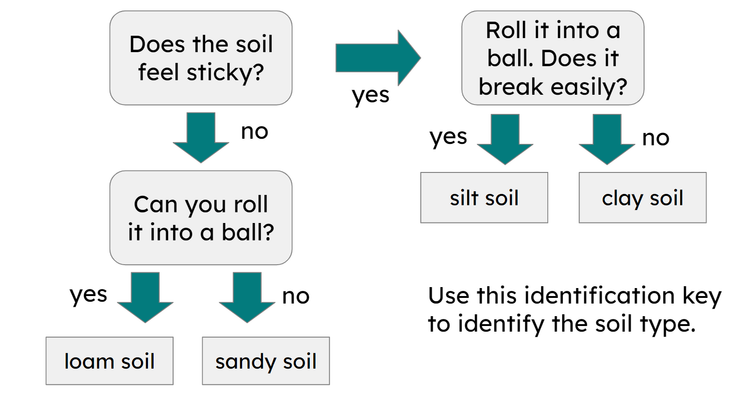
Q4.The yes/no questions in a classification key are layered, each answer leads to a new .
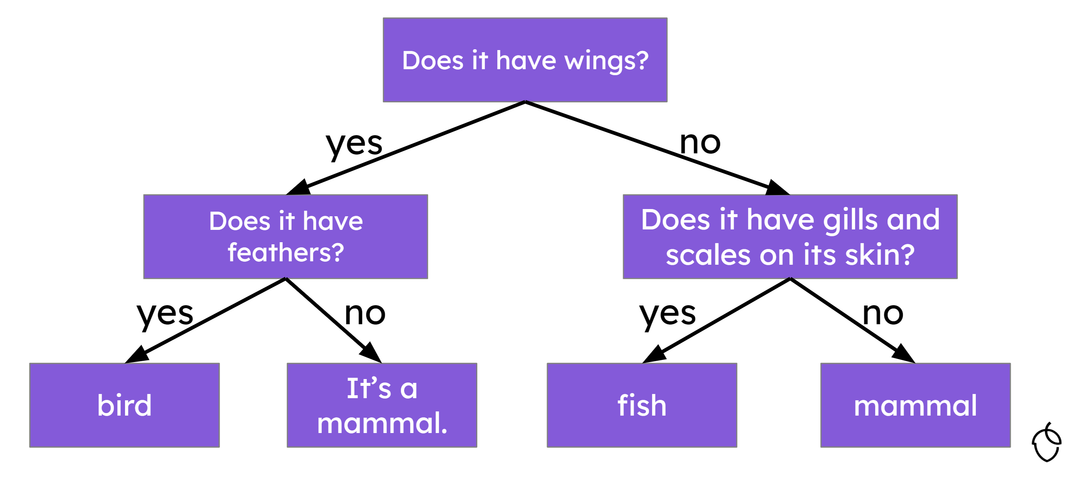
Q5.Scientists use classification keys based on an object's characteristics.
Q6.Look at the classification key, which group does a teddy bear standing up, that has dark brown fur, belong to?
To help you plan your 4 science lesson on: Classification keys, download all teaching resources for free and adapt to suit your pupils' needs...
To help you plan your 4 science lesson on: Classification keys, download all teaching resources for free and adapt to suit your pupils' needs.
The starter quiz will activate and check your pupils' prior knowledge, with versions available both with and without answers in PDF format.
We use learning cycles to break down learning into key concepts or ideas linked to the learning outcome. Each learning cycle features explanations with checks for understanding and practice tasks with feedback. All of this is found in our slide decks, ready for you to download and edit. The practice tasks are also available as printable worksheets and some lessons have additional materials with extra material you might need for teaching the lesson.
The assessment exit quiz will test your pupils' understanding of the key learning points.
Our video is a tool for planning, showing how other teachers might teach the lesson, offering helpful tips, modelled explanations and inspiration for your own delivery in the classroom. Plus, you can set it as homework or revision for pupils and keep their learning on track by sharing an online pupil version of this lesson.
Explore more key stage 2 science lessons from the Living things and the environment unit, dive into the full primary science curriculum, or learn more about lesson planning.