


Reproduction and variation


Lesson details
Learning outcome
I can explain why offspring look similar but not identical to their parents and one another.
Key learning points
- When organisms reproduce they make offspring of the same kind (species resemblance)
- Offspring inherit features from both parents, so they look similar to their parents and one another (family resemblance)
- Some features are inherited when DNA is passed from parents to offspring during reproduction
- Some features are caused (or changed) by an organism’s lifestyle and environment
- There is usually variation between offspring; they are not usually identical to their parents or one another
Keywords
Reproduction - the process that creates new individuals of a species
Inherit - to pass on features from parent to offspring
DNA - the molecule that stores genetic information
Variation - differences between individuals within a species
Common misconception
Boys only inherit features from their father and girls only inherit features from their mother. All characteristics are caused by genes.
The lesson consolidates understanding from Y7 that offspring inherit characteristics from both parents, and that some characteristics are caused (or changed) by an organism’s lifestyle and environment.
Teacher tip
In Task C, pupils will need to refer back to their completed Venn diagram (or a copy of the correctly completed version) from Task A.

Content guidance
Depiction or discussion of sensitive content

Supervision
Adult supervision recommended

Licence

Lesson video
Loading...
Prior knowledge starter quiz
6 Questions
Q1.Match the adult with the offspring it produces.
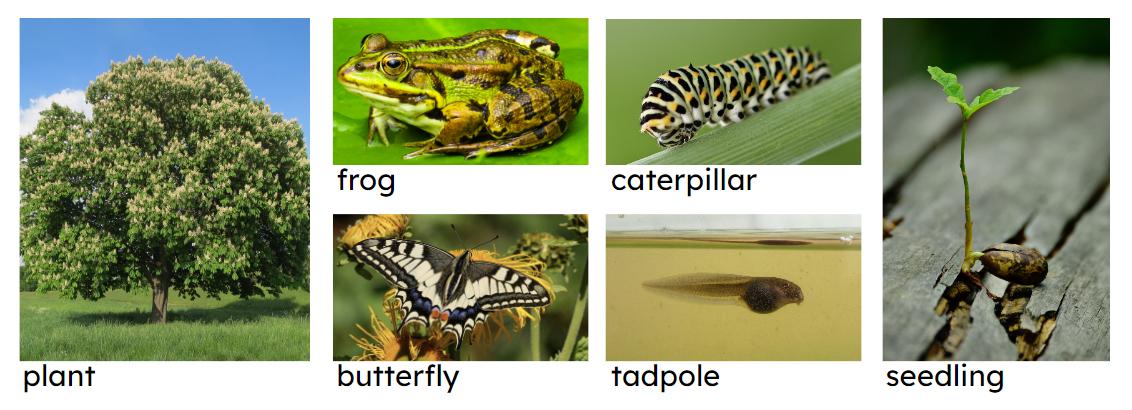

Q2.Which MRS GREN process describes the ability of an organism to make offspring?
Q3.Where is DNA stored in an animal cell?
Q4.Where is DNA stored in a bacterial cell?
Q5.How many biological parents does an organism have if it is made through sexual reproduction?
Q6.Who has the correct idea about reproduction?

Assessment exit quiz
6 Questions
Q1.A species is a group of organisms which can to make fertile offspring.
Q2.Offspring inherit features from both so they look similar to their family members.
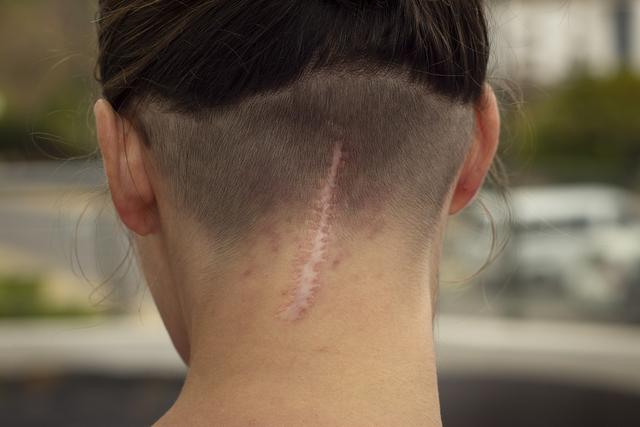
Q3.True or false? Scars are examples of characteristics that can be inherited.
Q4.Which of these features are caused only by DNA?
Q5.Some of the variation between offspring that have the same parents is caused by the genes inherited from …
Q6.Features that are influenced by the environment typically have __________ variants than those influenced by genes alone.
To help you plan your 8 science lesson on: Reproduction and variation, download all teaching resources for free and adapt to suit your pupils' needs...
To help you plan your 8 science lesson on: Reproduction and variation, download all teaching resources for free and adapt to suit your pupils' needs.
The starter quiz will activate and check your pupils' prior knowledge, with versions available both with and without answers in PDF format.
We use learning cycles to break down learning into key concepts or ideas linked to the learning outcome. Each learning cycle features explanations with checks for understanding and practice tasks with feedback. All of this is found in our slide decks, ready for you to download and edit. The practice tasks are also available as printable worksheets and some lessons have additional materials with extra material you might need for teaching the lesson.
The assessment exit quiz will test your pupils' understanding of the key learning points.
Our video is a tool for planning, showing how other teachers might teach the lesson, offering helpful tips, modelled explanations and inspiration for your own delivery in the classroom. Plus, you can set it as homework or revision for pupils and keep their learning on track by sharing an online pupil version of this lesson.
Explore more key stage 3 science lessons from the Variation (differences within species) unit, dive into the full secondary science curriculum, or learn more about lesson planning.