


New
New
Lesson 3 of 5
Represent counting in sixes as the 6 times table
I can represent counting in sixes as the 6 times table.

Lesson 3 of 5
New
New
Represent counting in sixes as the 6 times table
I can represent counting in sixes as the 6 times table.
Lesson details
Key learning points
- Counting in sixes is the pattern of the 6 times table
- Counting in sixes can be represented in different ways
- Counting in threes can help you to count in sixes
Keywords
Factor - Numbers we can multiply together to get another number are known as factors.
Product - The answer when two or more values are multiplied together.
Multiple - A multiple is the result of multiplying a number by another whole number.
Common misconception
Pupils often confuse the keywords of this lesson and use them interchangeably or incorrectly.
Model correct usage in a range of contexts including labelling abstract equations and using the terms to identify the known elements in worded problems. Choral response can also support pupils using these words correctly.
The focus of this lesson is recognition of multiples of sixes and connecting this to tables facts. Use every opportunity to rehearse and chant multiplication facts including skip counting and chanting multiplication tables to support fluency.

Teacher tip

Licence
This content is © Oak National Academy Limited (2025), licensed on Open Government Licence version 3.0 except where otherwise stated. See Oak's terms & conditions (Collection 2).
Lesson video
Loading...
Prior knowledge starter quiz
Download quiz pdf
6 Questions
Q1.Match the addition expression to the correct answer
Match the addition expression to the correct answer

6
9
12
15
Q2.When counting in multiples of three from zero, which of these numbers would not be part of the count?
When counting in multiples of three from zero, which of these numbers would not be part of the count?
3
6
12
Q3.When counting in threes from zero, Izzy reaches 36
Which number will she say next?
When counting in threes from zero, Izzy reaches 36
Which number will she say next?
35
37
38
40
Q4.Match the start of the count to the next number in the count.
Match the start of the count to the next number in the count.
12
16
32
27
18
Q5.What calculation does this array show?
What calculation does this array show?
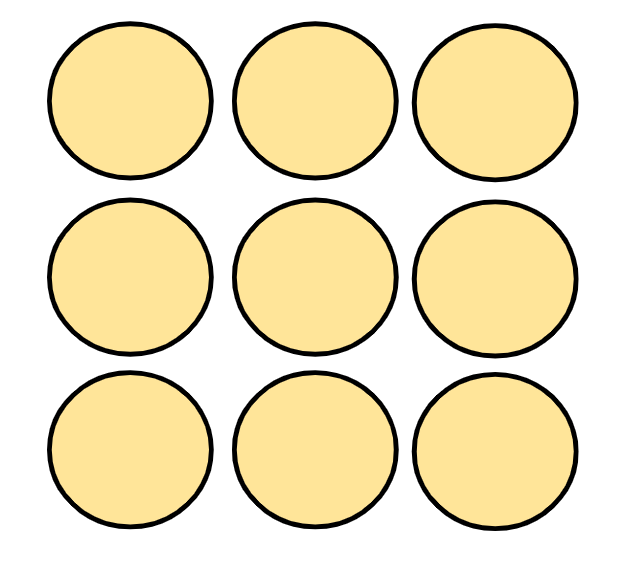
2 × 3
8 + 1
Q6.Match the times tables facts to the correct product.
Match the times tables facts to the correct product.
24
56
21
72
30
Assessment exit quiz
Download quiz pdf
6 Questions
Q1.Starting with the smallest put the multiples of 6 in order.
Starting with the smallest put the multiples of 6 in order.
Q2.Which of these numbers are multiples of 6?
Which of these numbers are multiples of 6?
28
40
Q3.For each sequence, match it to the multiple of 6 that will come next.
For each sequence, match it to the multiple of 6 that will come next.
24
36
30
48
66
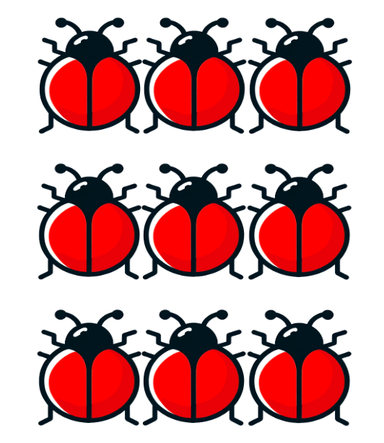
Q4.This image shows 9 ladybirds, each with 6 legs. How many legs are there altogether? legs
This image shows 9 ladybirds, each with 6 legs. How many legs are there altogether? legs
Q5.An ant has 6 legs. Imagine 5 ants. How many legs will there be altogether? legs
An ant has 6 legs. Imagine 5 ants. How many legs will there be altogether? legs
Q6.A hexagon has 6 sides. Imagine 8 hexagons. How many sides will there be in total? sides
A hexagon has 6 sides. Imagine 8 hexagons. How many sides will there be in total? sides