New
New
Lesson 15 of 15
Scale divisions derived from multiplication facts by 10
I can use unitising and multiplying and dividing by 10 to scale division facts.

Lesson 15 of 15
New
New
Scale divisions derived from multiplication facts by 10
I can use unitising and multiplying and dividing by 10 to scale division facts.
Lesson details
Key learning points
- Division is the inverse of multiplication
- If you know that 3 groups of 4 are equal to 12 then there are 3 groups of 4 in 12
- If you know there are 3 groups of 4 in 12 then there are 3 groups of 4 tens in 12 tens
Keywords
Scale / scaling - Scaling is when a given quantity is made ___ times the size. In this lesson, scaling will involve making values 10 times the size.
Inverse - Inverse means the opposite in effect. The reverse of.
Common misconception
Lack of fluency in 2s, 4s and 8s times tables and not understanding the divisibility rules or the problems.
To clearly model use of gattegno chart or place value chart to highlight scaling up and down by 10. Highlight key words of worded problems to understand the problem and the operation required for the calculation.
In this lesson, the Gattegno chart is used to highlight the relationship of multiplying / dividing a number by 10. Alternatively, a place value chart can be used. Continue to use language of unitisation e.g. if 4 ones multiplied by 3 is 12 ones then 4 tens multiplied by 3 is 12 tens.

Teacher tip

Licence
This content is © Oak National Academy Limited (2025), licensed on Open Government Licence version 3.0 except where otherwise stated. See Oak's terms & conditions (Collection 2).
Lesson video
Loading...
Prior knowledge starter quiz
Download quiz pdf
6 Questions
Q1.Select the numbers which are multiples of both 4 and 8
Select the numbers which are multiples of both 4 and 8
2
4
13
Q2.8 × 9 can help you to solve which of these multiplication equations?
8 × 9 can help you to solve which of these multiplication equations?
6 × 5 =
5 × 7 =
Q3.Match the expressions on the left which can help you to solve the expressions on the right.
Match the expressions on the left which can help you to solve the expressions on the right.

8 × 40
60 × 4
20 × 8
6 × 90
Q4.If 4 × 4 = 16 then 40 × 4 =
If 4 × 4 = 16 then 40 × 4 =
Q5.Complete: If 8 × 8 = 64 then 80 × 8 =
Complete: If 8 × 8 = 64 then 80 × 8 =
Q6.Andeep has collected 5 packets of 8 guinea cards. Izzy has collected 10 times as many as Andeep.
How many guinea cards does Izzy have?
Andeep has collected 5 packets of 8 guinea cards. Izzy has collected 10 times as many as Andeep.
How many guinea cards does Izzy have?
Assessment exit quiz
Download quiz pdf
6 Questions
Q1.Which equations does this array represent?
Which equations does this array represent?
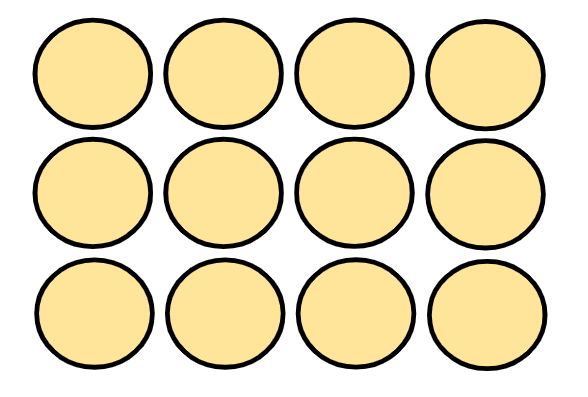
3 × 5 =
3 + 4 =
3 + 3 + 3 =
Q2.Which division equation does this array represent?
Which division equation does this array represent?
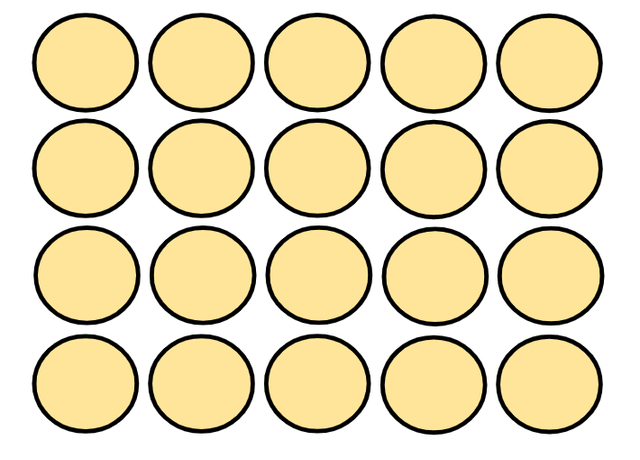
20 ÷ 3 =
20 + 5 =
Q3.Fill in the gap in this diagram showing related facts. 80 ÷ 4 = ___
Fill in the gap in this diagram showing related facts. 80 ÷ 4 = ___
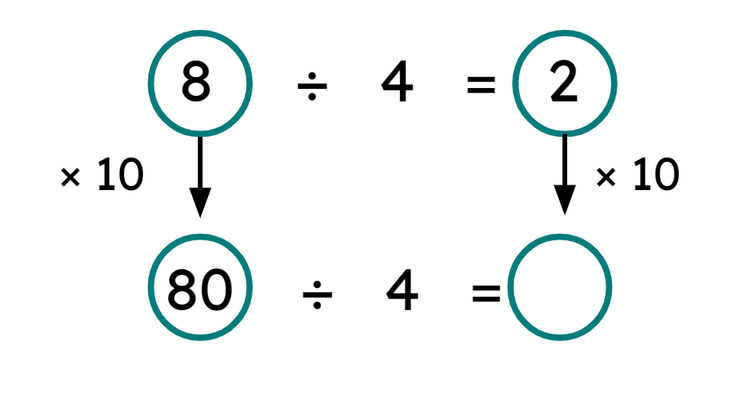
2
200
Q4.Fill in the gap in this diagram showing related facts. ÷ 2 = 20
Fill in the gap in this diagram showing related facts. ÷ 2 = 20
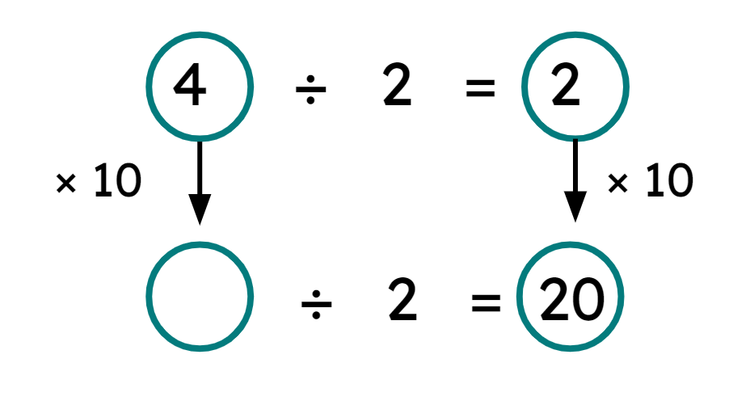
Q5.Use your knowledge of times tables to fill in the gap.
Use your knowledge of times tables to fill in the gap.
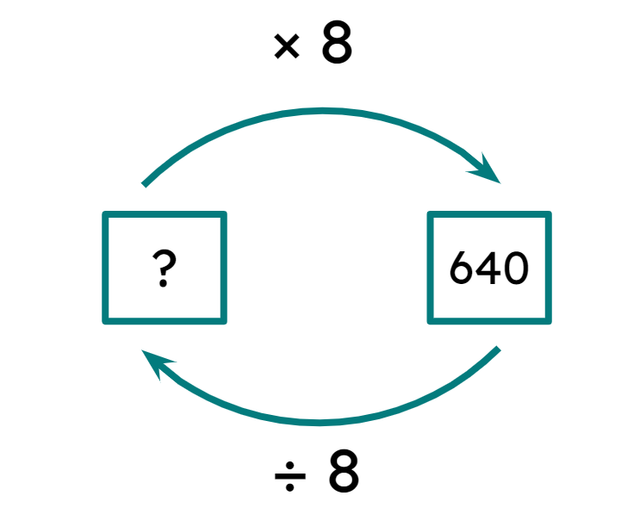
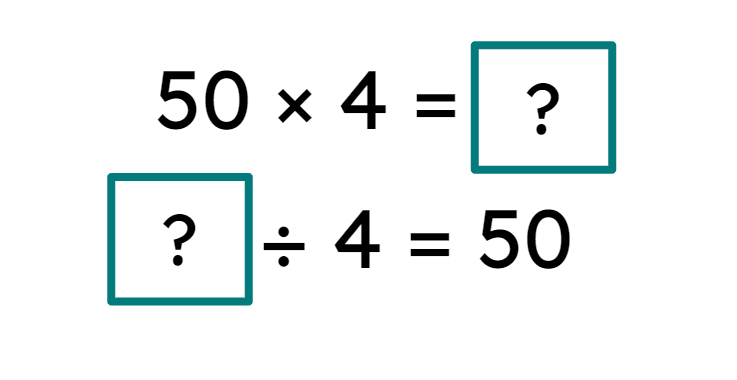
Q6.Fill in the gap. The same number can be written in both.
Fill in the gap. The same number can be written in both.