


- Year 8
Structure of Earth
I can describe the structure of Earth.
Lesson details
Key learning points
- Earth is a spherical, rocky planet with a thin crust, partially covered in water.
- Under Earth’s crust is a dense rocky layer, called the mantle.
- In the centre of Earth is a solid metallic core surrounded by a liquid outer core.
- Temperature and pressure increases towards the centre of Earth, making the inner core extremely hot and solid.
- Scientists use models to better understand phenomena, including Earth's structure.
Keywords
Crust - The rocky, outermost layer of Earth.
Mantle - A layer of dense rock found below the crust. Parts of it behave as a fluid over very long, geological time scales.
Outer core - The outer core is a liquid layer of mostly iron and nickel that lies between the mantle and inner core.
Inner core - The inner core is a solid ball of mostly iron that lies at the centre of Earth, within the outer core.
Model - Used by scientists to represent parts of the natural world that are difficult to observe or explain directly.
Common misconception
Pupils struggle to appreciate the relative scales between each layer and features of the mantle.
Use common models (boiled egg or an orange) to stress the relative sizes and use multiple demonstrations to model features of the mantle.
To help you plan your year 8 science lesson on: Structure of Earth, download all teaching resources for free and adapt to suit your pupils' needs...
To help you plan your year 8 science lesson on: Structure of Earth, download all teaching resources for free and adapt to suit your pupils' needs.
The starter quiz will activate and check your pupils' prior knowledge, with versions available both with and without answers in PDF format.
We use learning cycles to break down learning into key concepts or ideas linked to the learning outcome. Each learning cycle features explanations with checks for understanding and practice tasks with feedback. All of this is found in our slide decks, ready for you to download and edit. The practice tasks are also available as printable worksheets and some lessons have additional materials with extra material you might need for teaching the lesson.
The assessment exit quiz will test your pupils' understanding of the key learning points.
Our video is a tool for planning, showing how other teachers might teach the lesson, offering helpful tips, modelled explanations and inspiration for your own delivery in the classroom. Plus, you can set it as homework or revision for pupils and keep their learning on track by sharing an online pupil version of this lesson.
Explore more key stage 3 science lessons from the Earth's resources unit, dive into the full secondary science curriculum, or learn more about lesson planning.


Equipment
None required.

Licence
Lesson video
Loading...
Prior knowledge starter quiz
6 Questions
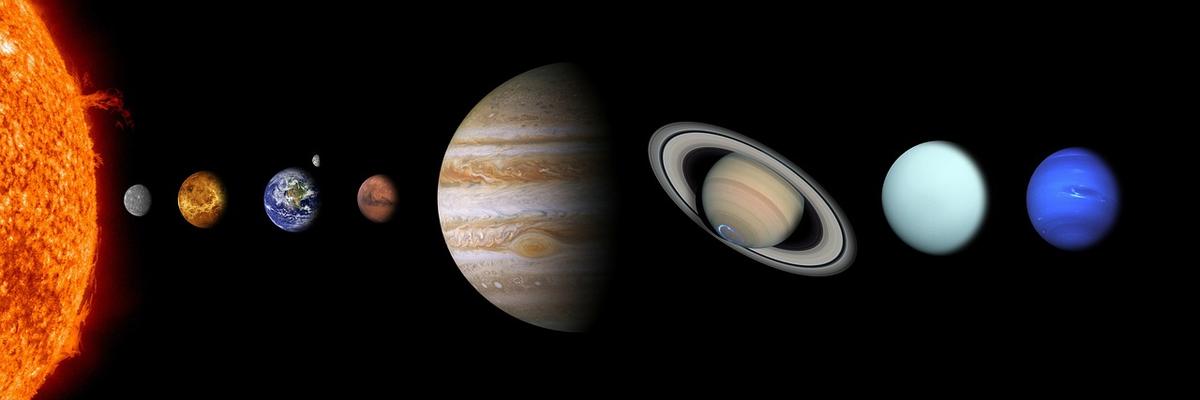
Q1.Which planet is Earth in the order from the Sun?
Q2.Earth’s surface is mostly covered by .
Q3.What shape is Earth?
Q4.Which of the following states of matter has a definite volume but no definite shape?
Q5.The of a material determines how much space it takes up.
Q6.A scientific is a representation of a part of the natural world that is difficult to observe directly.
Assessment exit quiz
6 Questions
Q1.Match the following key terms to their definition.

The rocky, outermost layer of Earth.
A layer of dense rock found below the crust.
A liquid layer of mostly iron and nickel.
A solid ball of mostly iron that lies at the centre of Earth.