- AQA
Weathering and mass movement at the coast
I can explain how weathering and mass movement shape the coast.

- AQA
Weathering and mass movement at the coast
I can explain how weathering and mass movement shape the coast.
Lesson details
Key learning points
- The coast is shaped by weathering processes (mechanical and chemical).
- The coast is shaped by processes of mass movement (sliding, slumping and rock falls).
Keywords
Weathering - the breakdown or disintegration of rocks at or close to the surface
Mechanical weathering - physical disintegration of rocks, for example through freeze-thaw
Chemical weathering - chemical breakdown of rocks usually involving slightly acidic rainwater
Mass movement - the downhill movement of material under the influence of gravity
Common misconception
Mass movement only refers to dramatic events like landslides and rockfalls.
Mass movement includes all downhill movements of soil, rock, or debris due to gravity. It's not just rapid events like landslides but also slower processes which occur gradually and can still significantly alter the landscape over time.


Equipment

Licence
Lesson video
Loading...
Prior knowledge starter quiz
6 Questions
Q1.Which of the following characteristics best describes constructive waves?

Q2.What type of erosion involves rocks and pebbles colliding and breaking into smaller, rounder pieces?
Q3.Which type of erosion is defined as material being hurled against a cliff face, wearing it down?
Q4.What process is being described here "the uninterrupted distance over which the wind blows across the water"?
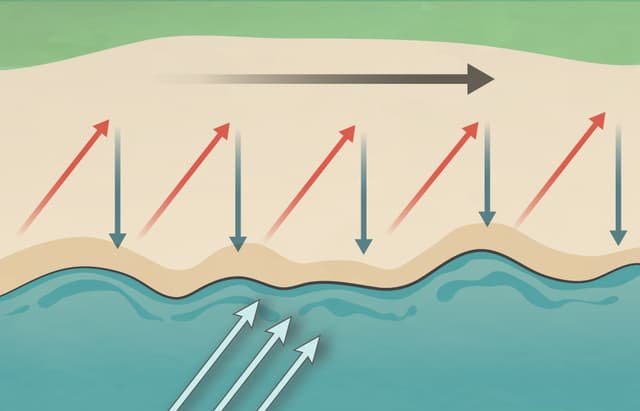
Q5.Reorder the steps in the process of longshore drift: