


New
New
Lesson 1 of 10

Lesson 1 of 10
New
New
What forces do
I can describe what forces are and what forces do.
Lesson details
Key learning points
- The motion of faster objects is harder to stop.
- The motion of heavier objects is harder to stop.
- Objects with a greater mass need a greater force to start or stop it moving, and to change the direction of motion.
- A force is a push or a pull.
- A force is needed to change the motion or shape of an object.
Keywords
Force - Forces are the pushes and pulls that objects exert on each other.
Exert - We say that objects exert forces on other objects.
Speed - The speed of an object is how fast it is going.
Mass - The mass of an object can be thought of as the amount of material making up the object.
Common misconception
A moving object has force that keeps it moving, and which runs out when it comes to rest.
Forces come from other objects. Forces change the motion of objects. Objects slow when forces act opposite to the direction of motion.
Many of the situations illustrated in the diagrams in the slide deck could be demonstrated live in the classroom. Students could be invited to hold up cardboard arrows to objects involved in demonstrations to represent the forces acting.

Teacher tip

Equipment

Licence
This content is © Oak National Academy Limited (2025), licensed on Open Government Licence version 3.0 except where otherwise stated. See Oak's terms & conditions (Collection 2).
Lesson video
Loading...
Prior knowledge starter quiz
Download quiz pdf
6 Questions
Q1.When one object pushes or pulls on another object, what do we call the push or pull?
When one object pushes or pulls on another object, what do we call the push or pull?

energy
power
Q2.A force is always a or a pull.
A force is always a or a pull.
Q3.If they were thrown at the same speed, would a tennis ball (60 g) or a cricket ball (160 g) be harder to stop?
If they were thrown at the same speed, would a tennis ball (60 g) or a cricket ball (160 g) be harder to stop?
the tennis ball
they would be equally hard to stop
Q4.Which one of these is a force?
Which one of these is a force?
a waterfall
electric current
a car's engine
the movement of a rolling ball
Q5.Forces make things change. Which of the following statements are true?
Forces make things change. Which of the following statements are true?
Forces can change the material an object is made of.
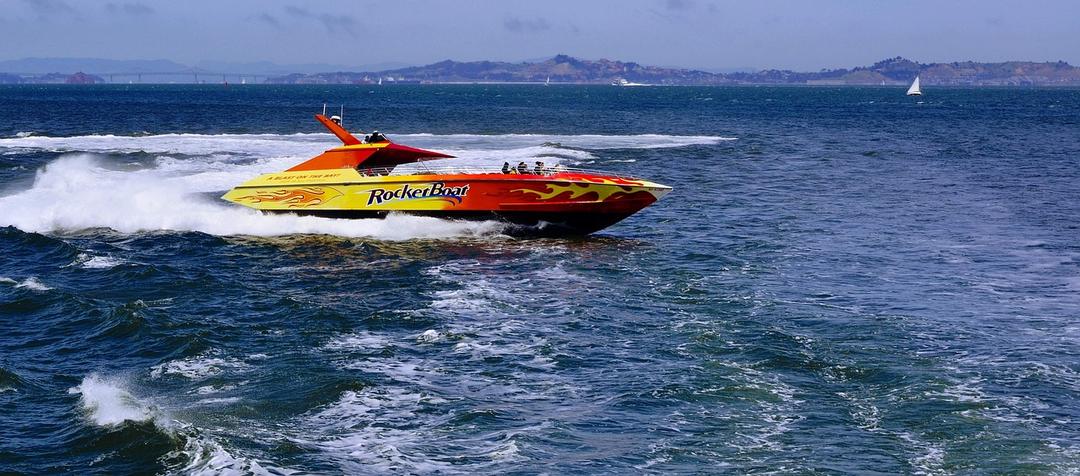
Q6.Which of the following forces act on the moving speedboat? The speedboat is driving forwards.
Which of the following forces act on the moving speedboat? The speedboat is driving forwards.
A gravitational force (a downwards pull from Earth).
An upthrust force (an upwards push from the water).
Air resistance (a backwards force from the air as the boat moves through it).
None of the above
Assessment exit quiz
Download quiz pdf
6 Questions
Q1.The speed of an object can only be changed if a acts.
The speed of an object can only be changed if a acts.
Q2.Which answer gives the best summary of what friction does?
Which answer gives the best summary of what friction does?
Friction provides motion.
Friction make things change.
Q3.Which is the best definition of what a force is?
Which is the best definition of what a force is?
A force is what moving objects have.
A force is the energy an object has.
A force is the power of an object.
Q4.Which would need the greatest force to stop it?
Which would need the greatest force to stop it?
a 3 g table-tennis ball at a speed of 10 m/s
a 60 g tennis ball at a speed of 2 m/s
a 160 g apple at a speed of 2 m/s
a 160 g cricket ball at a speed of 10 m/s
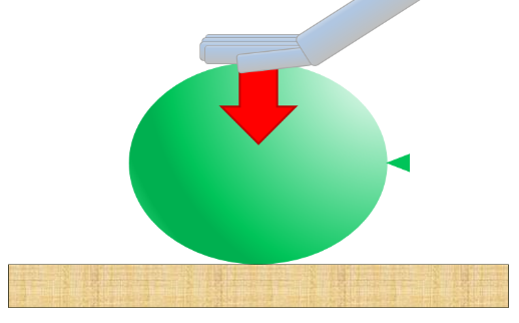
Q5.Which is the best way of describing the force represented by the arrow?
Which is the best way of describing the force represented by the arrow?
the hand's force
the balloon's force
the force between the hand and the balloon
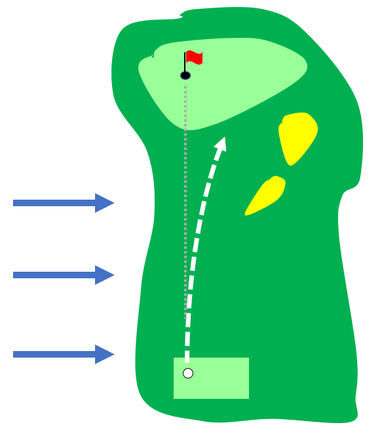
Q6.The path of a golf ball is shown. It was struck with a golf club but then blown off course by the wind. Sophia suggests using a heavier golf ball would help. Identify the false statement.
The path of a golf ball is shown. It was struck with a golf club but then blown off course by the wind. Sophia suggests using a heavier golf ball would help. Identify the false statement.
A heavier ball, hit with the same speed, would be more difficult to stop.
A heavier ball would need a greater force from the club to reach the same speed.