


Presenting our geographical data


Lesson details
Learning outcome
I can present data in a way that will help me answer my enquiry question.
Key learning points
- Data that we collect in fieldwork can be presented in different ways.
- Maps can be used to show data that is about the differences between places.
- Graphs can help us to see patterns in our data.
Keywords
Bar chart - a graphic that allows geographers to compare data values
Key - a section of the map that tells the reader what symbols and colours mean
Geolocated data - data that is drawn on a map in the position where that data was collected
Common misconception
Maps are only used to help us find out where places are.
Maps are a brilliant tool that geographers can use to record and present information as well as use for navigation.
Teacher tip
If this is the first time pupils have presented data on a map, consider making it a whole class activity using a large map on a wall as the base map for the data. Equally, groups of pupils could work together on large A3 maps of the school grounds.

Equipment
graph paper; A3 or large maps of the school grounds; scissors; glue

Content guidance
Risk assessment required - outdoor learning

Supervision
Adult supervision required

Licence

Lesson video
Loading...
Prior knowledge starter quiz
6 Questions
Q1.What is a variable?

Q2.What happens after we collect data in the enquiry cycle?
Q3.Which of these would help us compare one fieldwork location with others?
Q4.What is biased data?
Q5.Why might some data be hard to collect?
Q6.How can we try to make sure our data has less bias?
Assessment exit quiz
4 Questions
Q1.What is a key?
Q2.Which of the following statements is true?
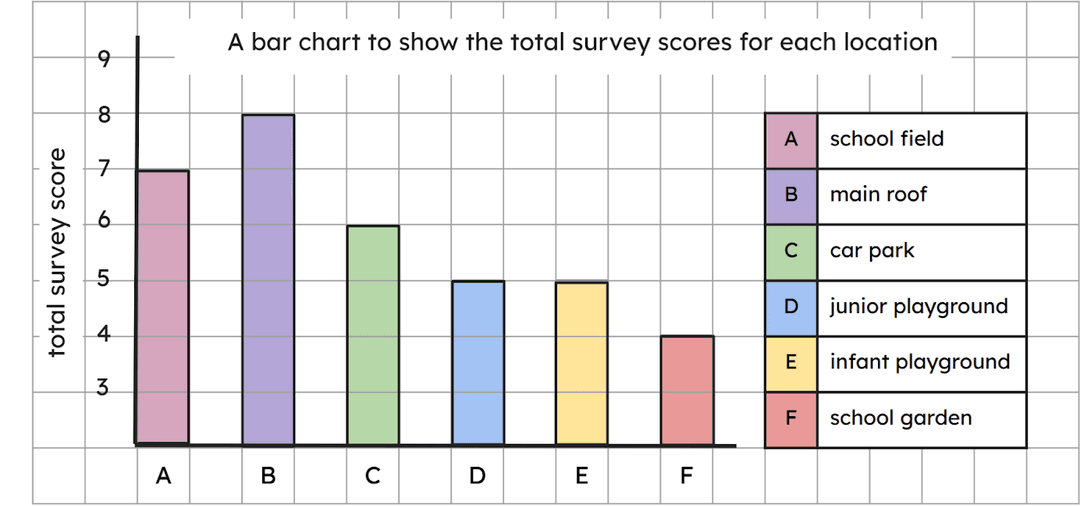
Q3.What would a bar chart of our results show in each location?
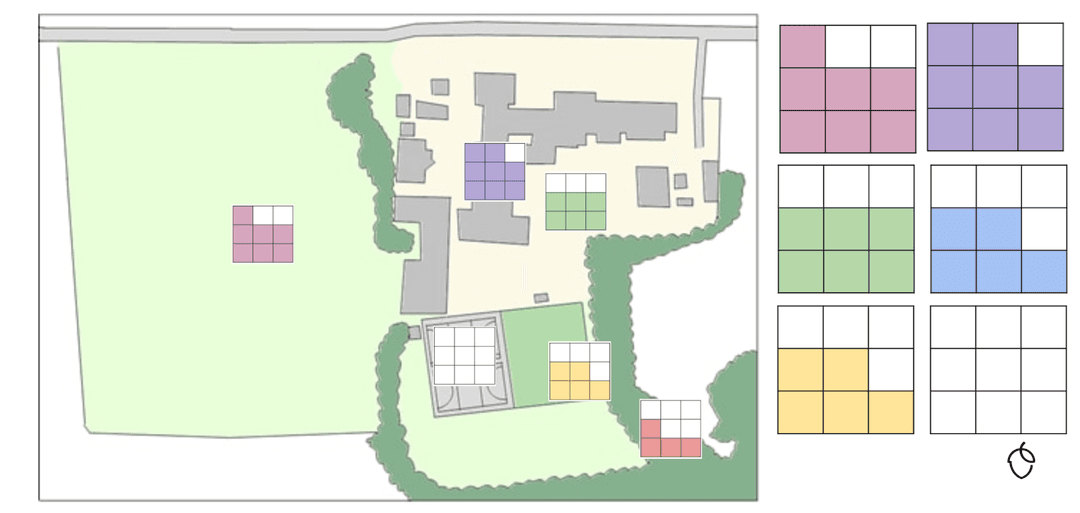
Q4.Why did we use 3 x 3 grids on our map?
To help you plan your 5 geography lesson on: Presenting our geographical data, download all teaching resources for free and adapt to suit your pupils' needs...
To help you plan your 5 geography lesson on: Presenting our geographical data, download all teaching resources for free and adapt to suit your pupils' needs.
The starter quiz will activate and check your pupils' prior knowledge, with versions available both with and without answers in PDF format.
We use learning cycles to break down learning into key concepts or ideas linked to the learning outcome. Each learning cycle features explanations with checks for understanding and practice tasks with feedback. All of this is found in our slide decks, ready for you to download and edit. The practice tasks are also available as printable worksheets and some lessons have additional materials with extra material you might need for teaching the lesson.
The assessment exit quiz will test your pupils' understanding of the key learning points.
Our video is a tool for planning, showing how other teachers might teach the lesson, offering helpful tips, modelled explanations and inspiration for your own delivery in the classroom. Plus, you can set it as homework or revision for pupils and keep their learning on track by sharing an online pupil version of this lesson.
Explore more key stage 2 geography lessons from the Fieldwork: how can we investigate the sustainability of our school? unit, dive into the full primary geography curriculum, or learn more about lesson planning.