


Use bridging to solve addition and subtraction problems


Lesson details
Learning outcome
I can use bridging to solve addition and subtraction problems.
Key learning points
- We can use known facts to help us find new facts efficiently.
Keywords
Bridge - A strategy that involves using a multiple of ten as a 'bridge', so numbers can be partitioned to make use of bonds to ten.
Common misconception
When solving problems, particularly in new contexts, children may revert to inefficient strategies as they are focusing on the problem rather than the number involved.
Encourage children to record the numbers involved on bar models, number lines or in equations, then focus on what they notice about the numbers.
Teacher tip
Encourage children to draw/make bar models to draw attention to the structure of the problem. When finding the difference, link equations with a missing addend or subtrahend to the 'difference' structure to build understanding that it can mean both how many more and how many less/fewer.

Licence

Lesson video
Loading...
Prior knowledge starter quiz
6 Questions
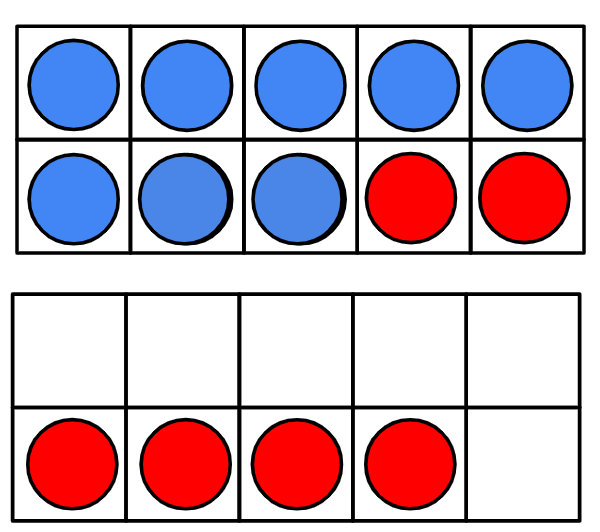
Q1.Look at the ten frames. Which equation does the image represent by showing ‘bridging 10’ to subtract?

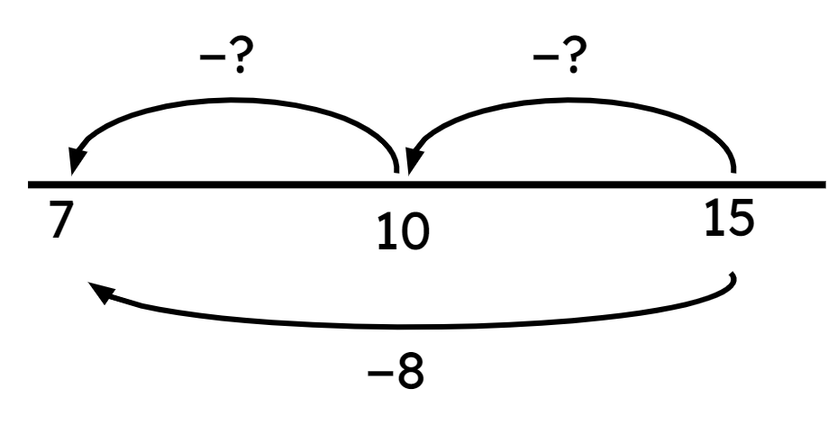
Q2.Look at the number line. How should 8 be partitioned to ‘bridge 10’ when subtracting?
Q3.How could we solve this equation? 23 − 6 = ?
Q4.Which number is missing from this number line?
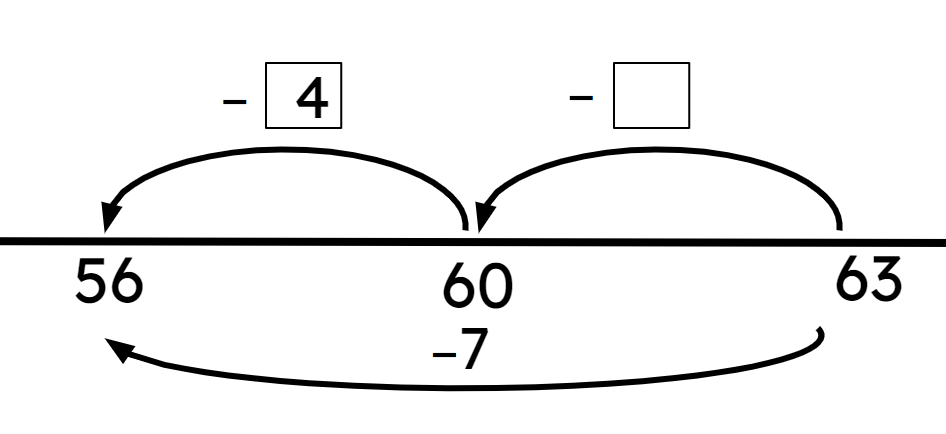
Q5.Look at the number line. What is the missing multiple of ten?
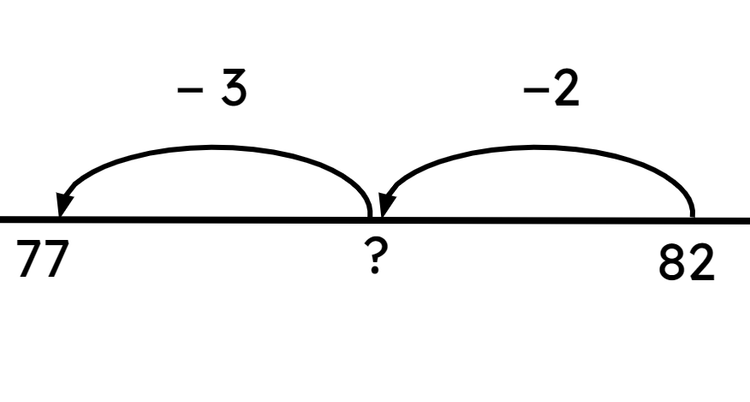
Q6.54 − 6 =
Assessment exit quiz
6 Questions
Q1.Which equation would be used to solve this problem? There were 42 children. 7 were sitting down and the rest were standing up. How many were standing up?
Q2.Alex had put 47 cubes into the tray and then he found 6 more. How many cubes are there altogether? cubes.
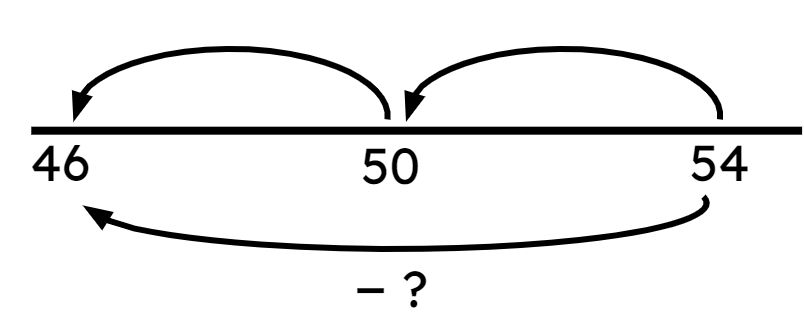
Q3.Sam collected 54 pencils. He kept some to use and put some away in a pot. He put 46 in the pot. How many does he now have to use? pencils.
Q4.Which of these equations can be solved by bridging a multiple of 10?
Q5.Which of these equations can be solved by bridging a multiple of 10?
Q6.Which of these known facts could help you in solving this equation? 46 + 8 = ___
To help you plan your 2 maths lesson on: Use bridging to solve addition and subtraction problems, download all teaching resources for free and adapt to suit your pupils' needs...
To help you plan your 2 maths lesson on: Use bridging to solve addition and subtraction problems, download all teaching resources for free and adapt to suit your pupils' needs.
The starter quiz will activate and check your pupils' prior knowledge, with versions available both with and without answers in PDF format.
We use learning cycles to break down learning into key concepts or ideas linked to the learning outcome. Each learning cycle features explanations with checks for understanding and practice tasks with feedback. All of this is found in our slide decks, ready for you to download and edit. The practice tasks are also available as printable worksheets and some lessons have additional materials with extra material you might need for teaching the lesson.
The assessment exit quiz will test your pupils' understanding of the key learning points.
Our video is a tool for planning, showing how other teachers might teach the lesson, offering helpful tips, modelled explanations and inspiration for your own delivery in the classroom. Plus, you can set it as homework or revision for pupils and keep their learning on track by sharing an online pupil version of this lesson.
Explore more key stage 1 maths lessons from the Adding and subtracting ones and tens to and from 2-digit numbers unit, dive into the full primary maths curriculum, or learn more about lesson planning.