


Explain that addition is commutative


Lesson details
Learning outcome
I can explain that if the order of the addends is changed, the sum remains the same.
Key learning points
- When the order of the addends is changed, the sum remains the same.
- Addition is commutative because the addends can be combined in any order.
- An equation can be written to show that when the order of the addends is changed, they remain equal.
Keywords
Addend - part - Any of the numbers that are added together. A part of the whole.
Sum - whole - The result of adding two or more numbers.
Commutative - Addition is commutative because if order of the addends are change, the sum remains the same.
Altogether - To bring two or more numbers together and find out how many. The amount in the whole set or group.
Common misconception
Children may not recognise the same equation when the order of the addends is swapped. They may also think of the equal sign as meaning' the answer is' rather than showing equivalence.
Demonstrate writing equation in different order to that seen in picture or present as mistake to discuss. Refer to equals sign as ‘is equals to’ rather than ‘makes’ or ‘is’ and vary its position in equations to draw attention to its meaning.
Teacher tip
Vary the position of equals sign between contexts, but not within the same context as this could draw attention away from the change in order of addends. Once children are confident, extend work to include measures where quantities are represented by numerals rather than individual objects to count.

Licence

Lesson video
Loading...
Prior knowledge starter quiz
6 Questions
Q1.Sam uses these counters to find the sum in an equation. Which number will
be the sum?
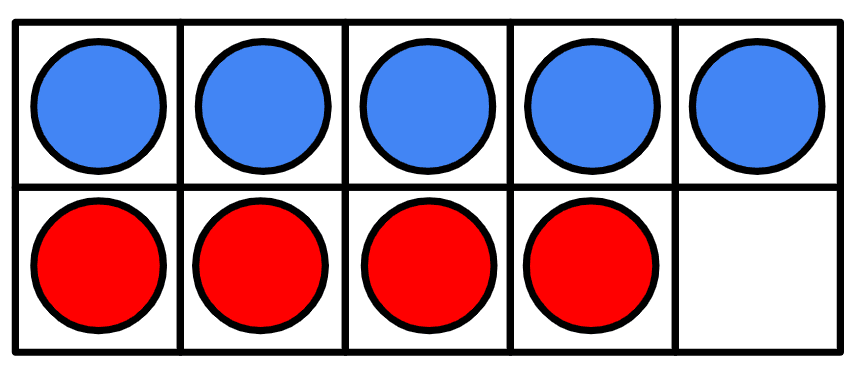
Q2.Which numeral represents the amount added in the picture?
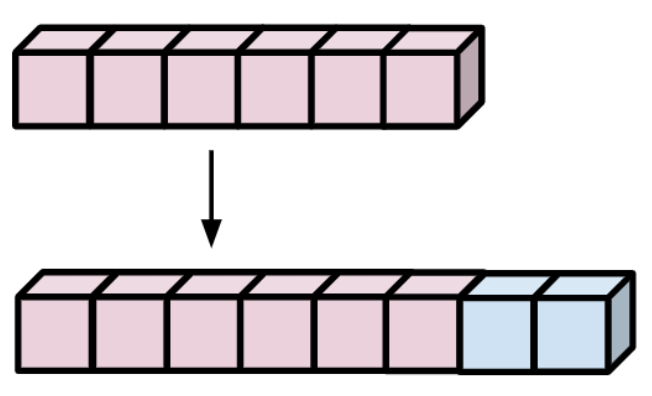
Q3.Write an equation to represent the picture.

Q4.Which picture could represent this equation? 6 = 2 + 4

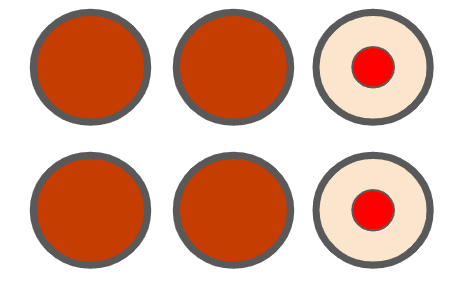
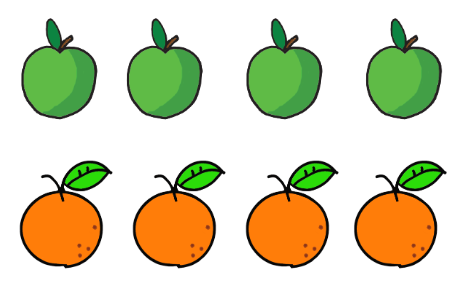
Q5.This missing number equation represents the picture shown. 3 + ___ = 5
Which number is the missing addend?

Q6.Sam has 3 pens and Jacob has 4 pencils. When they put them together, they have a whole group of 7 objects. Which expression could represent the addends?
Assessment exit quiz
6 Questions
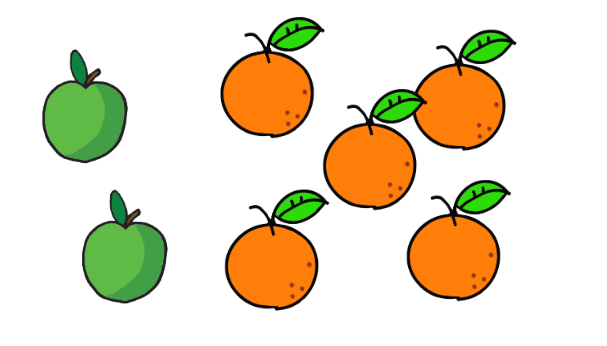
Q1.Jacob describes this picture as 2 apples and 5 oranges. 7 pieces of fruit altogether.
He writes 2 + 5 = 7.
What equation would represent the story if the parts had been added in a different order?
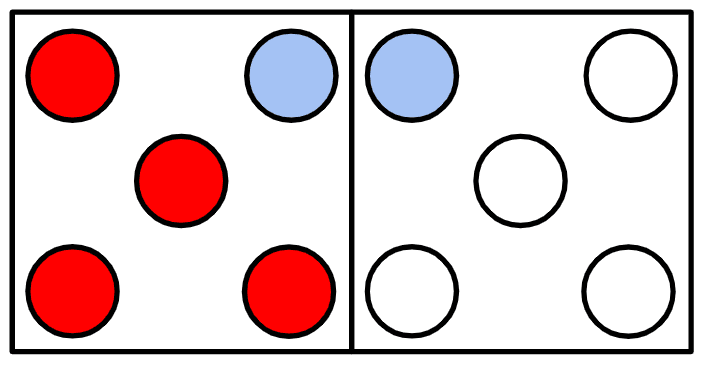
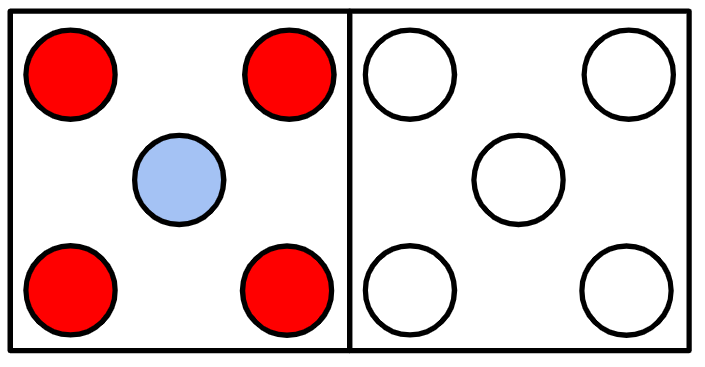
Q2.Which Hungarian tens frame shows 4 + 2 = 2 + 4?
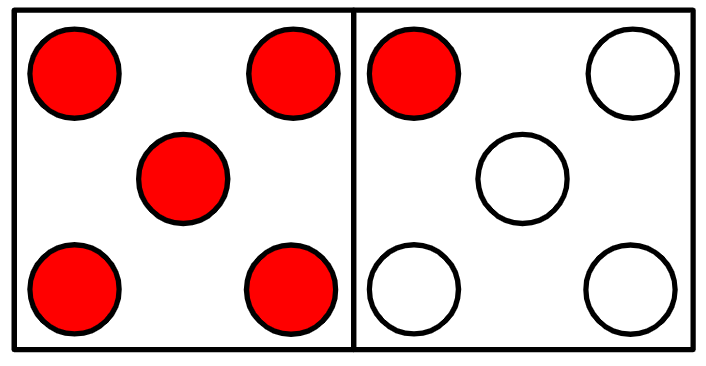
Q3.Match the equations that show that the addends order can be changed but the sum will remain the same.

Q4.What is the missing number from this equation to make it correct?
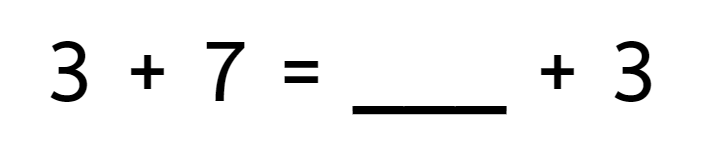
Q5.Which of these equations is correct?
Q6.Alex says that 5 can be used to fill all the gaps in the equations. Tick the ones where 5 is the missing number.
To help you plan your 1 maths lesson on: Explain that addition is commutative, download all teaching resources for free and adapt to suit your pupils' needs...
To help you plan your 1 maths lesson on: Explain that addition is commutative, download all teaching resources for free and adapt to suit your pupils' needs.
The starter quiz will activate and check your pupils' prior knowledge, with versions available both with and without answers in PDF format.
We use learning cycles to break down learning into key concepts or ideas linked to the learning outcome. Each learning cycle features explanations with checks for understanding and practice tasks with feedback. All of this is found in our slide decks, ready for you to download and edit. The practice tasks are also available as printable worksheets and some lessons have additional materials with extra material you might need for teaching the lesson.
The assessment exit quiz will test your pupils' understanding of the key learning points.
Our video is a tool for planning, showing how other teachers might teach the lesson, offering helpful tips, modelled explanations and inspiration for your own delivery in the classroom. Plus, you can set it as homework or revision for pupils and keep their learning on track by sharing an online pupil version of this lesson.
Explore more key stage 1 maths lessons from the Addition and subtraction facts within 10 unit, dive into the full primary maths curriculum, or learn more about lesson planning.