


Use knowledge of doubles to calculate near-doubles


Lesson details
Learning outcome
I can use knowledge of doubles to calculate near-doubles.
Key learning points
- Knowing double facts helps you to calculate near-doubles.
- If 2 + 2 is equal to 4, then 2 + 3 is equal to one more than 4 which is 5
Keywords
Double - To become twice as many.
Near-double - A near-double is a number close to a double.
Addends - Any of the numbers that are added together.
Common misconception
Children could try to apply this idea to other near-double facts that may be more easily solved using other strategies.
0 + 1 and 1 + 2 are near-doubles, but these are more easily solved using the 'one more'/ 'one less' strategy. Explore this together before leading children to the most efficient strategy for calculating.
Teacher tip
Here, two new facts are introduced that can be learnt using near-doubles, 3 + 4 and 4 + 5 (and their commutatives). Note, 2 + 3 (and 3 + 2) has been covered in 'adding two', but some may find it easier to relate this fact to 'near double two' rather than the 'odd number after' 3

Licence

Lesson video
Loading...
Prior knowledge starter quiz
6 Questions
Q1.When we add two equal addends, we are
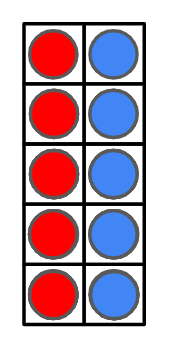

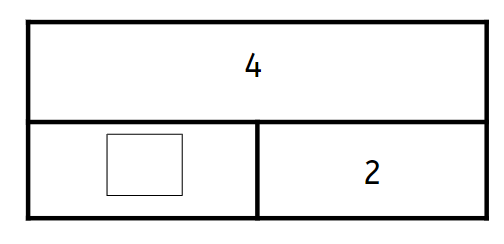
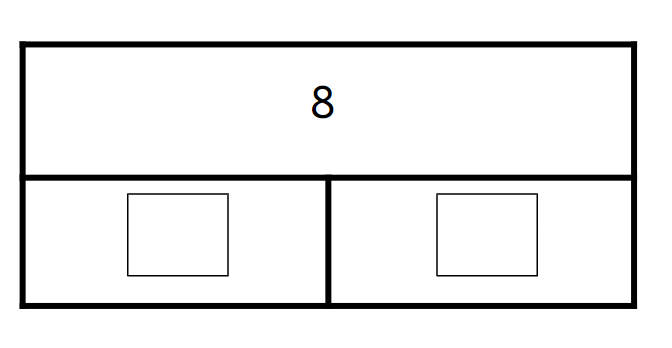
Q2.What number would complete this bar model?
Q3.Tick all the correct statements.
Q4.What is the missing number? Half of is 3
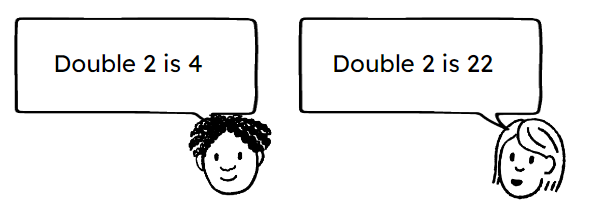
Q5.Who is correct?
Q6.Sam is 8 years old. She is double the age of her brother. How old is her brother?
Assessment exit quiz
6 Questions
Q1.What near double is the representation showing?
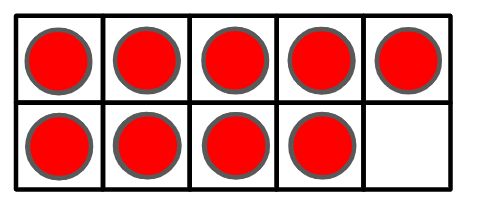
Q2.What near double is the representation showing?
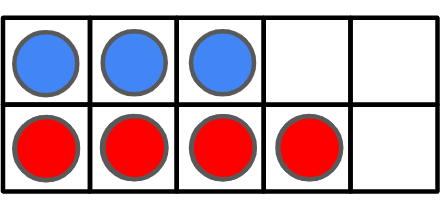
Q3.Which of these double facts would help to solve this near-double problem? 2 + 3 =
Q4.Finish the sentence. Near doubles always have
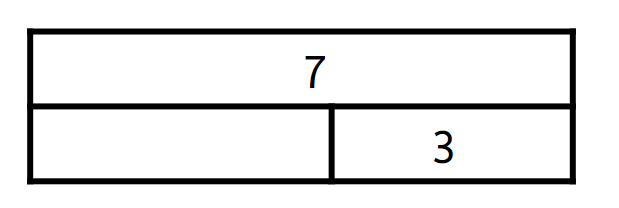
Q5.What is the missing number in this bar model?
Q6.Jacob ran 4 laps of the track. Then he ran another 3 laps. How many laps did he run in total?
To help you plan your 1 maths lesson on: Use knowledge of doubles to calculate near-doubles, download all teaching resources for free and adapt to suit your pupils' needs...
To help you plan your 1 maths lesson on: Use knowledge of doubles to calculate near-doubles, download all teaching resources for free and adapt to suit your pupils' needs.
The starter quiz will activate and check your pupils' prior knowledge, with versions available both with and without answers in PDF format.
We use learning cycles to break down learning into key concepts or ideas linked to the learning outcome. Each learning cycle features explanations with checks for understanding and practice tasks with feedback. All of this is found in our slide decks, ready for you to download and edit. The practice tasks are also available as printable worksheets and some lessons have additional materials with extra material you might need for teaching the lesson.
The assessment exit quiz will test your pupils' understanding of the key learning points.
Our video is a tool for planning, showing how other teachers might teach the lesson, offering helpful tips, modelled explanations and inspiration for your own delivery in the classroom. Plus, you can set it as homework or revision for pupils and keep their learning on track by sharing an online pupil version of this lesson.
Explore more key stage 1 maths lessons from the Addition and subtraction facts within 10 unit, dive into the full primary maths curriculum, or learn more about lesson planning.