


Explain that numbers can represent how many objects there are in a set


Lesson details
Learning outcome
I can recognise how many objects there are in a small set without counting them.
Key learning points
- Counting rhymes help to link the name with the numeral, the cardinal value and the position in the linear number system.
- Numbers can represent how many objects there are in a set.
- For small sets, we can subitise to identify quantity instead of counting.
Keywords
Count - To say the number words in order, the last number tells how many there are in the whole set.
Subitise - Instantly recognising the number of objects in a small group, without counting.
Zero to ten
Common misconception
Children may rely on counting all and may not count accurately when given unfamiliar arrangements.
Children need to build familiarity with different arrangements of number. Comment on what you notice eg. 'I can see 3 and 1, I can see 4'.
Teacher tip
This lesson helps children to move away from counting to 5 to perceptual, and then conceptual, subitising. Explore further arrangements that encourage conceptual subitising throughout the day e.g. show 4 as 2 fingers on one hand and 2 on the other. Use the slides to guide practical activities.

Licence

Lesson video
Loading...
Prior knowledge starter quiz
6 Questions
Q1.What is the next number in the count? 1, 2, 3 ….

Q2.What is the next number in the count? 1, 2, 3, 4 ….
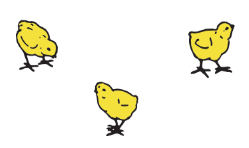
Q3.How many chicks are there?
Q4.How many counters are there?

Q5.Lucas thinks there are 3 counters here. What mistake has he made?

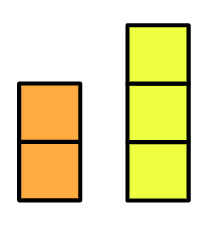
Q6.Aisha thinks there are 5 cubes here. Is she right?
Assessment exit quiz
6 Questions
Q1.What does count mean?
Q2.What does subitise mean?
Q3.How many counters can you see?

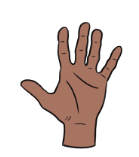
Q4.How many fingers can you see?
Q5.Lucas thinks there are 4 counters here. Is he right?
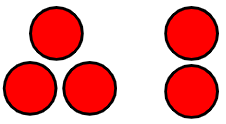
Q6.Aisha thinks there are 5 counters here. Is she right?

To help you plan your 1 maths lesson on: Explain that numbers can represent how many objects there are in a set, download all teaching resources for free and adapt to suit your pupils' needs...
To help you plan your 1 maths lesson on: Explain that numbers can represent how many objects there are in a set, download all teaching resources for free and adapt to suit your pupils' needs.
The starter quiz will activate and check your pupils' prior knowledge, with versions available both with and without answers in PDF format.
We use learning cycles to break down learning into key concepts or ideas linked to the learning outcome. Each learning cycle features explanations with checks for understanding and practice tasks with feedback. All of this is found in our slide decks, ready for you to download and edit. The practice tasks are also available as printable worksheets and some lessons have additional materials with extra material you might need for teaching the lesson.
The assessment exit quiz will test your pupils' understanding of the key learning points.
Our video is a tool for planning, showing how other teachers might teach the lesson, offering helpful tips, modelled explanations and inspiration for your own delivery in the classroom. Plus, you can set it as homework or revision for pupils and keep their learning on track by sharing an online pupil version of this lesson.
Explore more key stage 1 maths lessons from the Composition of numbers 0 to 5 unit, dive into the full primary maths curriculum, or learn more about lesson planning.