


Crossing the tens boundary counting forwards and backwards


Lesson details
Learning outcome
I can count forwards and backwards within 100, crossing the tens boundary.
Key learning points
- The numbers from 0 to 100 have patterns that can help us to count forwards and backwards across the tens boundary.
- They are arranged differently on a number track and on a one hundred square.
- We can count the numbers in two ways.
- When a number ends in a 9, it is always followed by a decade number when counting in ones.
Keywords
Cross the tens boundary - The point at which the counting moves from one decade into another.
Forwards - When you count forwards the number become greater.
Backwards - When you count backwards the number become less.
Common misconception
Confusion around the numbers which cross the tens boundary, e.g. 39, 40 may say 39, 30
Make errors for the children to discuss; encourage them to explain and correct mistakes.
Teacher tip
Provide regular daily opportunities to count to one hundred as a class and as a small group or individual basis.

Licence

Lesson video
Loading...
Prior knowledge starter quiz
6 Questions
Q1.When does the pattern of counting change when counting backwards?

Q2.I'm thinking of a number. It is in the fifties and ends in 6. What is my number?
Q3.Sort these numbers in the order you would say them if counting forwards.
Q4.Lucas counts backwards from the number 76. What numbers will he say next?
Q5.When counting forwards from 34, which of these numbers will you say?
Q6.When counting backwards from 34, which of these numbers will you say?
Assessment exit quiz
6 Questions
Q1.Aisha starts counting at 49 and finishes at 54. She must be counting __________.
Q2.When counting backwards from 60, which of these numbers would come first in the count?
Q3.Lucas is counting forwards from a number ending in 9. What was the number he started at?
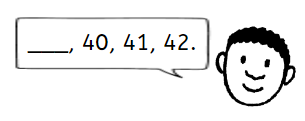
Q4.Aisha is counting backwards from a decade number. What was the decade number she started at?
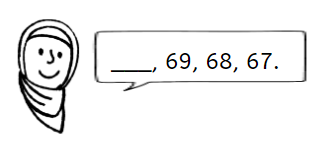
Q5.Lucas is counting forwards from 45. What is the next decade number he will say?
Q6.Aisha is counting backwards from 45. What is the next decade number she will say?
To help you plan your 1 maths lesson on: Crossing the tens boundary counting forwards and backwards, download all teaching resources for free and adapt to suit your pupils' needs...
To help you plan your 1 maths lesson on: Crossing the tens boundary counting forwards and backwards, download all teaching resources for free and adapt to suit your pupils' needs.
The starter quiz will activate and check your pupils' prior knowledge, with versions available both with and without answers in PDF format.
We use learning cycles to break down learning into key concepts or ideas linked to the learning outcome. Each learning cycle features explanations with checks for understanding and practice tasks with feedback. All of this is found in our slide decks, ready for you to download and edit. The practice tasks are also available as printable worksheets and some lessons have additional materials with extra material you might need for teaching the lesson.
The assessment exit quiz will test your pupils' understanding of the key learning points.
Our video is a tool for planning, showing how other teachers might teach the lesson, offering helpful tips, modelled explanations and inspiration for your own delivery in the classroom. Plus, you can set it as homework or revision for pupils and keep their learning on track by sharing an online pupil version of this lesson.
Explore more key stage 1 maths lessons from the Pattern in counting from 20 to 100 unit, dive into the full primary maths curriculum, or learn more about lesson planning.