


Solve problems involving area and perimeter


Lesson details
Learning outcome
I can apply understanding of calculation of area and perimeter of polygons to solve problems.
Key learning points
- Area and perimeter are calculated from the side lengths of 2D shapes.
- Perimeter is measured in units of length.
- Area is measured in squared units.
Keywords
Area - Area is a measurement of a flat surface. It measures a 2D space.
Perimeter - The distance around a 2D shape is its perimeter.
Common misconception
Because area and perimeter are so often discussed alongside each other - as is the case with this lesson - pupils often get the two confused.
By now pupils should be very familiar with area and perimeter, so that they can apply the knowledge to problem solving. However, spend time going over the definitions at the start and ensure pupils have access to visual reminders.
Teacher tip
In order to focus attention on area and perimeter and strategies for calculation, arithmetic focuses on multiplication tables. Consider how you will support pupils who are less fluent in recalling these facts.

Licence

Lesson video
Loading...
Prior knowledge starter quiz
6 Questions
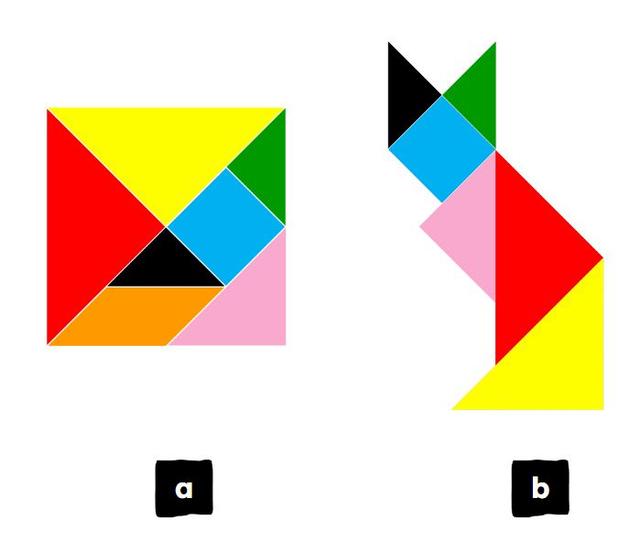
Q1.What can be done so that the shapes have the same area?

Q2.What is true for any regular shape?
Q3.What is the area of a square with a side length of 5 cm?
Q4.What is the perimeter of a square with a side length of 6 cm?
Q5.12 × 6 =
Q6.12 × 16 =
Assessment exit quiz
6 Questions
Q1.Which of the following is true?
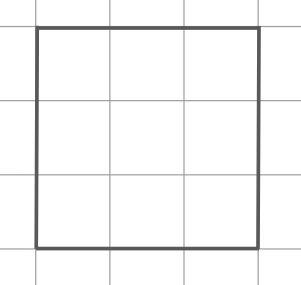
Q2.How can the perimeter of this shape be increased without its area changing?
Q3.The side length of an equilateral triangle is 8 cm. What is the area of a square with the same perimeter? cm².
Q4.The side length of a regular pentagon is 8 cm. What is the area of a square with the same perimeter? cm².
Q5.How many rectangles can be drawn with whole number side lengths that have an area of 4 cm²?
Q6.How many rectangles can be drawn with whole number side lengths that have an area of 16 cm²?
To help you plan your 6 maths lesson on: Solve problems involving area and perimeter, download all teaching resources for free and adapt to suit your pupils' needs...
To help you plan your 6 maths lesson on: Solve problems involving area and perimeter, download all teaching resources for free and adapt to suit your pupils' needs.
The starter quiz will activate and check your pupils' prior knowledge, with versions available both with and without answers in PDF format.
We use learning cycles to break down learning into key concepts or ideas linked to the learning outcome. Each learning cycle features explanations with checks for understanding and practice tasks with feedback. All of this is found in our slide decks, ready for you to download and edit. The practice tasks are also available as printable worksheets and some lessons have additional materials with extra material you might need for teaching the lesson.
The assessment exit quiz will test your pupils' understanding of the key learning points.
Our video is a tool for planning, showing how other teachers might teach the lesson, offering helpful tips, modelled explanations and inspiration for your own delivery in the classroom. Plus, you can set it as homework or revision for pupils and keep their learning on track by sharing an online pupil version of this lesson.
Explore more key stage 2 maths lessons from the Area, perimeter, position and direction unit, dive into the full primary maths curriculum, or learn more about lesson planning.