


Use knowledge of 1,000 to explain common measure conversions


Lesson details
Learning outcome
You can use knowledge of 1,000 to explain common measure conversions.
Key learning points
- There are 1,000 m in a km and 1,000 mm in a m
- There are 1,000 ml in a l and 1,000 g in a kg
- Milli means 1,000 times smaller
- Kilo means 1,000 times larger
Keywords
Millimetre - A metric measure of distance used for small lengths.
Metre - The basic unit of length (or distance) in the metric system.
Kilometre - A metric measure of distance, equal to 1,000 metres.
Gram / Kilogram - A gram (g) is a measure of mass. 1,000 grams are equivalent to one kilogram (kg).
Millilitre / litre - A millilitre (ml) is a measure of capacity. 1,000 millilitres are equivalent to one litre (l)
Common misconception
Pupils can be misled by the meaning of the prefix 'milli', as it sounds like one million. They therefore presume a millimetre is one millionth of a metre, or that one metre is one million millimetres.
The etymology of the prefixes 'milli' and 'kilo' are discussed in the lesson. You may wish to extend this by talking about other examples. Adding the words and their meanings to your Maths area will serve as a useful reminder, as will flash cards.
Teacher tip
The lesson asks pupils to use trundle wheels to measure out one kilometre, noting different landmarks or locations as they go. If this is not possible, ask them to measure one kilometre by going round the school field or playground. Using digital mapping can give a sense of a kilometre.

Equipment
Trundle wheel (ideally one between two), metre sticks.

Licence

Lesson video
Loading...
Prior knowledge starter quiz
6 Questions
Q1.Which of these representations shows 1,000?

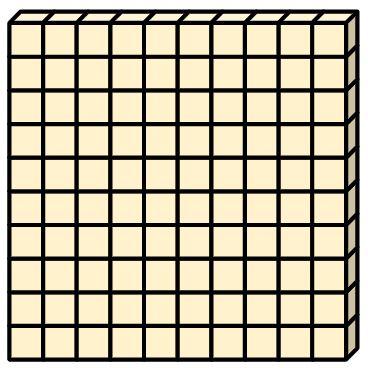
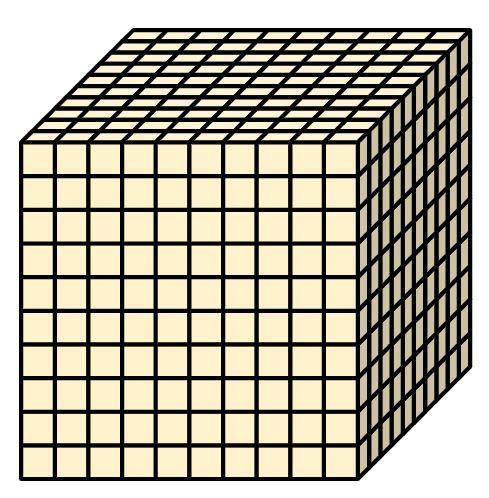
Q2.How many ones are there in one thousand?
Q3.Match the unit of measure to the correct type of measurement.

Q4.Order these units of measure from smallest to largest:
Q5.Which of the items could be around one metre long?
Q6.Which of the items could have a capacity of about one litre?
Assessment exit quiz
6 Questions
Q1.There are mm in one metre.
Q2.There are grams in one kilogram.
Q3.How many metres in one kilometre? There are m in one kilometre.
Q4.Which of these is the most sensible estimate for how long it would take to walk one kilometre?
Q5.Which of these items is approximately equivalent to one millilitre?
Q6.Which of these items is approximately equivalent to one gram?
To help you plan your 4 maths lesson on: Use knowledge of 1,000 to explain common measure conversions, download all teaching resources for free and adapt to suit your pupils' needs...
To help you plan your 4 maths lesson on: Use knowledge of 1,000 to explain common measure conversions, download all teaching resources for free and adapt to suit your pupils' needs.
The starter quiz will activate and check your pupils' prior knowledge, with versions available both with and without answers in PDF format.
We use learning cycles to break down learning into key concepts or ideas linked to the learning outcome. Each learning cycle features explanations with checks for understanding and practice tasks with feedback. All of this is found in our slide decks, ready for you to download and edit. The practice tasks are also available as printable worksheets and some lessons have additional materials with extra material you might need for teaching the lesson.
The assessment exit quiz will test your pupils' understanding of the key learning points.
Our video is a tool for planning, showing how other teachers might teach the lesson, offering helpful tips, modelled explanations and inspiration for your own delivery in the classroom. Plus, you can set it as homework or revision for pupils and keep their learning on track by sharing an online pupil version of this lesson.
Explore more key stage 2 maths lessons from the Calculation and conversion of measures unit, dive into the full primary maths curriculum, or learn more about lesson planning.