Myths about teaching can hold you back
- Year 4
Identify numbers on marked but unlabelled number lines
I can identify numbers on marked but unlabelled number lines.
- Year 4
Identify numbers on marked but unlabelled number lines
I can identify numbers on marked but unlabelled number lines.
Lesson details
Key learning points
- Within a mixed number, the whole number is the most significant part.
- The whole number part of a mixed number can be used to decide which integers it will be placed between on a number line.
- The fractional part of the mixed number can be used to establish exactly where it will be placed between these numbers.
Keywords
Mixed number - A mixed number is a whole number and a fraction combined.
Integer - An integer is a number that has no fractional part - they are whole numbers. This includes the counting numbers e.g, 1, 2, 3 and zero.
Common misconception
Children may count the marks rather than the equal parts between integers thereby determining the unit that we are working with incorrectly.
Show that we need to count the equal parts in between the given integers, not the marks. You could model this with the same line with increasing parts.
To help you plan your year 4 maths lesson on: Identify numbers on marked but unlabelled number lines, download all teaching resources for free and adapt to suit your pupils' needs...
To help you plan your year 4 maths lesson on: Identify numbers on marked but unlabelled number lines, download all teaching resources for free and adapt to suit your pupils' needs.
The starter quiz will activate and check your pupils' prior knowledge, with versions available both with and without answers in PDF format.
We use learning cycles to break down learning into key concepts or ideas linked to the learning outcome. Each learning cycle features explanations with checks for understanding and practice tasks with feedback. All of this is found in our slide decks, ready for you to download and edit. The practice tasks are also available as printable worksheets and some lessons have additional materials with extra material you might need for teaching the lesson.
The assessment exit quiz will test your pupils' understanding of the key learning points.
Our video is a tool for planning, showing how other teachers might teach the lesson, offering helpful tips, modelled explanations and inspiration for your own delivery in the classroom. Plus, you can set it as homework or revision for pupils and keep their learning on track by sharing an online pupil version of this lesson.
Explore more key stage 2 maths lessons from the Compare and order mixed numbers and position on a number line unit, dive into the full primary maths curriculum, or learn more about lesson planning.
Licence
Lesson video
Loading...
Prior knowledge starter quiz
6 Questions
Q1.Look at this number $$3 {{2} \over {4}}$$ We say it as three and two .
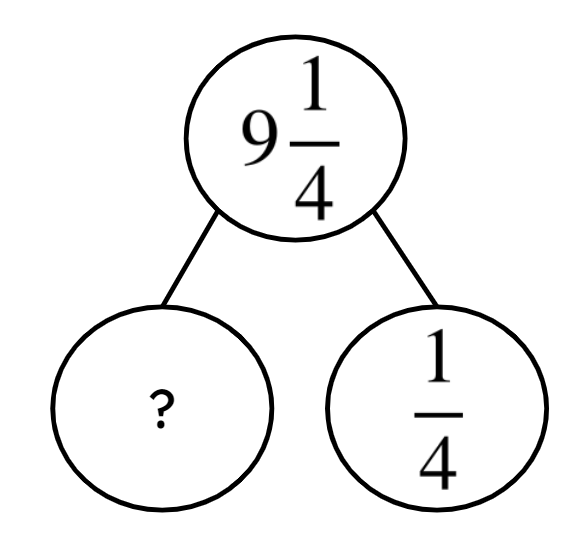
Q2.Look at the part-part-whole model. What is the missing part?

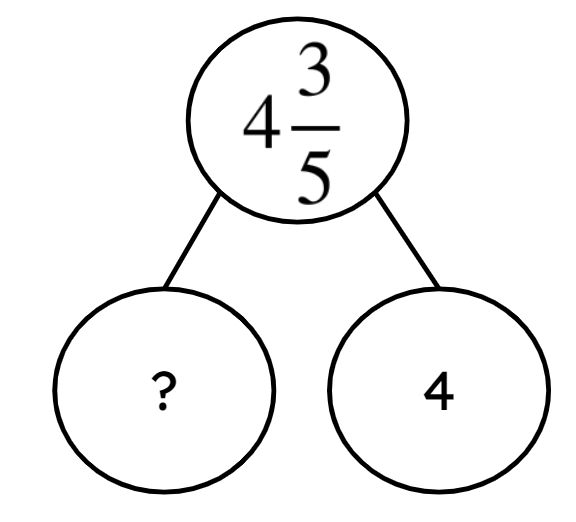
Q3.Look at the part-part-whole model. $$4 {{3} \over {5}}$$ is composed of four wholes and three-

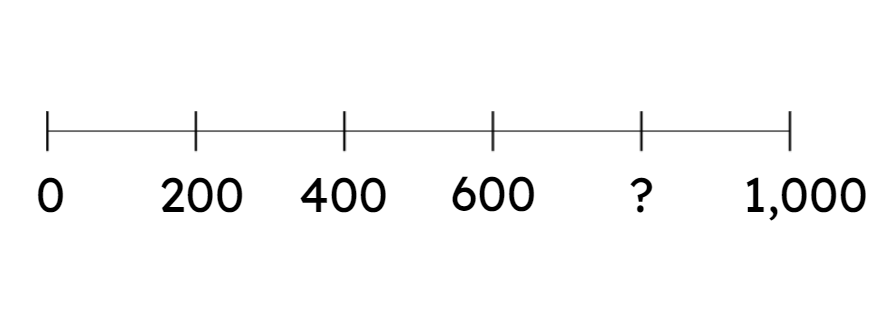
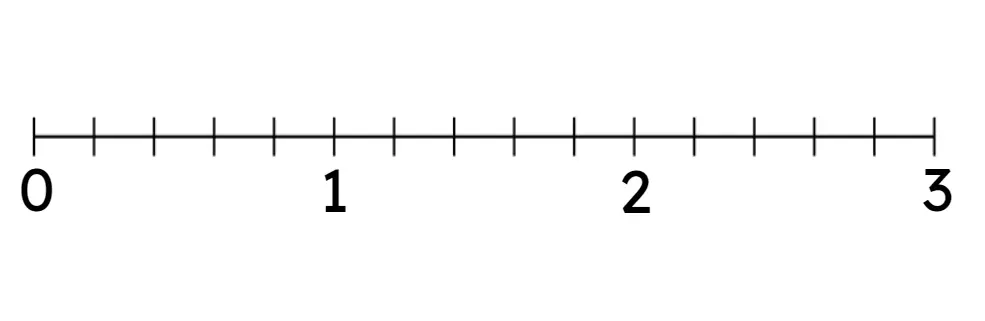
Q4.Look at this number line. The missing number is

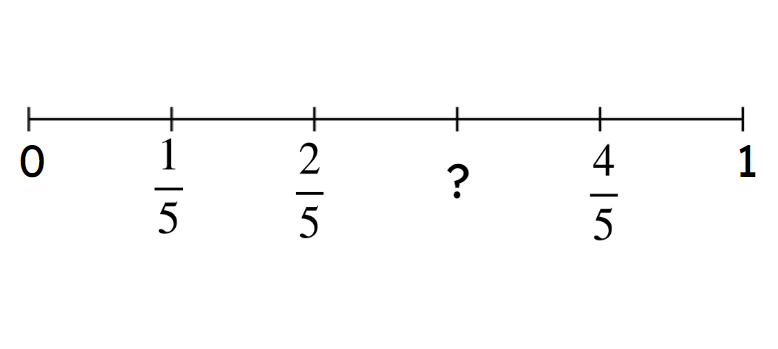
Q5.Look at this number line. What is the missing number?

Q6.Look at this number line. The interval between two consecutive whole numbers is divided into how many equal parts?

Assessment exit quiz
6 Questions
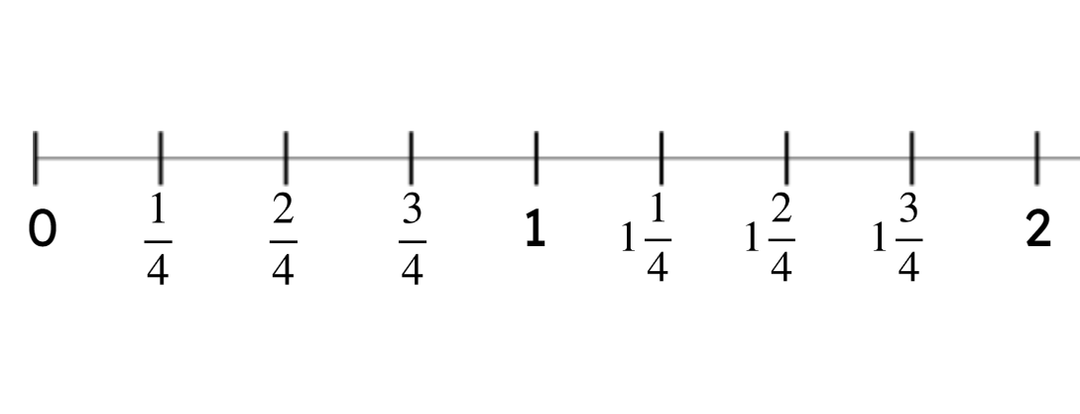
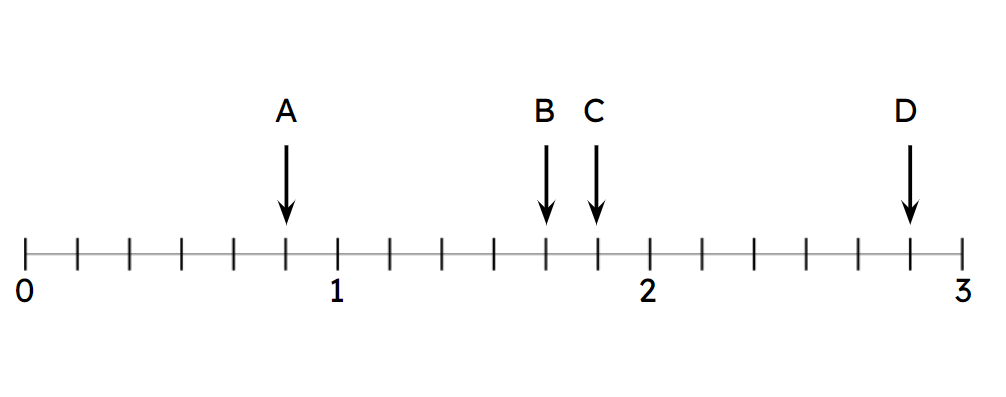
Q1.Look at the number line. Which number is greater than one but close to one?

Q2.Look at the number line and complete this sentence: Each interval between the integers on the line is divided into four equal parts. This allows us to count in __________.

Q3.Look at the numberline. Where would $$1{{5} \over {6}}$$ be positioned?

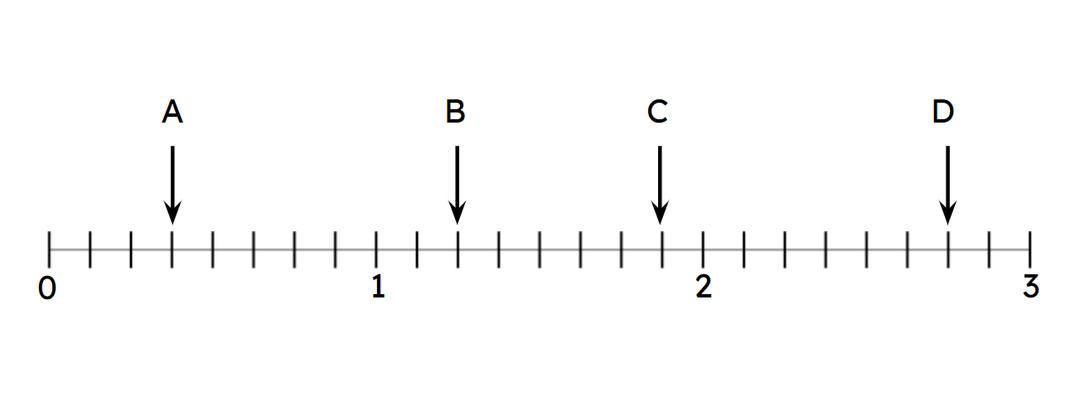
Q4.Look at this number line. Match the letter to the number that it is representing.

A -
$$ {3} \over {8}$$
B -
$$1{{2} \over {8}}$$
C -
$$1{{7} \over {8}}$$
D -
$$2{{6} \over {8}}$$
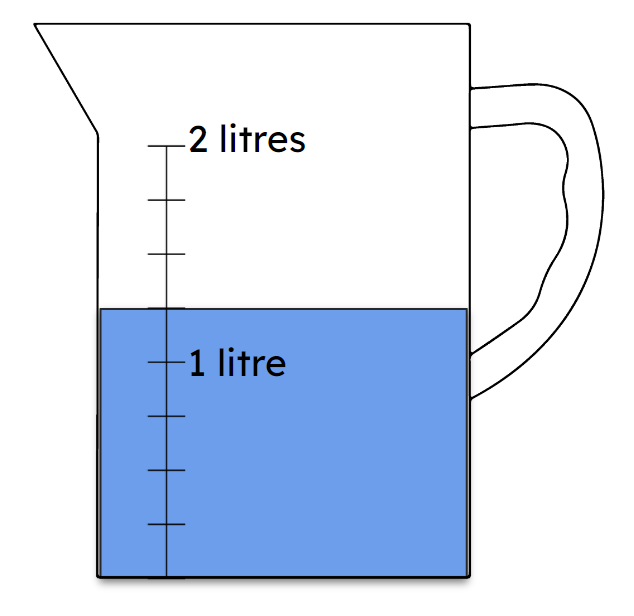
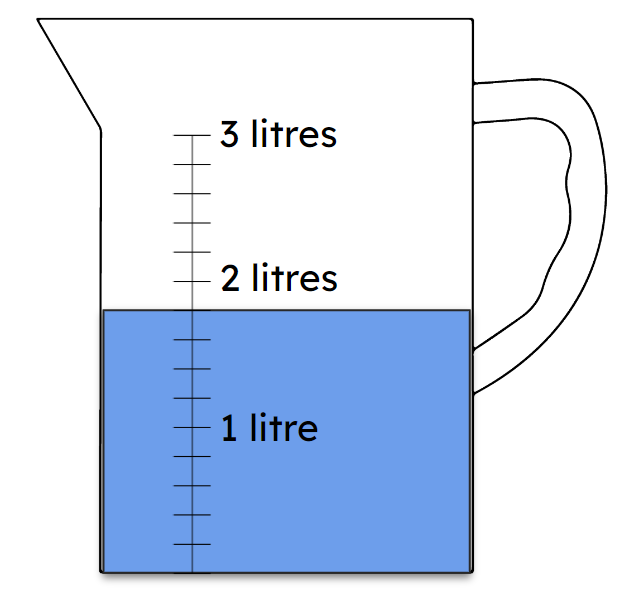
Q5.What volume of water is in the jug?

Q6.What volume of water is in the jug?