Choose exam board for KS4 Computer Science (GCSE)
Choose exam board for KS4 English
Choose exam board for KS4 French
Choose exam board for KS4 Geography
Choose exam board for KS4 German
Choose exam board for KS4 History
Choose tier for KS4 Maths
Choose exam board for KS4 Music
Choose exam board for KS4 Physical education (GCSE)
Choose exam board for KS4 Religious education (GCSE)
Choose exam board for KS4 Spanish

Identify non-unit fractions
Lesson details

Learning outcome

I can identify non-unit fractions.

Key learning points

  1. A non-unit fraction has a numerator greater than 1; it is composed of more than one unit fraction.
  2. We say, 'the whole has been divided into ___ equal parts, and I have ___ of them'.
  3. When writing fractions, the numerator is the top number showing the number of equal parts we have.
  4. The denominator is the bottom number showing the number of equal parts the whole has been divided into.

Keywords

  • Division bar - The division bar is the horizontal line separating the two values in a fraction.

  • Denominator - A denominator is the bottom number in a fraction.

  • Numerator - A numerator is the top number in a fraction.

Common misconception

Pupils may count the number of equal parts that are shaded and write the numerator and then count the number that are not shaded and write the denominator.

Ensure that pupils count all of the equal parts to find the denominator. The denominator is the number of equal parts that make up whole. We encourage children to find, and then describe, the denominator before the numerator.

Teacher tip

In this lesson, pupils explore non-unit fractions, writing these in fraction notation. They should use the terms denominator and numerator correctly. Explore the language of 'whole' and 'parts' with the pupils. Explain that the whole can be a shape, a line or a set of objects.

Licence

This content is © Oak National Academy Limited (2025), licensed on Open Government Licence version 3.0
except where otherwise stated. See Oak's terms & conditions
(Collection 2).

Lesson video

Loading...

Prior knowledge starter quiz

6 Questions
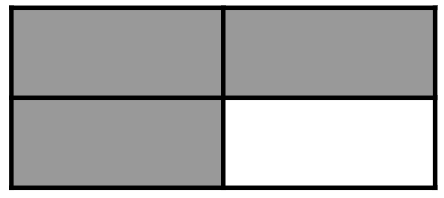
Q1.
How many one-quarters are shaded?

An image in a quiz
Correct Answer: 3, three

Q2.
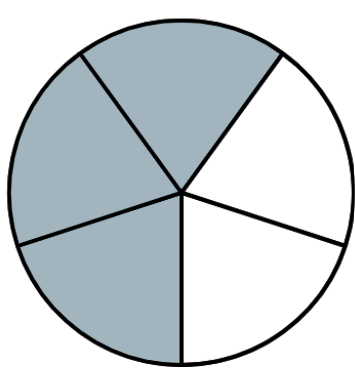
How many one-fifths are shaded?

An image in a quiz
Correct Answer: 3, three

Q3.
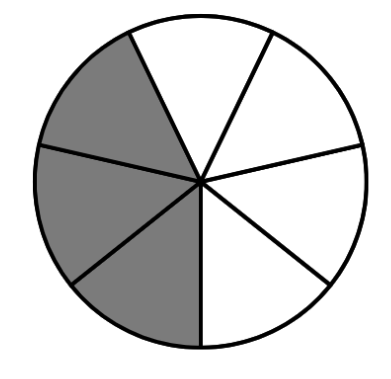
What fraction is represented?

An image in a quiz
three-eighths
Correct answer: three-sevenths
three-sixths

Q4.
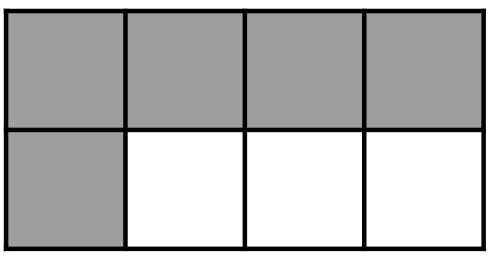
What fraction is represented?

An image in a quiz
five-sixths
five-sevenths
Correct answer: five-eighths

Q5.
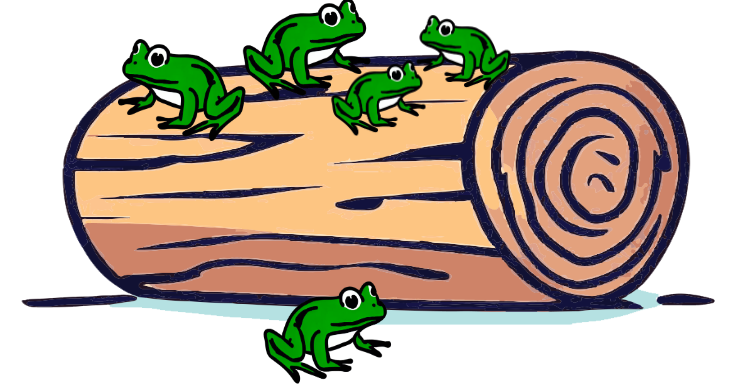
What fraction of the frogs are on the log?

An image in a quiz
five-fourths
five-fifths
Correct answer: four-fifths

Q6.
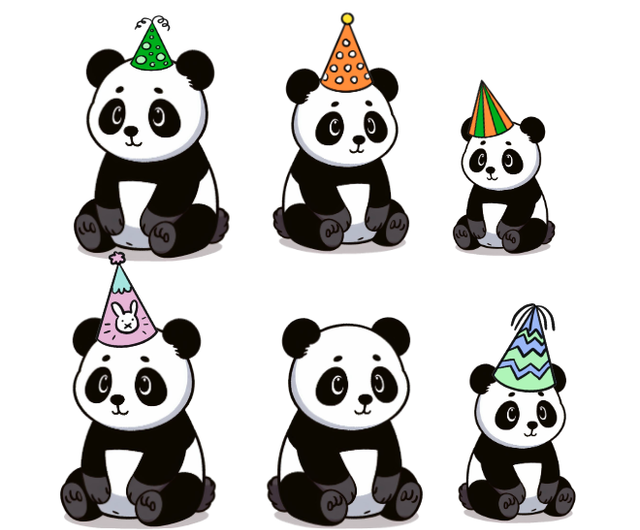
What fraction of the pandas are wearing hats?

An image in a quiz
Correct answer: five-sixths
six-fifths
five-sevenths

6 Questions

Q1.
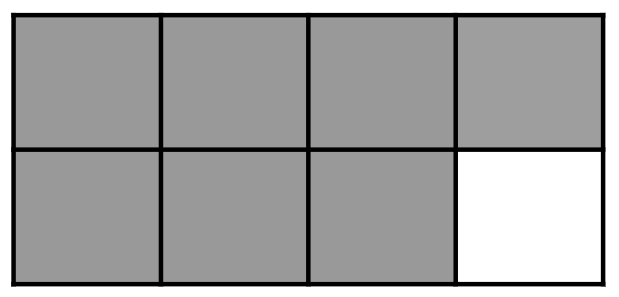
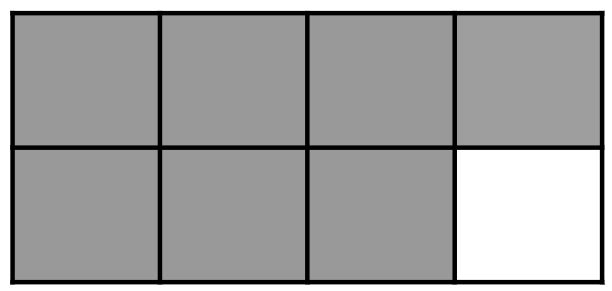
What is the denominator of the fraction shaded

An image in a quiz
Correct Answer: 8, eight

Q2.
What is the numerator of the fraction shaded?

An image in a quiz
Correct Answer: 7, seven

Q3.
What fraction is shaded?

An image in a quiz
$$ \frac{3}{4} $$
$$ \frac{4}{6} $$
Correct answer: $$ \frac{3}{6} $$

Q4.
What fraction is shaded?

An image in a quiz
$$ \frac{8}{3} $$
$$ \frac{3}{7} $$
Correct answer: $$ \frac{3}{8} $$

Q5.
What fraction of stars are shaded?

An image in a quiz
$$ \frac{3}{7} $$
$$ \frac{5}{6} $$
Correct answer: $$ \frac{4}{7} $$

Q6.
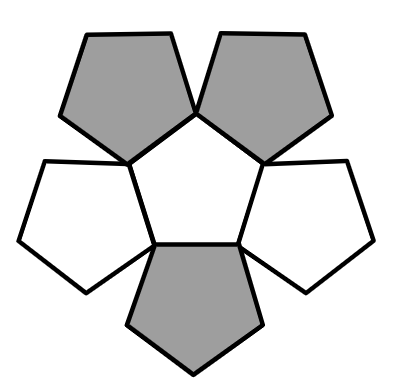
Sofia shades 3 parts of this shape yellow and 3 parts green. The rest she shades red. What fraction is red?

An image in a quiz
$$ \frac{5}{8} $$
$$ \frac{7}{9} $$
Correct answer: $$ \frac{3}{9} $$

To help you plan your 3 maths lesson on: Identify non-unit fractions, download all teaching resources for free and adapt to suit your pupils' needs...