


Make and draw quadrilaterals on circular geoboards


Lesson details
Learning outcome
I can make and draw quadrilaterals on circular geoboards and name quadrilaterals according to their properties.
Key learning points
- Join four dots on the edge of the circle to create a quadrilateral.
- Use the properties of the quadrilateral to decide if the quadrilaterals are different or the same.
- Work systematically to create all the different possible quadrilaterals.
Keywords
Quadrilateral - A quadrilateral is a polygon with four straight sides and four vertices.
Vertex / vertices - A vertex is the point where two lines meet. The plural is vertices.
Parallel - Parallel lines are straight lines that are always the same distance apart. They never get closer together or further apart.
Common misconception
Pupils find remembering the types and properties of quadrilaterals challenging.
Take time to repeat and revisit the key properties within the lesson and beyond. Consider providing a scaffold for some pupils so they can create quadrilaterals without having to recall the specific properties each time.
Teacher tip
This lesson focuses on different types of quadrilaterals. Take time to ensure that you have a secure understanding of the definitions of each. You may wish to create some unusual examples to share.

Licence

Lesson video
Loading...
Prior knowledge starter quiz
6 Questions
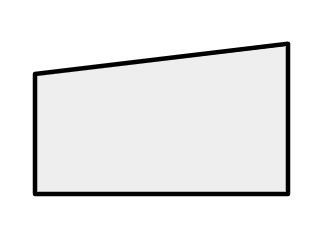
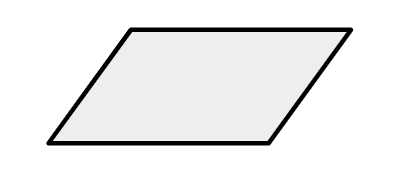
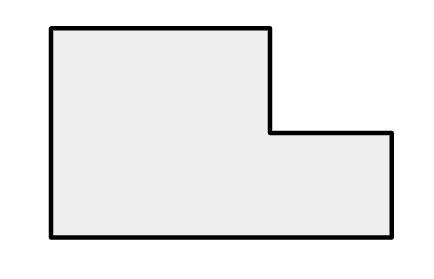
Q1.Tick the shape which is a trapezium.

Q2.Match the shape name to the number of vertices it has.

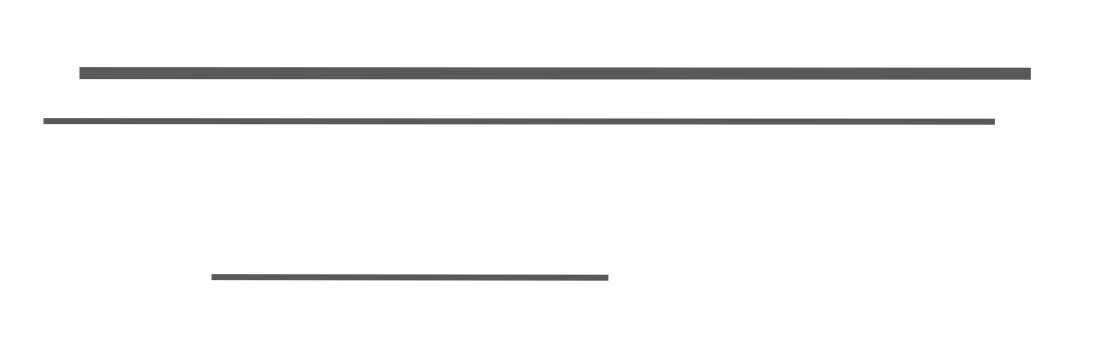
Q3.True or false? These lines are all parallel to one another.
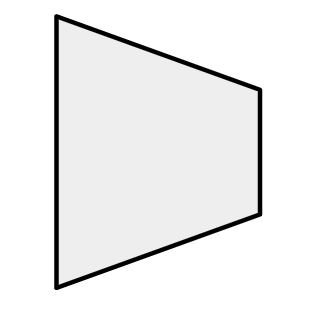
Q4.Complete the sentence. This quadrilateral has pair(s) of perpendicular sides.
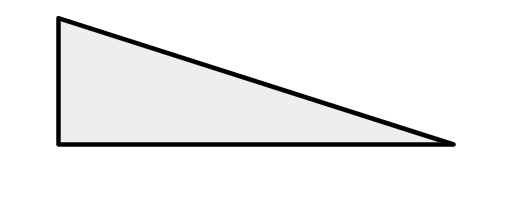
Q5.Complete the sentence. This polygon has pairs of parallel sides.
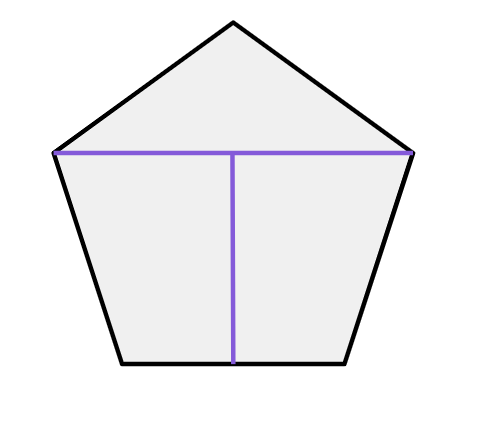
Q6.Select the correct three shapes the pentagon has been decomposed into.
Assessment exit quiz
6 Questions
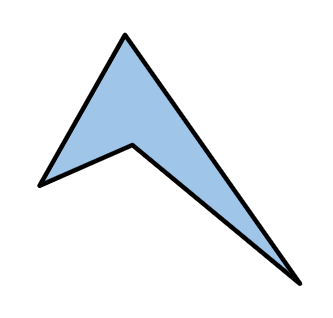
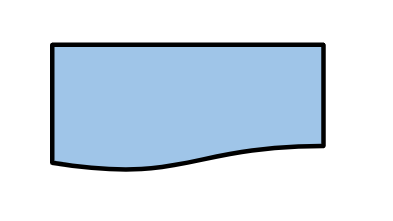
Q1.Select the quadrilaterals.


Q2.Select the parallelogram.
Q3.Select the properties of this polygon drawn on a circular grid.

Q4.What is the name of this polygon?
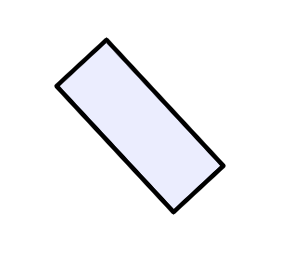
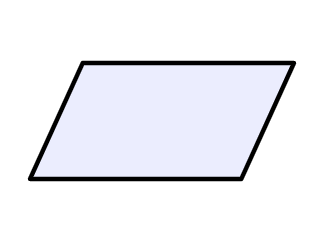
Q5.Select the parallelograms which are not rectangles.
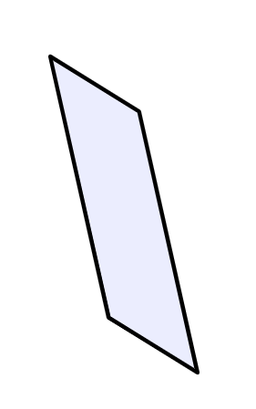
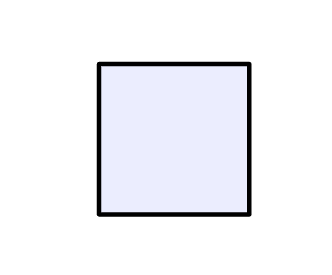
Q6.What is the difference between a parallelogram and a trapezium?
To help you plan your 3 maths lesson on: Make and draw quadrilaterals on circular geoboards, download all teaching resources for free and adapt to suit your pupils' needs...
To help you plan your 3 maths lesson on: Make and draw quadrilaterals on circular geoboards, download all teaching resources for free and adapt to suit your pupils' needs.
The starter quiz will activate and check your pupils' prior knowledge, with versions available both with and without answers in PDF format.
We use learning cycles to break down learning into key concepts or ideas linked to the learning outcome. Each learning cycle features explanations with checks for understanding and practice tasks with feedback. All of this is found in our slide decks, ready for you to download and edit. The practice tasks are also available as printable worksheets and some lessons have additional materials with extra material you might need for teaching the lesson.
The assessment exit quiz will test your pupils' understanding of the key learning points.
Our video is a tool for planning, showing how other teachers might teach the lesson, offering helpful tips, modelled explanations and inspiration for your own delivery in the classroom. Plus, you can set it as homework or revision for pupils and keep their learning on track by sharing an online pupil version of this lesson.
Explore more key stage 2 maths lessons from the Parallel and perpendicular sides in polygons unit, dive into the full primary maths curriculum, or learn more about lesson planning.