Choose exam board for KS4 Computer Science (GCSE)
Choose exam board for KS4 English
Choose exam board for KS4 French
Choose exam board for KS4 Geography
Choose exam board for KS4 German
Choose exam board for KS4 History
Choose tier for KS4 Maths
Choose exam board for KS4 Music
Choose exam board for KS4 Physical education (GCSE)
Choose exam board for KS4 Religious education (GCSE)
Choose exam board for KS4 Spanish

      Explain how to find all the factors of a number systematically
      Lesson details

      Learning outcome

      I can explain how to find all the factors of a number systematically.

      Key learning points

      1. All numbers have themselves and 1 as factors.
      2. Listing factors in order helps identify all the factors for a given number.

      Keywords

      • Factor - Factors are whole numbers which exactly divide another whole number.

      • Systematic - Being systematic, means working in a set way, often according to a fixed plan.

      Common misconception

      Pupils do not know when to stop looking for more factors.

      Build up finding factors of numbers systematically by arranging into rows and columns, starting with 1 row. Encourage pupils to generalise that when the number of rows becomes larger than the number of columns, you can stop looking for factors.

      Teacher tip

      There are a number of ways for pupils to recognise that they no longer need to search for factors. Spend time encouraging pupils to reason how they know they have all the factors, linking this to the language of multiplication and division equations.

      Licence

      This content is © Oak National Academy Limited (2026), licensed on Open Government Licence version 3.0
      except where otherwise stated. See Oak's terms & conditions
      (Collection 2).

      Lesson video

      Loading...

      Prior knowledge starter quiz

      6 Questions
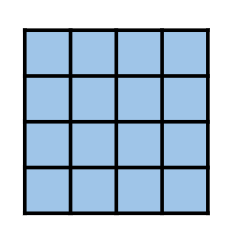
      Q1.
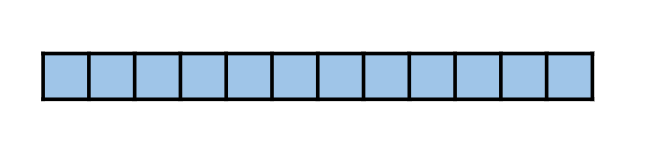
      What multiplication equation does this array represent?

      An image in a quiz
      4 × 2 = 16
      Correct answer: 4 × 4 = 16
      16 × 4 = 16

      Q2.
      What is the missing factor in this image?

      An image in a quiz
      Correct Answer: 10, ten

      Q3.
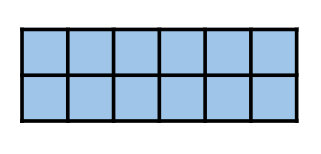
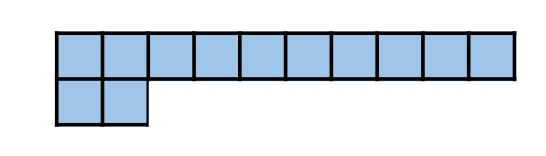
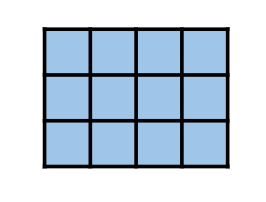
      Which of these are correct arrays for 12?

      Correct Answer: An image in a quiz
      An image in a quiz
      An image in a quiz
      Correct Answer: An image in a quiz
      An image in a quiz
      Correct Answer: An image in a quiz
      An image in a quiz

      Q4.
      Which of these make a rectangle with an area of 32 cm $$^2$$?

      30 cm + 2 cm =
      Correct answer: 4 cm × 8 cm =
      Correct answer: 1 cm × 32 cm =
      5 cm × 6 cm =
      3 cm × 2 cm =

      Q5.
      Complete the missing factor: 12 × = 60

      Correct Answer: 5, five

      Q6.
      Complete: 72 ÷ = 9

      Correct Answer: 8, eight

      6 Questions

      Q1.
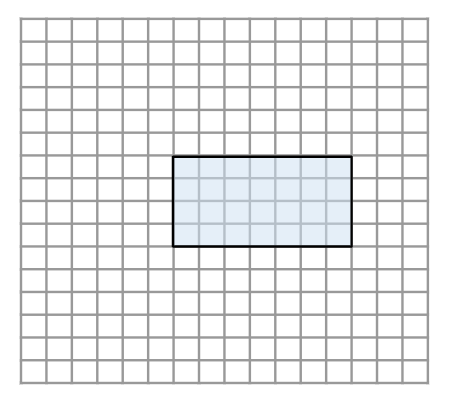
      Look at the rectangle on the grid. What is being represented?

      An image in a quiz
      28 × 7 = 4
      Correct answer: 7 × 4 = 28
      Correct answer: 4 × 7 = 28
      4 × 28 = 7

      Q2.
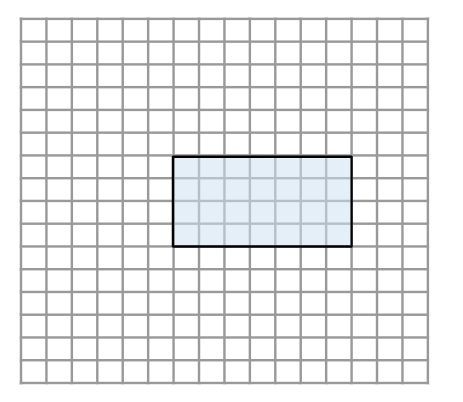
      Look at the rectangle on the grid. What other factor pairs would make a rectangle covering the same area?

      An image in a quiz
      20 and 8
      Correct answer: 1 and 28
      10 and 18
      8 and 3
      Correct answer: 2 and 14

      Q3.
      Which of these are factors of 48?

      Correct answer: 1
      Correct answer: 12
      40
      Correct answer: 48
      96

      Q4.
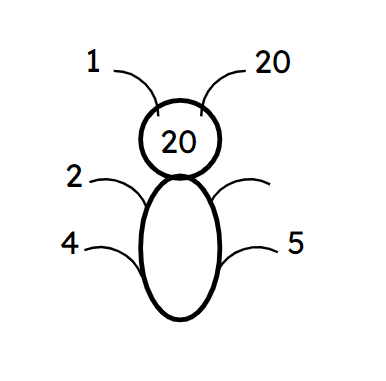
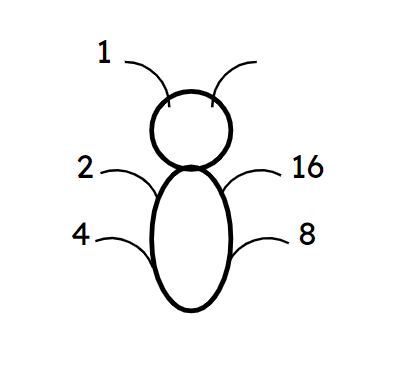
      Which factor is missing from the factor bug?

      An image in a quiz
      Correct Answer: 10, ten

      Q5.
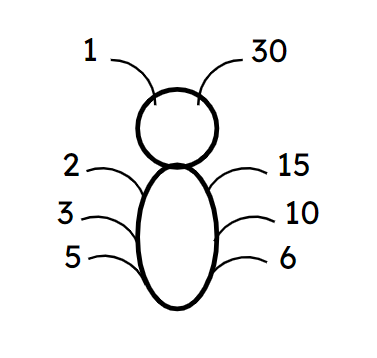
      What number is represented by the factor bug?

      An image in a quiz
      Correct Answer: 30, thirty

      Q6.
      What number is represented by the incomplete factor bug?

      An image in a quiz
      Correct Answer: 32

      To help you plan your 5 maths lesson on: Explain how to find all the factors of a number systematically, download all teaching resources for free and adapt to suit your pupils' needs...