


Using redistribution with addition of decimal fractions


Lesson details
Learning outcome
I can use redistribution with addition of decimal fractions.
Key learning points
- If one part is increased and the other is decreased by the same amount, the whole stays the same.
- If one part is decreased and the other is increased by the same amount, the whole stays the same.
- Redistributing between parts with the whole staying the same is sometimes known as the 'same sum' rule.
Keywords
Redistribution - Redistribution is where part of one addend is moved to another addend. It is sometimes known as the same sum rule.
Decimal fraction - A decimal fraction is a fraction written as a decimal. A decimal point separates whole numbers from decimal fractions.
Whole - The whole is all the parts or everything, the total amount.
Part - A part is some of the whole.
Common misconception
Children may struggle to not immediately rush to making use of a written method such as columns addition.
Encourage the children to be resilient and remind them that practice makes perfect.
Teacher tip
You might want to begin the lesson with some counting in tenths and hundredths to refamiliarise them with these values.

Licence

Lesson video
Loading...
Prior knowledge starter quiz
6 Questions
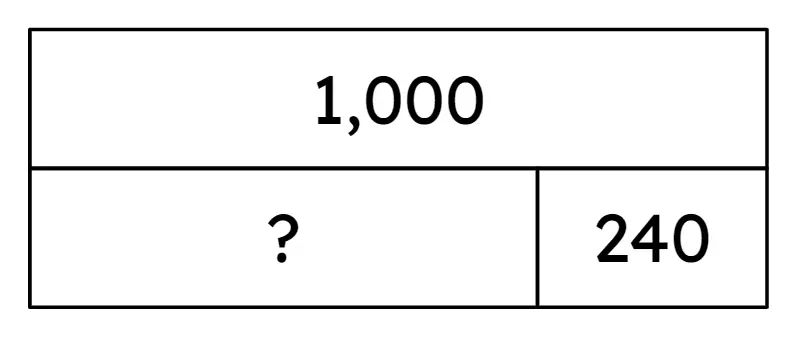
Q1.What is the missing part in this bar model?

Q2.Complete: 327 + 99 =
Q3.Jun buys two packs of oranges which cost £1.49 each. How much does he spend altogether? £
Q4.Sofia has £10 to spend. She buys a souvenir bear for £4.50 How much change should she receive? £
Q5.Sam thinks of a 2-digit number. She adds 7 before halving it to finish with the number 25
What was her starting number?
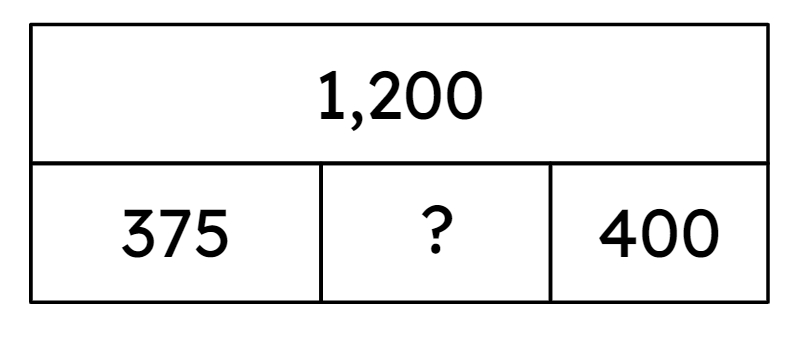
Q6.What is the missing part in this bar model?
Assessment exit quiz
6 Questions
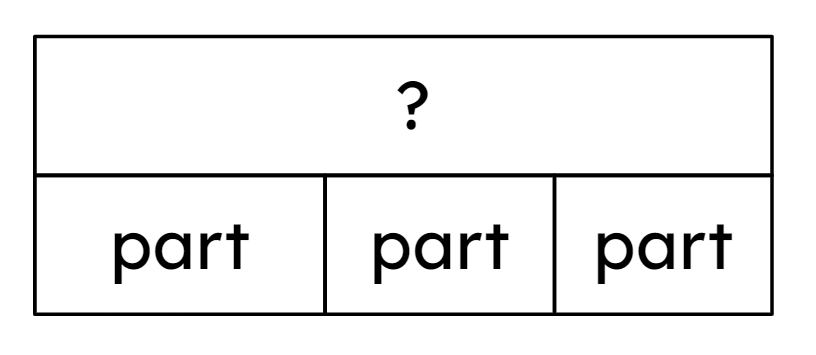
Q1.Is the question mark on the bar model a part or whole?
Q2.Use the mental strategy of redistribution to calculate the whole. 3.1 + 3.6 =
Q3.Use the mental strategy of redistribution to calculate the whole. 5.9 + 6.6 =
Q4.Use the mental strategy of redistribution to calculate the whole. 4.99 + 3.45 =
Q5.Which of the following additions do you think was most likely to have been solved using redistribution?
Q6.Which inequality symbol should be placed between these two addition expressions? Use redistribution to help.
2.02 + 5.79 5.81 + 1.95
To help you plan your 6 maths lesson on: Using redistribution with addition of decimal fractions, download all teaching resources for free and adapt to suit your pupils' needs...
To help you plan your 6 maths lesson on: Using redistribution with addition of decimal fractions, download all teaching resources for free and adapt to suit your pupils' needs.
The starter quiz will activate and check your pupils' prior knowledge, with versions available both with and without answers in PDF format.
We use learning cycles to break down learning into key concepts or ideas linked to the learning outcome. Each learning cycle features explanations with checks for understanding and practice tasks with feedback. All of this is found in our slide decks, ready for you to download and edit. The practice tasks are also available as printable worksheets and some lessons have additional materials with extra material you might need for teaching the lesson.
The assessment exit quiz will test your pupils' understanding of the key learning points.
Our video is a tool for planning, showing how other teachers might teach the lesson, offering helpful tips, modelled explanations and inspiration for your own delivery in the classroom. Plus, you can set it as homework or revision for pupils and keep their learning on track by sharing an online pupil version of this lesson.
Explore more key stage 2 maths lessons from the Use equivalence and compensation to simplify and solve addition calculations unit, dive into the full primary maths curriculum, or learn more about lesson planning.