Myths about teaching can hold you back
- Year 7
Checking and securing converting mixed numbers to improper fractions
I can use awareness that fractions of the form a/b, where a>b, are greater than one and so convert from mixed numbers to improper fractions.
- Year 7
Checking and securing converting mixed numbers to improper fractions
I can use awareness that fractions of the form a/b, where a>b, are greater than one and so convert from mixed numbers to improper fractions.
Lesson details
Key learning points
- Fractions where the numerator is greater than the denominator are greater than one.
- Whole numbers can be written as improper fractions.
- Mixed numbers can be converted into improper fractions.
- It may be helpful to switch between mixed number and improper fractions depending on the context.
Keywords
Proper fraction - A proper fraction is a fraction where the numerator is less than the denominator.
Improper fraction - An improper fraction is a fraction where the numerator is greater than or equal to the denominator.
Mixed number - A mixed number is an improper fraction written as its integer part plus the fractional part where the fractional part is a proper fraction.
Common misconception
Some pupils can miscalculate the mixed number to an improper fraction.
For smaller numbers, encourage pupils to draw bar models or diagrams to show the relationship between the whole and the improper fraction.
To help you plan your year 7 maths lesson on: Checking and securing converting mixed numbers to improper fractions, download all teaching resources for free and adapt to suit your pupils' needs...
To help you plan your year 7 maths lesson on: Checking and securing converting mixed numbers to improper fractions, download all teaching resources for free and adapt to suit your pupils' needs.
The starter quiz will activate and check your pupils' prior knowledge, with versions available both with and without answers in PDF format.
We use learning cycles to break down learning into key concepts or ideas linked to the learning outcome. Each learning cycle features explanations with checks for understanding and practice tasks with feedback. All of this is found in our slide decks, ready for you to download and edit. The practice tasks are also available as printable worksheets and some lessons have additional materials with extra material you might need for teaching the lesson.
The assessment exit quiz will test your pupils' understanding of the key learning points.
Our video is a tool for planning, showing how other teachers might teach the lesson, offering helpful tips, modelled explanations and inspiration for your own delivery in the classroom. Plus, you can set it as homework or revision for pupils and keep their learning on track by sharing an online pupil version of this lesson.
Explore more key stage 3 maths lessons from the Comparing and ordering fractions and decimals (positive and negative) unit, dive into the full secondary maths curriculum, or learn more about lesson planning.
Licence
Prior knowledge starter quiz
6 Questions
Q1.Match together each type of fraction with an example of that fraction.
mixed number -
$$2 \frac {8}{9}$$
proper fraction -
$$\frac {8}{9}$$
improper fraction -
$$\frac {9}{8}$$
Q2.Write the correct symbol (<, > or =) to make the statement true: 236 ÷ 237 1
Q3.Match each statement to the symbol that should go in the box to make each statement true.
$$\frac{6}{5} \square 1$$ -
>
$$\frac{5}{6} \square 1$$ -
<
$$\frac{6+5}{5+6 } \square 1$$ -
=
Q4.Aisha writes: $$\frac{17} {6} = \square \frac {5}{6}$$. Jun should write the number in the box.
Q5.Izzy writes: $$\frac{23} {4} = 5 \frac {\square}{4}$$. Izzy should write the number in the box.
Q6.Match each improper fraction to its equivalent mixed number.
$$ \frac {23}{6}$$ -
$$3 \frac {5}{6}$$
$$ \frac {5}{3}$$ -
$$1 \frac {2}{3}$$
$$ \frac {15}{6}$$ -
$$2 \frac {1}{2}$$
$$ \frac {14}{6}$$ -
$$2 \frac {1}{3}$$
$$ \frac {10}{3}$$ -
$$3 \frac {1}{3}$$
Assessment exit quiz
6 Questions
Q1.Fractions where the numerator is greater than or equal to the denominator are called fractions.
Q2.The integer that is equivalent to the fraction $$20 \over 4$$ is .
Q3.Write $$4\frac{2}{3}$$ as an improper fraction.
Q4.Write the correct symbol (<, > or =) to make the statement true: $$15 \frac {1}{4} $$ $$\frac {31}{2} $$
Q5.Starting with the smallest, put these fractions and mixed numbers in order of size.
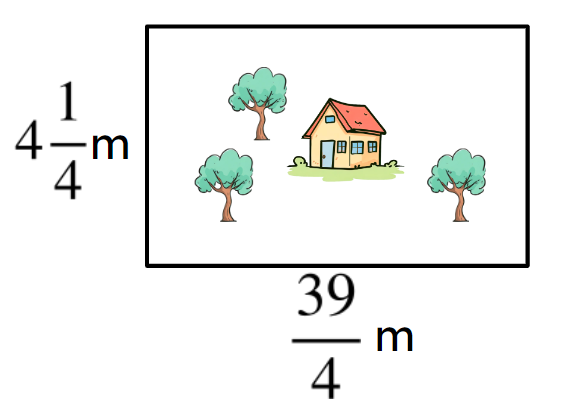
Q6.A gardener puts up a fence around a rectangular garden. Each fence panel is 1 metre long and costs £35. What is the total cost of the fencing? £