Myths about teaching can hold you back
- Year 8
Calculating the mean
I can calculate the mean from data presented in a frequency table and different graphs.
- Year 8
Calculating the mean
I can calculate the mean from data presented in a frequency table and different graphs.
Lesson details
Key learning points
- The mean can be calculated from a line graph.
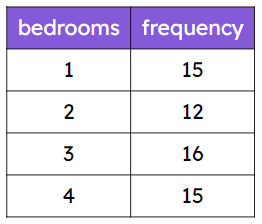
- The mean can be calculated from an ungrouped frequency table.
- The mean can be calculated from a bar chart.
Keywords
Frequency - The frequency is the number of times an event occurs; or the number of individuals (people, animals etc.) with some specific property.
Data - Data are a collection of information.
Mean - The sum of the values divided by the number of values. It is a measure of central tendency representing the average of the values.
Measure of central tendency - A summary measure that attempts to describe a whole set of data with a single value that represents the middle of the distribution.
Common misconception
Pupils may divide by how many groups/bars there are, instead of the total frequency.
By reminding students frequently that averages need to give a 'typical' value of the data set, ask them to sense check their mean value.
To help you plan your year 8 maths lesson on: Calculating the mean, download all teaching resources for free and adapt to suit your pupils' needs...
To help you plan your year 8 maths lesson on: Calculating the mean, download all teaching resources for free and adapt to suit your pupils' needs.
The starter quiz will activate and check your pupils' prior knowledge, with versions available both with and without answers in PDF format.
We use learning cycles to break down learning into key concepts or ideas linked to the learning outcome. Each learning cycle features explanations with checks for understanding and practice tasks with feedback. All of this is found in our slide decks, ready for you to download and edit. The practice tasks are also available as printable worksheets and some lessons have additional materials with extra material you might need for teaching the lesson.
The assessment exit quiz will test your pupils' understanding of the key learning points.
Our video is a tool for planning, showing how other teachers might teach the lesson, offering helpful tips, modelled explanations and inspiration for your own delivery in the classroom. Plus, you can set it as homework or revision for pupils and keep their learning on track by sharing an online pupil version of this lesson.
Explore more key stage 3 maths lessons from the Numerical summaries of data unit, dive into the full secondary maths curriculum, or learn more about lesson planning.
Licence
Prior knowledge starter quiz
6 Questions
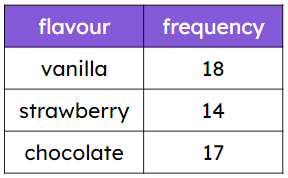
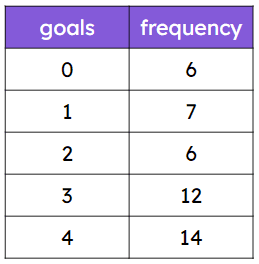
Q1.Which of these frequency tables shows 49 pieces of data?


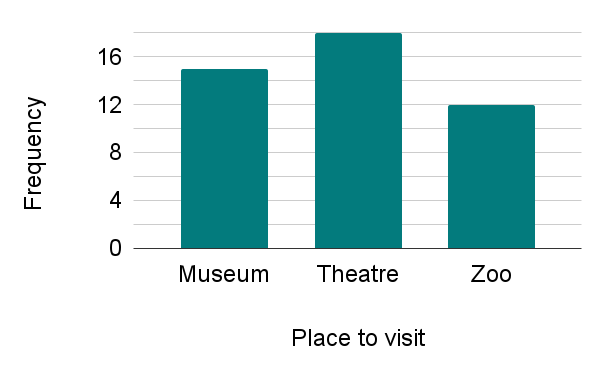
Q2.The bar chart shows the number of children who have visited different attractions in the summer holidays. The bar for has a frequency of 12.

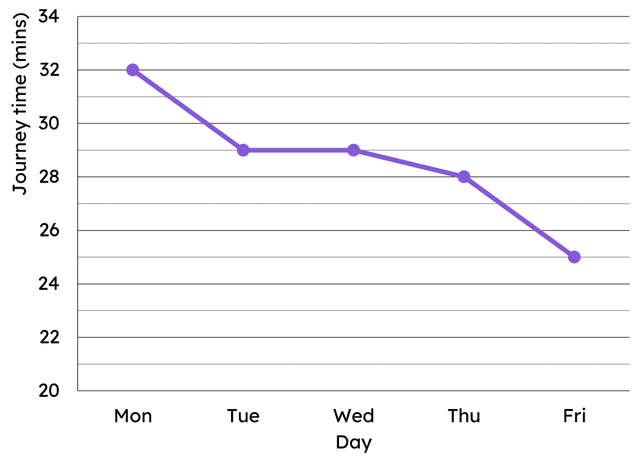
Q3.Laura times her bus journey to school every day for a week. On which day did Laura's journey take 28 minutes?

Q4.A measure of central tendency is a summary measure that attempts to describe a whole set of with a single value that represents the middle or centre of its distribution.
Q5.A large data set has 452 data values which have a total of 16 724. The mean of the data is .
Q6.The mean for the data shown on this dot plot is .

Assessment exit quiz
6 Questions
Q1.Select all the data sets that have a mean.
Q2.The (arithmetic) mean for a set of data is the sum of the values divided by the number of values. It is a measure of central tendency representing the average of the values.
Q3.Without any further calculation, which of these could be the mean?

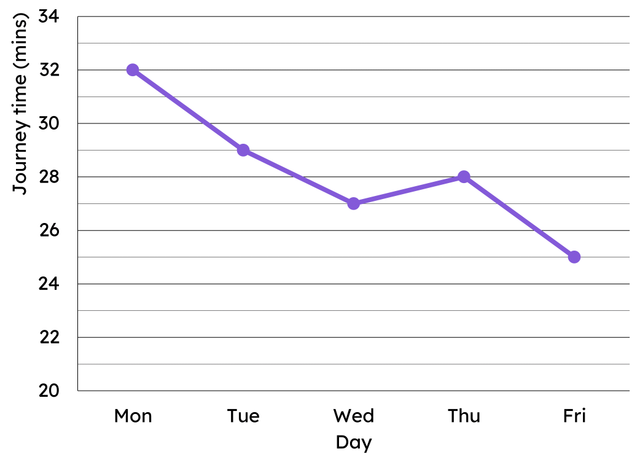
Q4.Laura records how long her journey is to school each day for a week. The line graph shows her results. Laura's mean journey time is minutes.

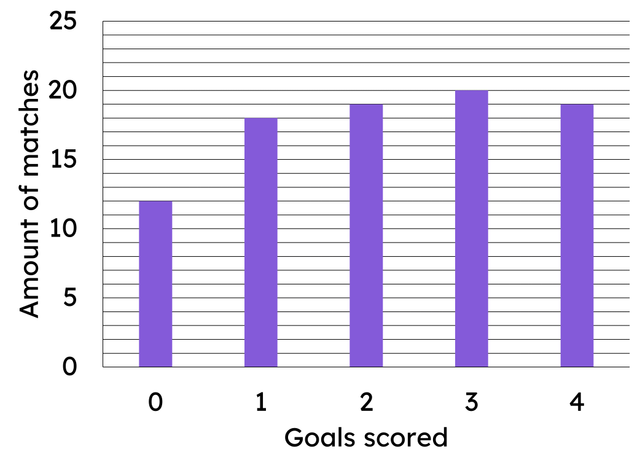
Q5.The bar chart shows the number of goals scored by a club in a season. 192 goals were scored in total. The mean number of goals per match is rounded to 1 decimal place.

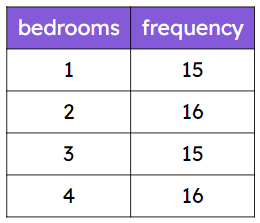
Q6.Which of these calculations is correct for finding the mean from this frequency table?