


Levers


Lesson details
Learning outcome
I can identify levers and describe their purpose and how they work.
Key learning points
- Levers can multiply a small force into a larger force.
- Levers can multiply a small movement into a larger movement.
- There are different types of lever, each with the pivot in a different position.
Keywords
Lever - A lever is a simple machine designed to use the turning effect of a force.
Effort - The force applied to a lever is called the effort.
Load - The force produced by a lever is called the load.
Pivot - A lever will rotate around a pivot.
Force multiplier - If a lever produces a larger load force than the effort force, it is a force multiplier.
Common misconception
Pupils confuse the term moment with ideas about time or movement.
Use the term ‘turning effect’ in this lesson whilst ideas are being introduced and consolidated.
Teacher tip
Pupils should try out as many types of lever as are available, identifying the load, effort and pivots.

Licence

Lesson video
Loading...
Prior knowledge starter quiz
6 Questions
Q1.The point at which a lever rotates called the .
Q2.Which of the following act as levers?
Q3.Why is it easier to steer a bicycle with wide handlebars rather than one with narrower handlebars?
Q4.A lever that produces a larger load force than the effort force is called a force .
Q5.Why does a spanner acts as a force multiplier?
Q6.A screwdriver is being used to open a tin of paint. Which statements are correct?
Assessment exit quiz
6 Questions
Q1.Match the key words with the explanations.

Q2.Where is the pivot on a wheelbarrow?
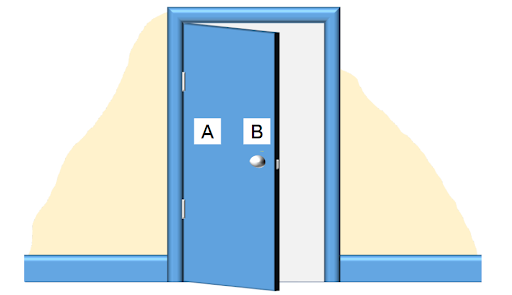
Q3.The figure shows an open door. Which statement is correct?
Q4.What term is used for a lever that produces a larger load force than the effort force applied?
Q5.The figure shows a winch used to pull on a rope. The winch is operated by pulling the handle around the pivot in the middle.
Which feature make this lever a force multiplier?

Q6.How can the load force produced by a crowbar be increased?

To help you plan your 9 science lesson on: Levers, download all teaching resources for free and adapt to suit your pupils' needs...
To help you plan your 9 science lesson on: Levers, download all teaching resources for free and adapt to suit your pupils' needs.
The starter quiz will activate and check your pupils' prior knowledge, with versions available both with and without answers in PDF format.
We use learning cycles to break down learning into key concepts or ideas linked to the learning outcome. Each learning cycle features explanations with checks for understanding and practice tasks with feedback. All of this is found in our slide decks, ready for you to download and edit. The practice tasks are also available as printable worksheets and some lessons have additional materials with extra material you might need for teaching the lesson.
The assessment exit quiz will test your pupils' understanding of the key learning points.
Our video is a tool for planning, showing how other teachers might teach the lesson, offering helpful tips, modelled explanations and inspiration for your own delivery in the classroom. Plus, you can set it as homework or revision for pupils and keep their learning on track by sharing an online pupil version of this lesson.
Explore more key stage 3 science lessons from the Hidden forces unit, dive into the full secondary science curriculum, or learn more about lesson planning.