


New
New
Lesson 8 of 10
Draw and translate simple shapes on the full coordinate grid
I can draw and translate simple shapes on the full coordinate grid

Lesson 8 of 10
New
New
Draw and translate simple shapes on the full coordinate grid
I can draw and translate simple shapes on the full coordinate grid
Lesson details
Key learning points
- To translate a shape is to move it in a horizontal or vertical direction or a combination of the two.
- The translation will give a move in a horizontal direction first.
- The vertical translation will be given second.
- The shape remains the same size after it has been translated.
Keywords
Translate - Translation is a type of transformation. Every point of a shape moves the same distance in the same direction.
Common misconception
Pupils are taught to choose a vertex then count horizontally and / or vertically when translating that vertex. Pupils may forget which vertex they started with and end up translating the wrong vertex.
You may wish to consider asking pupils to mark the starting vertex with a small circle as a reminder of which one they started with.
A highly effective modification to this lesson would be having a large physical 4-quadrant grid so that you can model a cut-out version of a shape being translated from one position to another.

Teacher tip

Licence
This content is © Oak National Academy Limited (2025), licensed on Open Government Licence version 3.0 except where otherwise stated. See Oak's terms & conditions (Collection 2).
Lesson video
Loading...
Prior knowledge starter quiz
6 Questions
Q1.Match the quadrilateral to the correct name.
Match the quadrilateral to the correct name.
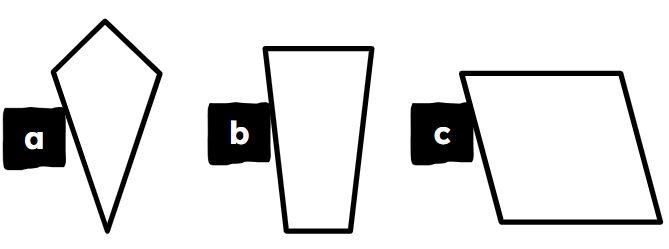

kite
trapezium
rhombus
Q2.Can a triangle and a square be congruent to each other?
Can a triangle and a square be congruent to each other?
Yes, as long as their side lengths are the same.
Yes, as long as they have the same area.
Q3.What is 5 more than −3?
What is 5 more than −3?
Q4.Match the coordinate to the quadrant where it can be found.
Match the coordinate to the quadrant where it can be found.
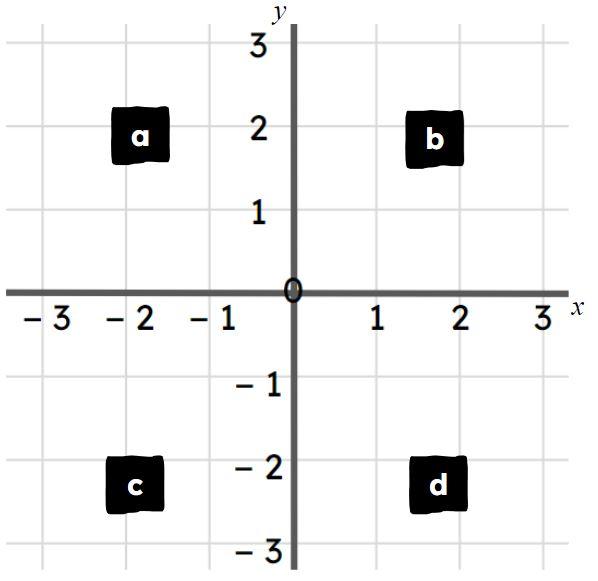
(−1,2)
(1,2)
(−1,−2)
(1,−2)
Q5.Select the correct notation for the coordinate marked on this grid.
Select the correct notation for the coordinate marked on this grid.
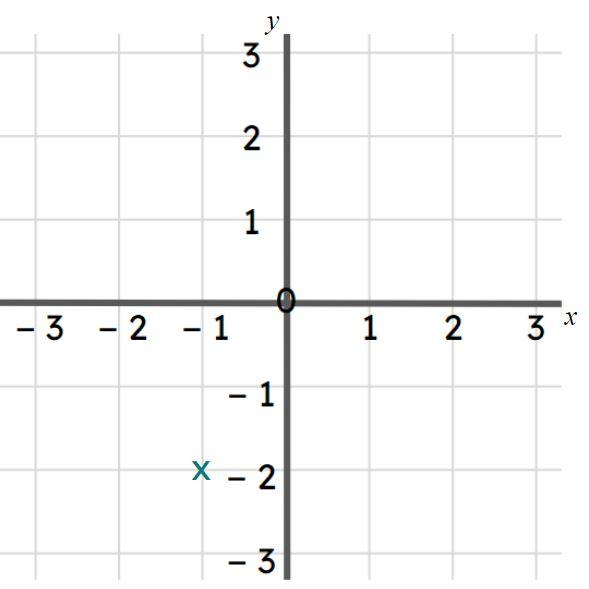
(−2,−1)
(1,2)
(1,−2)
Q6.Select the correct notation for the coordinate marked on this grid.
Select the correct notation for the coordinate marked on this grid.
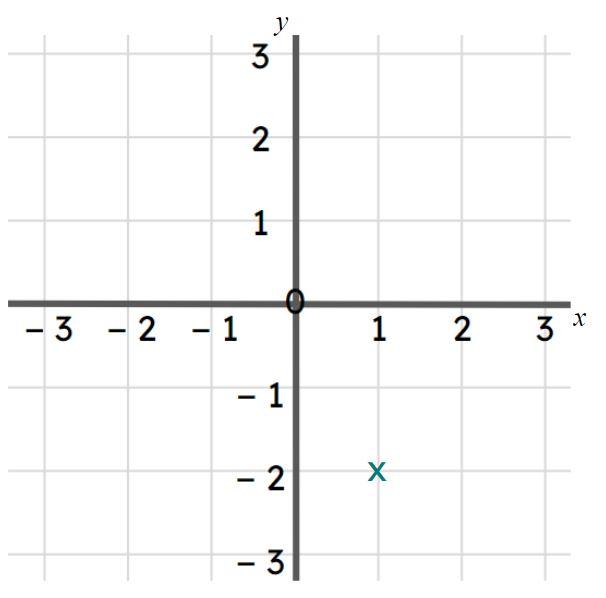
(−2,−1)
(1,2)
(−1,−2)
Assessment exit quiz
6 Questions
Q1.Which of these could be classed as a translation?
Which of these could be classed as a translation?
Enlarging the shape.
Rotating the shape.
Q2.Describe the translation from Shape a to Shape b.
Describe the translation from Shape a to Shape b.
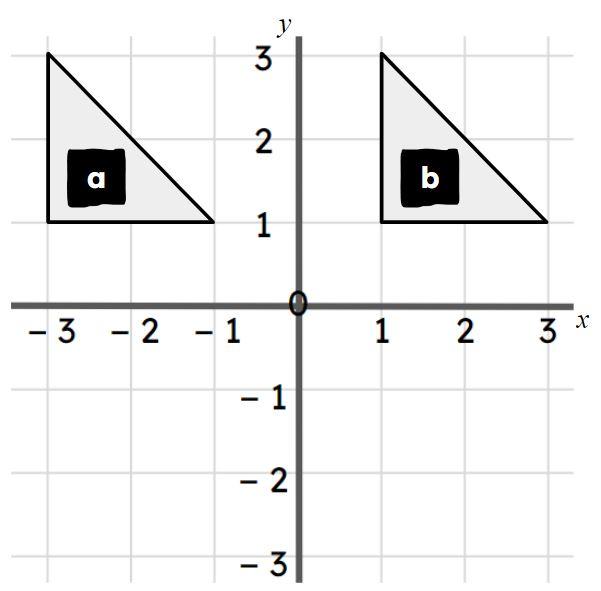
4 to the left
4 down 2 to the left
2 to the right
Q3.Complete: Shape b has been translated units to the left to become shape a.
Complete: Shape b has been translated units to the left to become shape a.
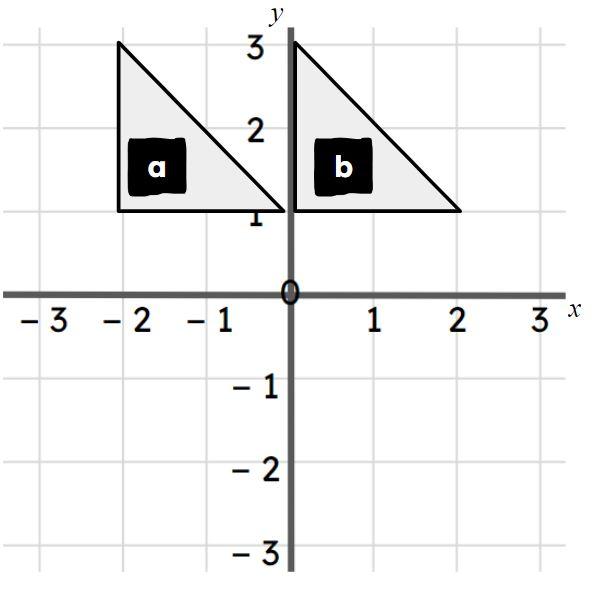
Q4.Select the correct translation from shape a to shape b.
Select the correct translation from shape a to shape b.
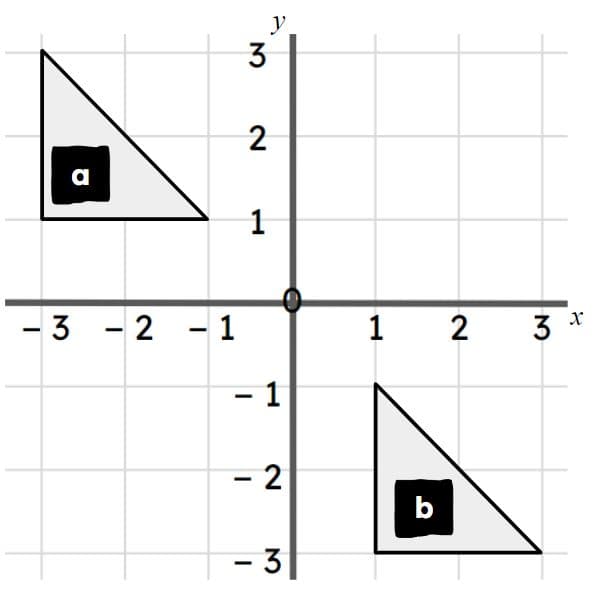
4 to the right, 4 up
Diagonal 4
2 to the right, 2 down
Q5.Select the correct translation from shape b to shape a.
Select the correct translation from shape b to shape a.
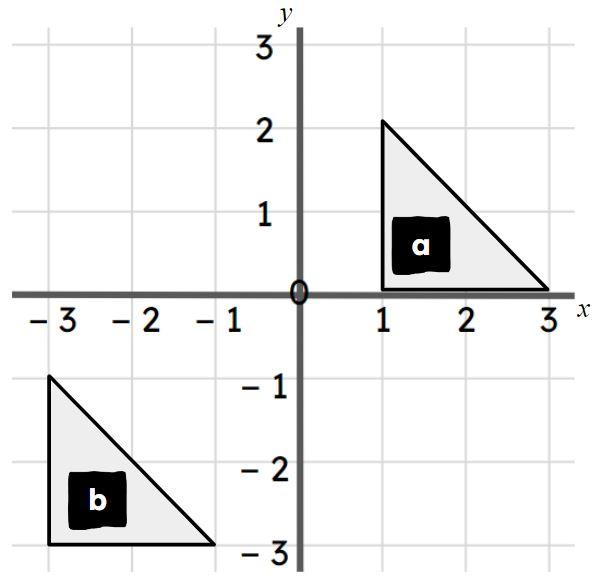
4 to the right, 3 down
Diagonal 3
4 to the left, 3 down
Q6.A vertex has been plotted at (3,−2). It is then translated 3 units to the left and 5 units up. What are the coordinates of the translated vertex?
A vertex has been plotted at (3,−2). It is then translated 3 units to the left and 5 units up. What are the coordinates of the translated vertex?
(8,1)
(6,−7)
(−2,1)